knife

Short definition: The word knife means a tool or weapon with a sharp blade and handle, commonly used for cutting food, materials, or objects, and in some contexts for self-defense, valued for precision, versatility, and everyday practical use.

Looking for a clear and natural explanation of the word knife? This word is extremely common in everyday English and appears in kitchens, workshops, and daily routines. A knife can be a simple tool for cutting food or a sharp object used with care. You’ll hear it in conversations about cooking, safety, crafts, and sometimes in figurative language. Below, each meaning is explained in a calm and natural way, with enough detail to feel human and clear.

knife n., v. /naɪf/

Forms: knife, knives; knife, knifed, knifing
Related: blade n., cut v., sharp adj.
Syllable: knife

  1. (Noun) A tool with a sharp blade and a handle, used for cutting or slicing.

    A knife is a common hand tool with a sharp edge attached to a handle. It is widely used in kitchens to cut food, in crafts to shape materials, and in everyday tasks that require precision. Knives come in many sizes and shapes, each designed for a specific purpose. This is the most common and practical meaning of the word.

    She used a sharp knife to slice the vegetables evenly.
    Keep the knife clean and dry after cooking.
    A dull knife can be more dangerous than a sharp one.

    Synonyms: blade, cutting tool, kitchen knife, utility knife, hand blade, cutter, slicing tool, chef’s knife, pocket knife, carving knife, sharp tool, steel blade
    Antonyms: spoon, fork, blunt tool, hammer, mallet, club, staff, shield, protective gear, guard, armor, safety tool

  2. (Verb) To cut or stab something with a knife or a sharp object.

    To knife means using a knife to cut or stab. This usage is less common in daily conversation and often appears in reports or dramatic storytelling. It emphasizes the action rather than the tool itself. The meaning is direct and context-dependent.

    He accidentally knifed his finger while preparing dinner.
    The fabric was knifed carefully along the marked line.
    The story described how the character was knifed during the fight.

    Synonyms: cut, slice, stab, pierce, slash, carve, score, nick, wound, gash, sever, incise
    Antonyms: heal, mend, protect, cover, join, patch, repair, shield, guard, preserve, save, secure

  3. (Noun) A symbol of sharp criticism, danger, or emotional hurt.

    A knife can be used figuratively to describe words or actions that cause deep emotional pain. Expressions like “a knife in the back” suggest betrayal or harsh treatment. This sense is common in expressive language, writing, and speech. The meaning is symbolic rather than physical.

    His comment felt like a knife to her confidence.
    The betrayal was described as a knife in the back.
    Sharp criticism can cut like a knife.

    Synonyms: cutting remark, sharp insult, emotional wound, betrayal symbol, cruel comment, harsh blow, verbal attack, painful truth, sting, jab, hurtful words, symbolic weapon
    Antonyms: comfort, reassurance, kindness, support, praise, encouragement, warmth, trust, care, protection, empathy, goodwill
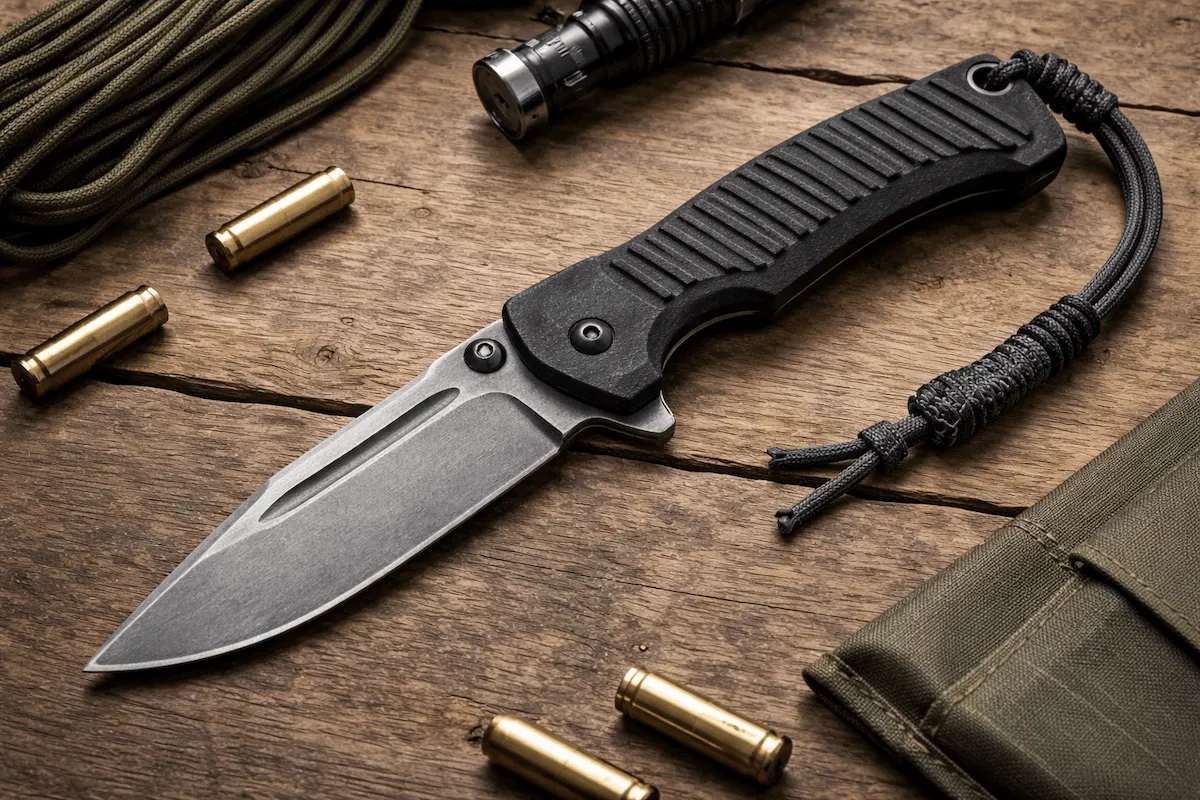
An Explanation of the Word "knife" in an Image

Tactical knife with a textured handle on a wooden surface, surrounded by survival gear, representing a sharp cutting tool used for outdoor, camping, or utility purposes.
A modern tactical knife placed on a wooden surface alongside survival gear, highlighting its sharp blade, textured handle, and practical design for outdoor and utility use.

Conversation Using the Word Knife

In a professional culinary kitchen, chefs Arthur and Beatrice are preparing for a high-stakes dinner service. The conversation highlights the knife as the most essential tool for a cook, discussing different blade types, the importance of sharpening, and safety techniques for precision cutting.

Arthur: I need to sharpen my chef's knife before I start julienning these vegetables; a dull blade is actually more dangerous to use.

Beatrice: I noticed that you prefer a Japanese-style knife because it’s much thinner and lighter than the traditional European versions.

Arthur: I read that a high-carbon steel knife stays sharp much longer, though it requires more maintenance to prevent it from rusting.

Beatrice: I saw a serrated bread knife in the drawer that would be perfect for slicing those crusty baguettes for the appetizer plate.

Arthur: If you use a paring knife for the smaller, delicate tasks like peeling fruit, you’ll have much more control over the cut.

Beatrice: It’s important to always store your knife in a block or on a magnetic strip to keep the edge from getting chipped or damaged.

Arthur: Every professional cook treats their knife as an extension of their own hand, keeping it meticulously clean and perfectly balanced.

Beatrice: I agree; without a high-quality knife, it would be impossible to achieve the level of precision required for this menu.

Arthur: I’m going to hone the knife one more time; please make sure the cutting board is steady before we begin the prep work.

Beatrice: Let's start; once I have my utility knife ready, we can finish dicing the onions and herbs for the soup base.

Phrases Containing the Word Knife

The phrases below show how the word knife is used to talk about tools, cooking, danger, precision, and emotional expressions.

Sharp knife

A well-honed blade.

A sharp knife makes cooking faster and much safer than using a dull one.

Kitchen knife

A knife used for food preparation.

He carefully washed the kitchen knife after chopping vegetables.

Knife edge

A very narrow margin.

The decision balanced on a knife edge, with no easy answer in sight.

Put a knife to

To cut or threaten.

She finally put a knife to the old rope to free them.

Knife wound

An injury caused by a knife.

The report described the knife wound with clinical detail.

Knife skills

Ability to use a knife well.

Good knife skills make food preparation smoother and more enjoyable.

Knife fight

A violent confrontation.

The story avoided glorifying the knife fight, focusing instead on its consequences.

Knife in the back

A betrayal.

His sudden criticism felt like a knife in the back.

Knife block

A holder for knives.

The knife block kept all the blades safely organized.

Carving knife

A knife for slicing meat.

She used a carving knife to serve the roast neatly.

Knife cut

A slice made by a knife.

The knife cut was clean and precise.

Knife technique

A method of cutting.

The chef demonstrated proper knife technique to beginners.

Knife drawer

A place to store knives.

He reached into the knife drawer carefully.

Knife sharpening

The act of honing a blade.

Regular knife sharpening extends the life of your tools.

Knife blade

The cutting part.

The knife blade reflected the kitchen light.

Knife control

Safe handling of knives.

Knife control is essential for preventing accidents.

Knife work

Tasks involving cutting.

Detailed knife work gave the dish a professional look.

Knife mark

A scratch from a blade.

The wooden table showed old knife marks.

Knife pressure

Force applied while cutting.

Too much knife pressure can ruin the texture of soft food.

Knife safety

Practices to avoid injury.

Knife safety should always be taught before advanced cooking techniques.

Words Rhyme with knife

life
wife
strife
fife
rife
high-life
mid-life
night-life
still-life
low-life
afterlife
housewife
fishwife
jackknife
pocketknife
penknife
lovelife
safe-life
half-life
shelf-life
wildlife
riff
stiff
cliff
sniff
skiff
whiff
tariff
sheriff
midriff
POS: Noun, Verb  Category: Kitchenware, Tools, Household Essentials, Weapons