ant

Short definition: The word ant refers to a tiny insect that lives in large groups, builds nests, and works cooperatively, often used to describe teamwork, patience, and steady effort in both literal and figurative contexts.

Looking for a clear and natural explanation of the word ant? This word is very common in everyday English and is usually connected to insects and nature. An ant may be tiny, but it is well known for its strength, teamwork, and organization. You’ll hear it in conversations about gardens, homes, science, and even as a metaphor for hard work. Below, each meaning is explained in a calm and natural way, with enough detail to feel human and clear.

ant n. /ænt/

Forms: ant, ants
Related: colony n., insect n., worker n.
Syllable: ant

  1. (Noun) A very small insect that lives in large groups and works together in an organized colony.

    An ant is a tiny insect that usually lives underground or inside structures called nests. Ants are known for working together, gathering food, and following clear roles within their colony. Even though each ant is small, the group as a whole can move heavy objects and build complex systems. This meaning is common in biology, nature discussions, and everyday observation.

    An ant crawled across the table carrying a crumb many times its size.
    The children watched the ants form a long line back to their nest.
    Ants can survive harsh conditions by working together as a colony.

    Synonyms: worker insect, colony insect, social insect, tiny insect, ground insect, foraging insect, nest insect, crawling insect, hive insect, organized insect, labor insect, small arthropod
    Antonyms: solitary insect, predator insect, flying insect, butterfly, bee, wasp, large insect, independent insect, lone creature, non-social insect, roaming insect, isolated insect

  2. (Noun) A person who is seen as very small, insignificant, or powerless in a larger system.

    Ant can be used metaphorically to describe a person who feels insignificant compared to a large organization or authority. This usage often highlights imbalance of power or scale. It is not usually flattering and can carry a critical or emotional tone. The meaning focuses on perception rather than physical size.

    He felt like an ant in a huge corporation where no one noticed his effort.
    Ordinary citizens can feel like ants when facing powerful institutions.
    She described herself as an ant trying to survive in a massive system.

    Synonyms: small person, insignificant individual, powerless figure, minor player, little guy, nobody, tiny part, overlooked person, weak position, background figure, low-level worker, unseen individual
    Antonyms: leader, powerful person, authority figure, decision-maker, major player, influential figure, boss, executive, dominant force, central figure, key person, person in control

  3. (Noun) A symbol of hard work, discipline, and cooperation.

    In stories, sayings, and cultural references, an ant often represents hard work and persistence. This meaning comes from how ants constantly work and support their community. It is commonly used in lessons about teamwork and preparation. The sense is symbolic rather than literal.

    The teacher used the ant as a symbol of discipline and teamwork.
    Like an ant, she kept working steadily without complaining.
    The story praised the ant for planning ahead.

    Synonyms: symbol of hard work, model worker, example of discipline, teamwork symbol, labor icon, diligence symbol, persistence figure, work ethic image, cooperation symbol, steady worker, effort symbol, productivity emblem
    Antonyms: symbol of laziness, slacker image, careless worker, idle figure, unprepared type, disorganized example, procrastination symbol, weak discipline, lack of effort, poor planning model, chaotic figure, negligent type
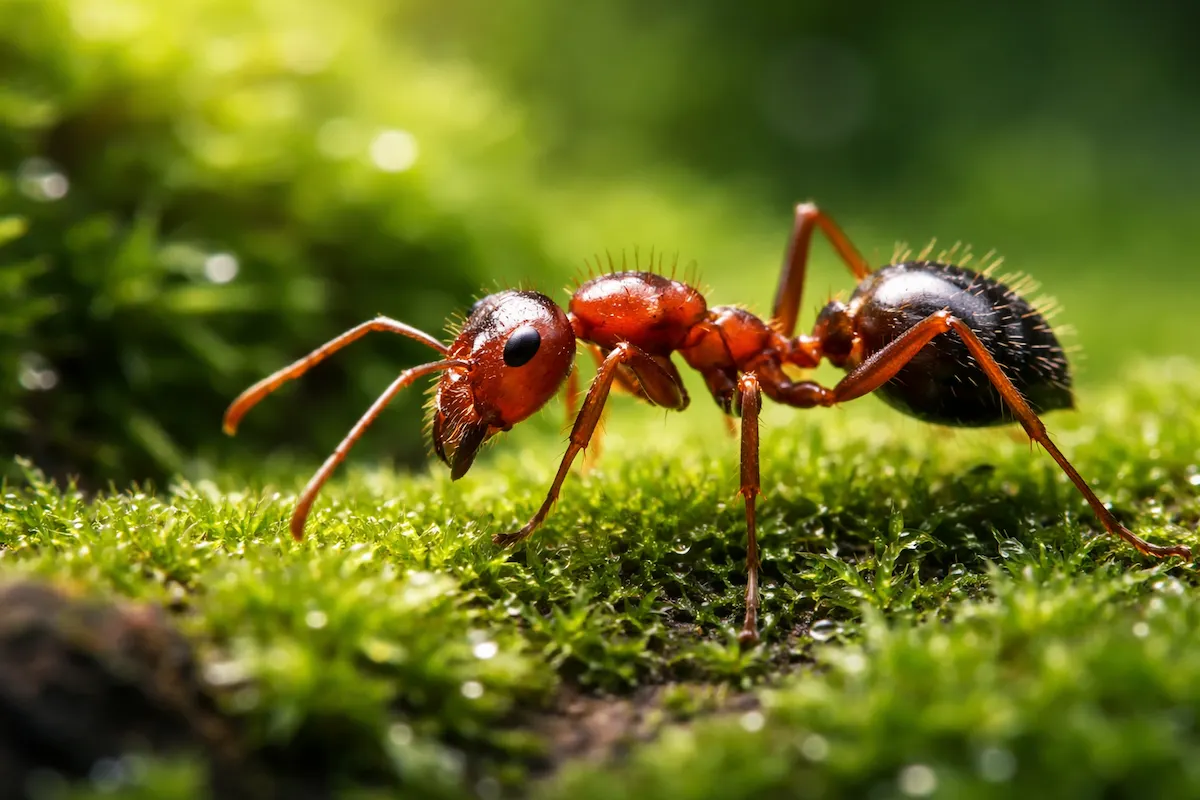
An Explanation of the Word "ant" in an Image

Macro illustration of a red ant on green moss, showing its segmented body, fine hairs, legs, and antennae in sharp detail against a blurred forest background.
A detailed macro illustration of an ant walking across a mossy forest floor, highlighting its segmented body, delicate legs, and antennae in a vivid natural environment with soft green background.

Conversation Using the Word Ant

The following conversation takes place between friends relaxing in a backyard. It shows how the word ant is used naturally in everyday conversation about small observations and nature.

The exchange reflects casual, curious talk in a relaxed setting.

Lucas: Look at all those ants near the table.

Sophie: Yeah, they must have smelled something sweet.

Lucas: It’s crazy how organized each ant looks.

Sophie: I know, even a tiny ant seems to know exactly where to go.

Lucas: They’re carrying crumbs bigger than themselves.

Sophie: That’s why people always talk about ant strength.

Lucas: Nature is impressive, even at this scale.

Sophie: Definitely, watching ants makes you appreciate teamwork.

Phrases Containing the Word Ant

The phrases below show how the word ant is commonly used when talking about insects, teamwork, size comparisons, and everyday observations.

Ant colony

A large group of ants living together.

The ant colony worked nonstop underground, with each ant performing a specific role that kept the entire system running smoothly.

Ant nest

The home of ants.

The ant nest was hidden beneath the soil, carefully built to protect the colony from weather and predators.

Worker ant

An ant that gathers food.

Each worker ant carried food many times heavier than its own body.

Ant trail

A line of ants moving together.

An ant trail formed quickly once food was discovered near the kitchen.

Ant hill

A mound built by ants.

The ant hill stood quietly in the corner of the yard, showing signs of constant activity.

Ant bite

A small painful sting.

An ant bite may seem minor, but it can be surprisingly uncomfortable.

Ant size

Very small scale.

The ant size of the object made it easy to lose on the floor.

Ant movement

Quick crawling motion.

Ant movement looks chaotic at first but follows a clear pattern.

Ant strength

Unexpected power.

Ant strength is often mentioned to show how small creatures can be incredibly strong.

Ant teamwork

Cooperative behavior.

Ant teamwork allows the colony to survive even in harsh environments.

Ant behavior

How ants act.

Ant behavior fascinates scientists because of its organization.

Ant communication

Signals between ants.

Ant communication relies on scent trails rather than sound.

Ant food

What ants eat.

Sugar crumbs quickly attract ant food seekers.

Ant problem

An infestation issue.

The ant problem in the kitchen required careful cleaning and prevention.

Ant invasion

Large number entering.

An ant invasion can happen overnight if food is left uncovered.

Ant activity

Visible movement.

Ant activity increases during warmer months.

Ant species

Different types of ants.

There are many ant species, each adapted to its environment.

Ant observation

Watching ants closely.

Ant observation can be a surprisingly calming activity.

Ant presence

Being nearby.

The ant presence suggested food had been dropped earlier.

Ant role

Function in nature.

The ant role in soil health is often overlooked.

Words Rhyme with ant

pant
cant
slant
plant
grant
chant
rant
scant
enchant
recant
supplant
gallant
implant
transplant
descant
extant
disenchant
adamant
arrogant
elegant
relevant
ignorant
tolerant
distant
constant
instant
servant
observant
merchant
mordant
POS: Noun  Category: Animals, Insects