crane

Short definition: The word crane means a tall construction machine with a long arm used for lifting and moving heavy objects, commonly seen on building sites, ports, and industrial areas where precise vertical and horizontal lifting is required.

Looking for a clear and natural explanation of the word crane? This word is interesting because it can refer to both heavy machinery and a type of bird. A crane is commonly associated with construction sites, lifting heavy loads, and tall metal structures. You’ll also hear it in conversations about wildlife and graceful long-legged birds. Below, each meaning is explained in a calm and natural way, with enough detail to feel human and clear.

crane n., v. /kreɪn/

Forms: crane, cranes; craned, craning
Related: lift v., tower n., bird n.
Syllable: crane

  1. (Noun) A tall machine with a long arm used to lift and move heavy objects.

    A crane is a large piece of construction equipment designed to lift heavy materials. It has a long horizontal or angled arm and uses cables or hooks to raise loads. Cranes are commonly seen on construction sites, in shipyards, and in large industrial areas. This is the most common and practical meaning of the word.

    The crane carefully lifted steel beams into place at the top of the building.
    A massive crane towered above the construction site.
    Workers signaled the crane operator before moving the heavy load.

    Synonyms: lifting machine, tower crane, hoist crane, mobile crane, construction crane, heavy lifter, boom crane, industrial crane, overhead crane, lifting equipment, load-moving machine, site crane
    Antonyms: hand tool, shovel, rake, manual lift, lightweight device, small tool, handheld equipment, delicate instrument, light machinery, manual carry, simple tool, portable device

  2. (Noun) A tall, long-legged bird with a long neck and beak.

    A crane is also a large bird known for its long legs, long neck, and graceful movements. These birds are often found in wetlands and are known for their distinctive calls. Cranes are symbols of elegance and longevity in many cultures. This meaning is biological rather than mechanical.

    A white crane stood quietly near the edge of the lake.
    The crane spread its wings before taking flight.
    In some traditions, the crane represents peace and good fortune.

    Synonyms: wading bird, long-legged bird, marsh bird, wetland bird, tall bird, migratory bird, water bird, heron-like bird, shore bird, elegant bird, flying crane, wild bird
    Antonyms: mammal, reptile, fish, insect, small rodent, domestic animal, ground mammal, amphibian, marine animal, farm animal, house pet, non-bird creature

  3. (Verb) To stretch your neck forward or upward in order to see something.

    To crane means to extend your neck to get a better view. People often crane their necks in crowded places or when something interesting is happening. The action resembles the posture of the bird, which is how the verb developed. This meaning focuses on body movement.

    She craned her neck to see over the crowd.
    He craned forward to read the small sign.
    Tourists craned upward to admire the tall building.

    Synonyms: stretch, lean forward, peer, strain, look up, reach forward, extend, tilt forward, bend toward, try to see, strain to view, lift the head
    Antonyms: relax, sit back, ignore, look away, withdraw, lower the head, turn aside, avoid looking, remain still, rest, stay seated, disengage
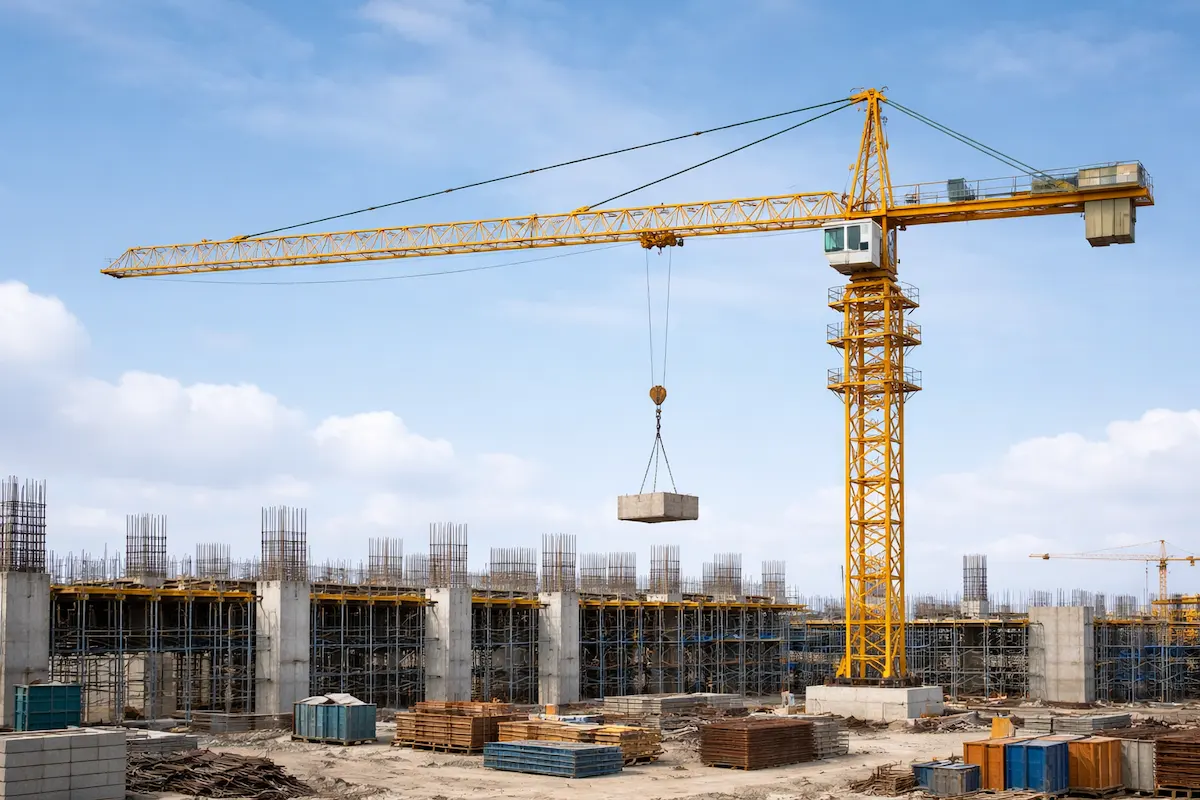
An Explanation of the Word "crane" in an Image

Yellow tower crane hoisting a concrete block at a busy construction site with scaffolding and unfinished buildings in the background.
A tall yellow tower crane operating at a large construction site, lifting a heavy concrete block high above the ground as workers assemble reinforced structures below.

Conversation Using the Word Crane

Looking up at a high-rise building project in a metropolitan center, engineers Sebastian and Elena discuss vertical logistics. The dialogue focuses on the crane, discussing tower cranes, mobile cranes, and the complex system of cables and pulleys used to lift massive loads to extreme heights.

Sebastian: The tower crane is so tall that it has to be anchored directly into the building's concrete foundation for stability.

Elena: I noticed that the crane operator has to climb hundreds of feet every morning just to reach the cab at the top of the mast.

Sebastian: I read that a crane uses a counterweight system to balance the load, preventing the entire structure from toppling over during a heavy lift.

Elena: I saw a mobile crane on the street yesterday that used large hydraulic outriggers to stay steady while lifting an air conditioning unit.

Sebastian: If the wind speed exceeds thirty miles per hour, the crane must stop all operations and enter 'weathervane mode' for safety.

Elena: It’s a masterpiece of physics; a crane can move steel beams weighing several tons with incredible precision and smoothness.

Sebastian: Many people are fascinated by how a crane can actually 'grow' by using its own machinery to add new sections to its tower.

Elena: I agree; without the crane, our modern skylines filled with skyscrapers would be impossible to construct.

Sebastian: I’m going to check the radio communication with the crane operator; clear signals are vital when he’s lifting blind behind a wall.

Elena: Let's clear the area below the jib; once the crane starts its swing, nothing should be standing in the potential drop zone.

Phrases Containing the Word Crane

The phrases below show how the word crane is used to talk about lifting operations, tall machinery, precision handling, and construction safety.

Crane operator

A person who controls a crane.

The crane operator coordinated closely with ground crews during the lift.

Crane lift

The act of raising a load.

The crane lift moved steel beams into place with precision.

Crane boom

The long lifting arm.

The crane boom extended high above the construction site.

Crane operation

The controlled use of a crane.

Crane operation requires constant communication and focus.

Crane load

The object being lifted.

The crane load was carefully balanced before lifting.

Crane safety

Rules to prevent accidents.

Crane safety procedures are strictly enforced on high-rise projects.

Crane inspection

A safety and readiness check.

Crane inspection was completed before work began.

Crane reach

The maximum distance a crane can lift.

Crane reach determines how far materials can be placed.

Crane stability

Balance during lifting.

Crane stability is critical when lifting heavy loads.

Crane setup

Preparing the crane for work.

Crane setup took several hours due to site conditions.

Crane signal

Hand or radio communication.

Clear crane signals ensured smooth lifting.

Crane operation skill

Operator proficiency.

Crane operation skill improves safety and efficiency.

Crane capacity

Maximum lifting weight.

Crane capacity limits must never be exceeded.

Crane transport

Moving the crane.

Crane transport required careful planning and permits.

Crane maintenance

Routine servicing.

Crane maintenance keeps hydraulic systems reliable.

Crane assembly

Putting the crane together.

Crane assembly involved multiple support vehicles.

Crane disassembly

Taking the crane apart.

Crane disassembly began after the final lift.

Crane coordination

Team communication.

Crane coordination between crews prevented delays.

Crane performance

Overall effectiveness.

Crane performance remained consistent in windy conditions.

Crane mastery

Advanced operating skill.

Crane mastery comes from years of precision work.

Words Rhyme with crane

abstain
attain
brain
campaign
cane
chain
champagne
complain
contain
detain
drain
explain
gain
grain
hurricane
insane
lane
main
maintain
obtain
pain
pane
plain
plane
rain
remain
restrain
stain
sustain
train
POS: Noun, Verb  Category: Birds, Heavy Equipment, Machinery, Construction