grasshopper

Short definition: The word grasshopper refers to a green or brown insect with long back legs that jumps and flies short distances, often found in fields and gardens, and commonly associated with summer sounds, movement, and open grassy areas.

Looking for a clear and natural explanation of the word grasshopper? This word is very common in everyday English and is closely connected to insects, fields, and summer landscapes. A grasshopper is known for its strong back legs and long jumps. You’ll hear it in conversations about nature, farming, gardens, and sometimes in stories or sayings. Below, each meaning is explained in a calm and natural way, with enough detail to feel human and clear.

grasshopper n. /ˈɡrɑːsˌhɒp.ər/

Forms: grasshopper, grasshoppers
Related: insect n., jump v., field n.
Syllable: grass-hop-per

  1. (Noun) A jumping insect with long back legs that lives in grass and feeds on plants.

    A grasshopper is an insect commonly found in fields, gardens, and open land. It is known for its powerful back legs, which allow it to jump long distances. Grasshoppers mainly eat grass and leaves and are often heard before they are seen. This meaning is common in nature, farming, and biology contexts.

    A grasshopper jumped out of the tall grass as we walked by.
    Farmers sometimes worry about large numbers of grasshoppers damaging crops.
    The children watched the grasshopper leap from one leaf to another.

    Synonyms: jumping insect, field insect, plant-eating insect, hopper insect, green insect, meadow insect, leaping insect, short-horned insect, land insect, crop insect, grass insect, outdoor insect
    Antonyms: crawling insect, ground insect, worm, larva, grub, flightless insect, soil insect, beetle, ant, termite, underground insect, non-jumping insect

  2. (Noun) A symbol of movement, impatience, or short-term thinking in stories and sayings.

    A grasshopper is sometimes used symbolically, especially in fables and expressions. It can represent someone who acts quickly, enjoys the moment, or fails to plan ahead. This meaning comes from classic stories that compare grasshoppers with more prepared animals. The sense is metaphorical rather than literal.

    In the story, the grasshopper enjoyed summer without planning for winter.
    He acted like a grasshopper, spending money without thinking about the future.
    The lesson warned against living like a grasshopper without preparation.

    Synonyms: carefree type, short-term thinker, impulsive person, unprepared figure, pleasure-seeker, spontaneous type, live-for-now symbol, careless planner, reckless character, quick-acting type, thoughtless actor, unprepared individual
    Antonyms: planner, saver, careful thinker, prepared person, disciplined type, long-term thinker, cautious planner, responsible figure, organized person, future-focused individual, patient type, strategic thinker
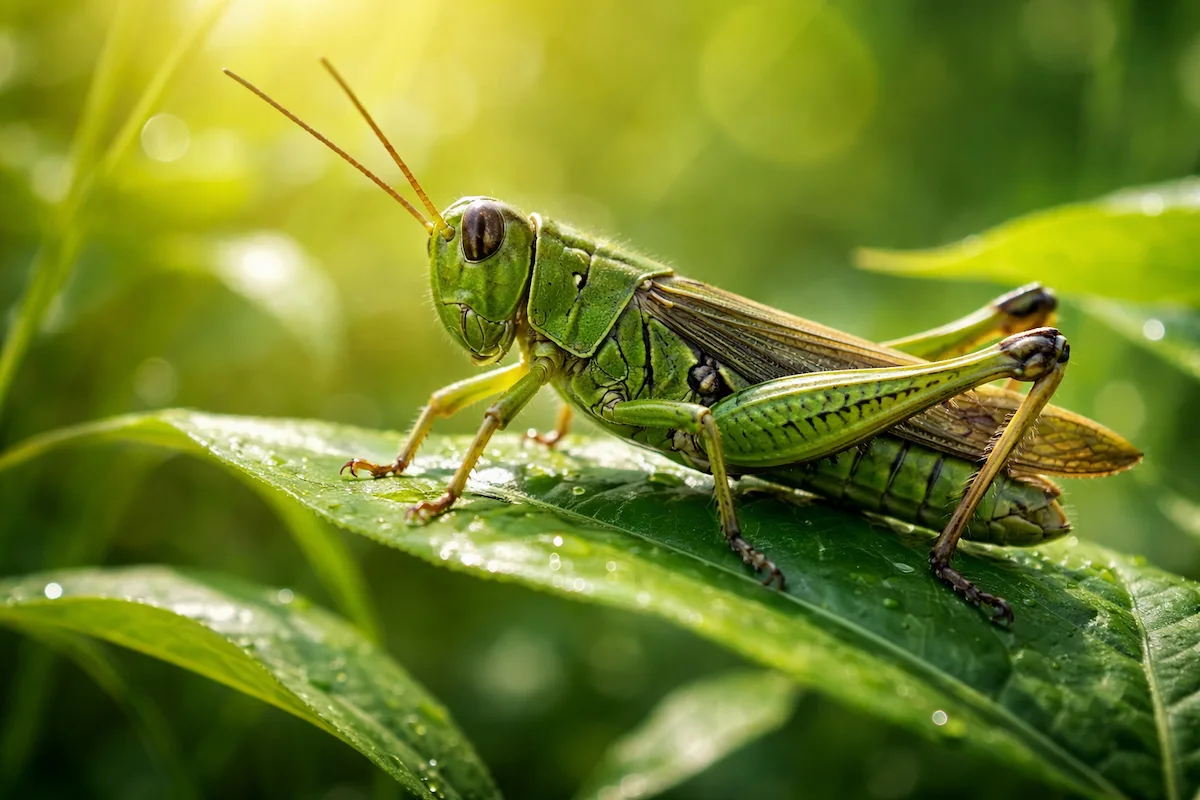
An Explanation of the Word "grasshopper" in an Image

Macro illustration of a green grasshopper on a leaf, showing its long antennae, folded wings, strong hind legs, and textured body against a blurred green background.
A realistic macro illustration of a green grasshopper resting on a fresh leaf, highlighting its powerful hind legs, segmented body, long antennae, and detailed wings in soft natural sunlight.

Conversation Using the Word Grasshopper

The following conversation takes place during a walk through open fields. It shows how the word grasshopper is used naturally in everyday conversation when talking about nature and small outdoor experiences.

The exchange reflects relaxed, descriptive speech about the surroundings.

Tom: Did you see that grasshopper jump right in front of us?

Lucy: Yeah, it startled me for a second.

Tom: They jump incredibly far for such small insects.

Lucy: I know, those long legs are impressive.

Tom: You can hear grasshoppers everywhere out here.

Lucy: It really makes the field feel alive.

Tom: Summer wouldn’t feel the same without them.

Lucy: True, grasshoppers are part of the season’s sound.

Phrases Containing the Word Grasshopper

The phrases below show how the word grasshopper is commonly used when talking about insects, nature scenes, farming, and everyday observations.

Grasshopper jump

A sudden leap.

The grasshopper jump was so quick that it disappeared into the tall grass before anyone noticed.

Grasshopper legs

Long and strong legs.

The grasshopper legs are specially adapted for powerful jumping across fields.

Grasshopper sound

A chirping noise.

The grasshopper sound filled the air during the quiet summer afternoon.

Grasshopper field

A grassy area.

The grasshopper field came alive with movement as the sun began to set.

Grasshopper movement

Jumping and flying motion.

Grasshopper movement can seem random, but it helps them escape predators quickly.

Grasshopper population

The number of insects.

The grasshopper population increases during warm and dry seasons.

Grasshopper habitat

Natural living area.

Fields and meadows provide the ideal grasshopper habitat.

Grasshopper activity

Visible jumping behavior.

Grasshopper activity was highest during the hottest part of the day.

Grasshopper insect

A type of bug.

The grasshopper insect blends easily into dry grass and soil.

Grasshopper presence

Being nearby.

The grasshopper presence made the countryside feel alive and active.

Grasshopper bite

A rare nibble.

A grasshopper bite is uncommon and usually harmless.

Grasshopper season

Time of frequent appearance.

Grasshopper season often peaks in late summer when grass is dry.

Grasshopper damage

Harm to plants.

Large swarms can cause grasshopper damage to crops.

Grasshopper swarm

A large group.

A grasshopper swarm moved through the field, eating leaves along the way.

Grasshopper color

Green or brown shade.

The grasshopper color helped it blend perfectly into the dry grass.

Grasshopper life cycle

Growth stages.

The grasshopper life cycle includes egg, nymph, and adult stages.

Grasshopper sighting

Seeing one.

A sudden grasshopper sighting startled her during the walk.

Grasshopper behavior

Typical actions.

Grasshopper behavior includes jumping away when approached.

Grasshopper feeding

Eating plants.

Grasshopper feeding can affect young crops if numbers are high.

Grasshopper environment

Surrounding area.

A dry grasshopper environment suits their survival best.

Words Rhyme with grasshopper

chopper
copper
cropper
dropper
hopper
lopper
popper
proper
shopper
stopper
topper
whopper
clodhopper
show-stopper
back-stopper
eye-popper
jaw-dropper
name-dropper
window-shopper
improper
pauper
flapper
slapper
wrapper
dapper
snapper
clapper
trapper
zapper
kidnapper
POS: Noun  Category: Animals, Insects