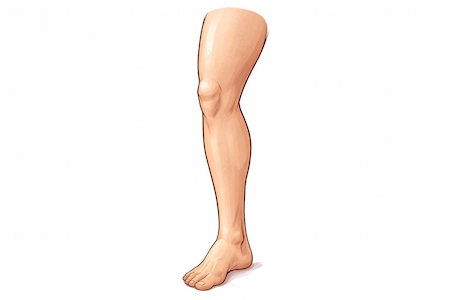
leg
Short definition: The word leg means the part of your body that helps you stand move and walk, and people also use it in many expressions to talk about travel support or even parts of furniture and tables.
Looking for a clear and natural explanation of the word leg? The word leg is used in many different ways in everyday English. Most people first think of the part of the body that helps us stand, walk, and run, but the word also appears in sports, travel, furniture, and even business talk. Because of this, leg is a simple word with many useful meanings. Below, each meaning is explained in a natural and human way, so it feels easy to understand in real life.
Forms: leg, legs
Related: leggy adj., legwork n.
Syllable: leg
-
The part of the body used for standing and walking.
A leg is one of the two long parts of the body that support a person when standing, walking, or running. It goes from the hip down to the foot and plays a big role in balance and movement. Strong legs help people stay active and healthy.
She hurt her leg while playing soccer.He stood on one leg to tie his shoe.Walking every day keeps your legs strong.Synonyms: limb, lower limb, lower body part, walking limb, support limb, movement limb, body support part, human leg, physical limb, standing limb, mobility part, body extension
Antonyms: arm, upper limb, hand, head, torso, body core, upper body part, shoulder, chest, back, neck, trunk -
A part of furniture or an object that supports it.
A leg can also mean the long support part of an object. Tables, chairs, desks, and beds all stand on legs. Without legs, these objects would not stay upright.
One leg of the table is broken.The chair has four strong legs.He fixed the loose leg on the desk.Synonyms: support post, stand, base support, pillar part, table support, furniture support, structural leg, holding piece, support arm, standing piece, support rod, base piece
Antonyms: top surface, tabletop, seat, cushion, backrest, cover, lid, upper part, surface panel, flat top, head section, upper frame -
One part of a journey or competition.
In travel and sports, a leg means one section of a longer trip or event. For example, a flight from one city to another can be one leg of a journey. In races, each stage can also be called a leg.
The first leg of the trip was very long.They won the first leg of the match.The race has three legs.Synonyms: stage, part, section, segment, round, phase, step, stretch, portion, travel section, match part, event stage
Antonyms: whole journey, full trip, complete race, entire event, total match, final result, full course, entire path, whole competition, overall trip, complete series, full process -
A person’s strength or advantage in something.
In a figurative way, a leg can mean an advantage or strong point. People say someone has “a leg up” when they have a better chance to succeed. This meaning is common in business and sports talk.
His experience gave him a leg up in the competition.The team had a strong first leg advantage.She gained a leg up by practicing early.Synonyms: advantage, edge, benefit, head start, upper hand, strong position, winning point, positive lead, extra strength, helpful boost, better chance, competitive edge
Antonyms: disadvantage, weakness, setback, loss, shortcoming, bad position, poor start, low chance, negative lead, lack of edge, weak position, handicap -
A word used in informal expressions.
The word leg appears in many everyday expressions. Phrases like “pull someone’s leg” mean joking with someone, while “on your last legs” means being very tired. These uses make the word fun and colorful in language.
He was just pulling your leg.After work, she was on her last legs.Don’t worry, they’re just pulling your leg.Synonyms: joke word, idiom part, expression term, slang usage, casual phrase piece, playful word, figurative use, everyday saying part, language color word, expression element, informal speech part, idiomatic term
Antonyms: literal meaning, formal usage, technical term, strict definition, academic use, serious wording, precise term, official language, exact meaning, formal expression, textbook usage, direct speech