sitemap
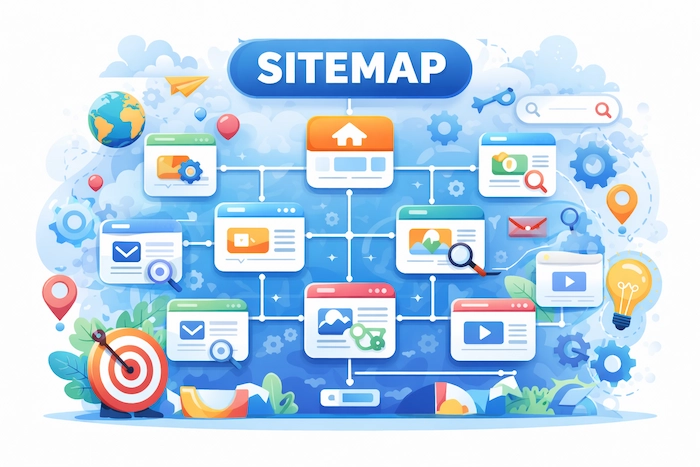
Short definition: The word sitemap means a list or map of all important pages on a website that shows how the site is organized. People use it to help search engines understand their content better and to guide visitors so they can find pages quickly and easily.
Looking for a clear and natural explanation of the word sitemap? The word sitemap is closely connected to websites, search engines, and how people find information online. Even though it sounds technical, the idea behind a sitemap is simple: it helps both humans and machines understand the structure of a website. In everyday digital life, sitemap plays a quiet but important role, making sure pages don’t get lost and that important content is easy to discover. Below, each meaning is explained in a relaxed and natural way, with explanations that feel human instead of stiff like a textbook.
Noun forms: sitemap, sitemaps
Related: site map n., index page n., navigation n.
Syllable: site-map
-
A list or map that shows all the pages of a website.
In its most common meaning, a sitemap is a simple guide that shows what pages exist on a website and how they are organized. It helps visitors understand where to go, especially on large websites with many sections. Instead of clicking randomly, people can use a sitemap to get a clear picture of the whole site at once.
When she couldn’t find the contact page, she checked the sitemap to see the full site structure.The new website includes a sitemap so visitors can explore every section easily.For large online stores, a clear sitemap makes shopping feel much less confusing.Synonyms: site guide, website map, page list, navigation map, content map, site outline, page directory, web guide, site index, navigation overview, site layout, content overview
Antonyms: confusion, lost navigation, hidden structure, unclear layout, messy site, disorganized pages, no guide, random layout, unclear site map, chaotic navigation, missing index, confusing design -
A file that helps search engines find and understand web pages.
In a more technical sense, a sitemap is a special file, often in XML format, that website owners give to search engines. It tells Google and others which pages exist, which ones are important, and how often they change. Without a sitemap, some pages might stay invisible online, even if they contain great content.
He submitted the sitemap to Google to make sure all his new pages could be indexed.After fixing the errors in the sitemap, the website started appearing better in search results.For a large blog, keeping the sitemap updated saves a lot of time in SEO work.Synonyms: XML sitemap, search-engine map, crawl guide, indexing file, page discovery file, site feed, search index helper, web indexing tool, crawler guide, page map file, SEO map, site feed file
Antonyms: hidden pages, unindexed content, invisible site, lost pages, search engine confusion, missing index, blocked crawling, no discovery file, unseen content, search failure, indexing problems, invisible pages -
A planning tool for building a website.
Before a website even goes live, a sitemap can be part of the planning stage. Designers and developers use it to decide what pages will exist and how everything connects. In this way, a sitemap works like a blueprint for the digital world.
During the meeting, they created a sitemap to plan the structure of the new website.The designer shared a visual sitemap so the client could understand the page flow.With a clear sitemap, the development process became much smoother.Synonyms: site blueprint, structure plan, website outline, navigation plan, page structure, site framework, design map, layout plan, content plan, site architecture, project map, development guide
Antonyms: no planning, messy design, random structure, unclear flow, chaotic layout, disorganized project, no structure, poor planning, unclear navigation, random pages, weak architecture, confused design -
A tool that improves user experience.
From a visitor’s point of view, a sitemap makes a website feel more friendly. It reduces frustration, because people can quickly find what they need instead of searching page by page. In this sense, a sitemap is about comfort and clarity.
Thanks to the sitemap, she found the help section in just a few seconds.The website added a footer sitemap to make navigation easier for older users.A well-designed sitemap can turn a confusing site into a pleasant experience.Synonyms: user guide, navigation help, site helper, browsing aid, page finder, site assistant, clarity tool, access guide, site support tool, navigation helper, usability feature, site aid
Antonyms: user frustration, poor navigation, confusing site, lost visitors, bad user experience, unclear paths, messy browsing, difficult access, navigation problems, site confusion, user struggle, poor usability -
A quiet but important part of website success.
Many visitors never notice a sitemap, but its impact is big. It helps search engines, guides users, and supports long-term growth. In this sense, a sitemap is like a behind-the-scenes helper that makes everything run more smoothly.
The developer said the sitemap was small work but made a big difference.Updating the sitemap became part of their regular website maintenance.Without a proper sitemap, even great content can stay unnoticed.Synonyms: behind-the-scenes tool, silent helper, SEO support, site backbone, structure support, digital assistant, hidden helper, growth tool, technical support, site foundation, invisible aid, system helper
Antonyms: ignored tool, missing support, weak foundation, broken structure, poor setup, invisible failure, lost opportunity, weak system, no guidance, hidden problem, unsupported site, fragile setup