bee

Short definition: The word bee refers to a small striped insect that flies, lives in groups, collects nectar, and plays a crucial role in pollination, making it essential for plants, food production, and healthy ecosystems.

Looking for a clear and natural explanation of the word bee? This word is very common in everyday English and is most often used to talk about nature and insects. A bee is small, but it plays a huge role in the environment, especially in pollination. You’ll hear it in conversations about gardens, food, farming, and sometimes even teamwork or social behavior. Below, each meaning is explained in a calm and natural way, with enough detail to feel human and clear.

bee n. /biː/

Forms: bee, bees
Related: honey n., hive n., pollinate v.
Syllable: bee

  1. (Noun) A small flying insect that collects nectar and pollen and produces honey.

    A bee is a small insect with wings, usually yellow and black, known for visiting flowers. Bees collect nectar and pollen, which helps plants reproduce through pollination. Many bees live in groups inside hives, where they work together and make honey. This meaning is common in nature, biology, and everyday observations.

    A bee landed on the flower while collecting nectar.
    Farmers depend on bees to pollinate their crops.
    The garden was full of bees buzzing between the plants.

    Synonyms: honeybee, pollinator, flying insect, worker bee, hive insect, nectar collector, pollen carrier, social insect, winged insect, buzzing insect, garden pollinator, honey maker
    Antonyms: predator insect, solitary insect, crawling insect, non-pollinator, parasite, flightless insect, beetle, ant, termite, ground insect, harmful pest, non-flying insect

  2. (Noun) A person who is busy, active, or works very hard, often as part of a group.

    Bee can be used informally to describe a hardworking and energetic person. This meaning comes from how bees constantly move and work together. It is usually positive and suggests dedication rather than stress. You’ll often hear it in friendly or descriptive contexts.

    She’s a real bee when it comes to organizing events.
    He was a busy bee all morning, helping everyone.
    The office was full of bees preparing for the launch.

    Synonyms: hard worker, busy person, energetic worker, active helper, diligent person, go-getter, tireless worker, productive person, team worker, industrious type, motivated worker, active contributor
    Antonyms: lazy person, slacker, idle worker, procrastinator, unmotivated person, inactive type, loafer, couch potato, slow worker, unproductive person, drifter, disengaged worker

  3. (Noun) A gathering where people compete in a specific skill, such as spelling or debating.

    A bee can also mean a competition focused on a particular skill. The most common example is a spelling bee, where participants spell words aloud. This sense highlights learning, challenge, and public performance. It is especially common in schools and educational settings.

    She won first place in the school spelling bee.
    The math bee attracted students from different regions.
    Preparing for the bee required weeks of practice.

    Synonyms: competition, contest, academic event, skill contest, school competition, challenge event, learning contest, academic challenge, knowledge test, public contest, classroom event, educational match
    Antonyms: practice session, casual activity, noncompetitive event, free play, informal gathering, solo study, private learning, non-contest, leisure activity, relaxation time, open discussion, ungraded activity
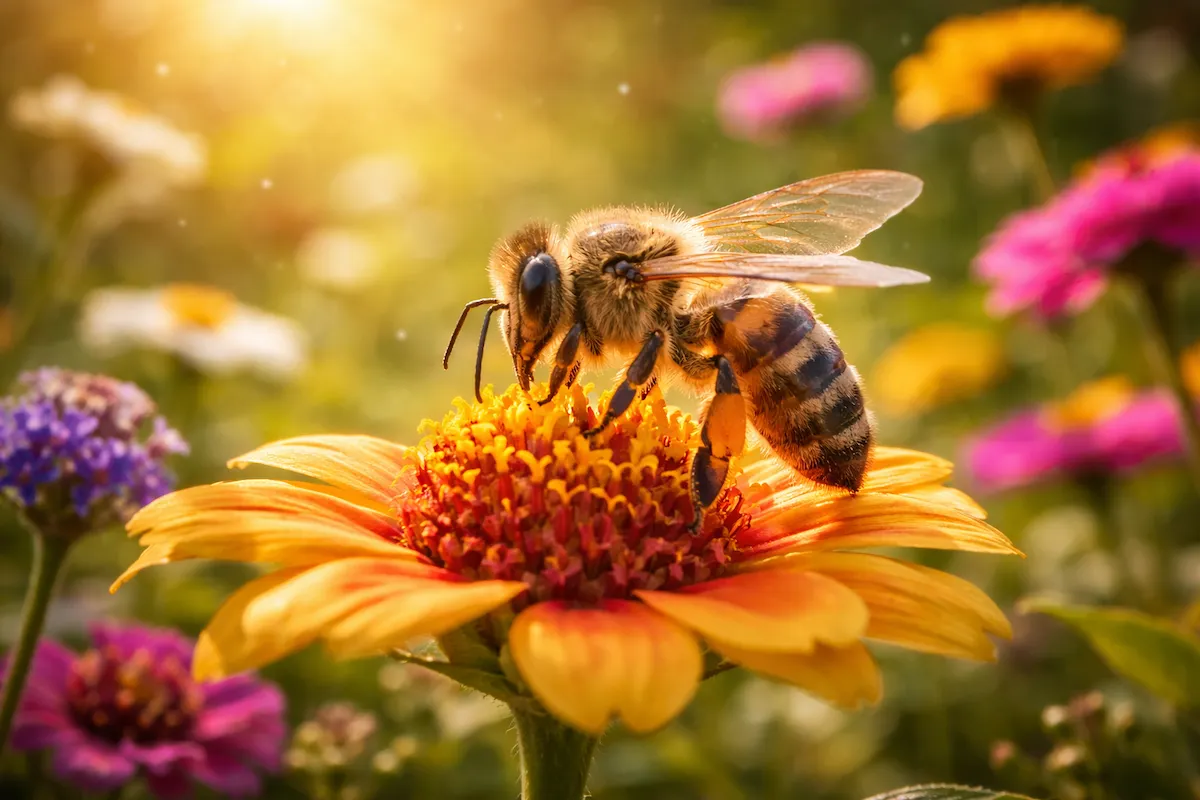
An Explanation of the Word "bee" in an Image

Realistic illustration of a honeybee on a colorful flower, showing translucent wings, striped body, and pollen-covered legs in a sunlit garden setting.
A realistic illustration of a honeybee collecting nectar from a bright garden flower, highlighting fine wing details, fuzzy body texture, and the vital role of bees in pollination under warm sunlight.

Conversation Using the Word Bee

The following conversation takes place in a garden on a warm afternoon. It shows how the word bee is used naturally in everyday conversation about nature and small daily observations.

The exchange reflects calm, casual speech and curiosity about the environment.

Liam: Did you see that bee near the flowers?

Emma: Yeah, it’s been flying around the same spot for a while.

Liam: I guess it’s collecting nectar.

Emma: Bees are always busy, that’s why people call them busy bees.

Liam: They’re important for the garden, right?

Emma: Definitely, without bees, many plants wouldn’t grow properly.

Liam: I’ll be careful not to disturb it.

Emma: Good idea, the bee is just doing its job.

Phrases Containing the Word Bee

The phrases below show how the word bee is commonly used when talking about nature, work habits, community, and everyday observations.

Honey bee

A bee that produces honey.

The honey bee collects nectar from flowers and turns it into honey inside the hive.

Bee hive

The home of bees.

The bee hive was hidden inside the tree, buzzing softly with activity.

Bee sting

A defensive action.

A bee sting can be painful, but it usually fades after a short time.

Bee colony

A group of bees.

The bee colony worked together efficiently, each bee playing a specific role.

Bee pollination

Plant fertilization.

Bee pollination is vital for growing fruits, vegetables, and flowers.

Busy bee

A hardworking person.

She’s always a busy bee, finishing tasks before anyone else.

Bee activity

Movement and work.

Bee activity increases during warm, sunny days.

Bee population

The number of bees.

The bee population has declined in some areas due to environmental changes.

Bee protection

Conservation effort.

Bee protection helps maintain healthy ecosystems and food supplies.

Bee behavior

How bees act.

Bee behavior shows clear teamwork and communication.

Bee species

Different types.

There are thousands of bee species around the world.

Bee role

Function in nature.

The bee role in agriculture is often underestimated.

Bee buzz

The sound it makes.

The bee buzz was the only sound in the quiet garden.

Bee habitat

Natural environment.

Protecting bee habitat supports biodiversity.

Bee movement

Flying pattern.

Bee movement between flowers looks random but is highly efficient.

Bee life cycle

Stages of development.

The bee life cycle includes egg, larva, pupa, and adult stages.

Bee-friendly garden

A supportive space.

A bee-friendly garden includes native plants and avoids harsh chemicals.

Bee worker

A working bee.

The bee worker spends most of its life collecting nectar.

Bee presence

Being nearby.

The bee presence indicated a healthy garden environment.

Bee symbol

A sign of effort.

The bee symbol often represents teamwork and hard work.

Words Rhyme with bee

bee [rhyme]
see
sea
tree
free
knee
three
tea
key
fee
gee
he
she
we
me
be
agree
degree
decree
flee
plea
spree
coffee
toffee
trophy
guarantee
refugee
nominee
jubilee
bumblebee
honeybee
[/rhyme]
POS: Noun  Category: Animals, Insects, Livestock