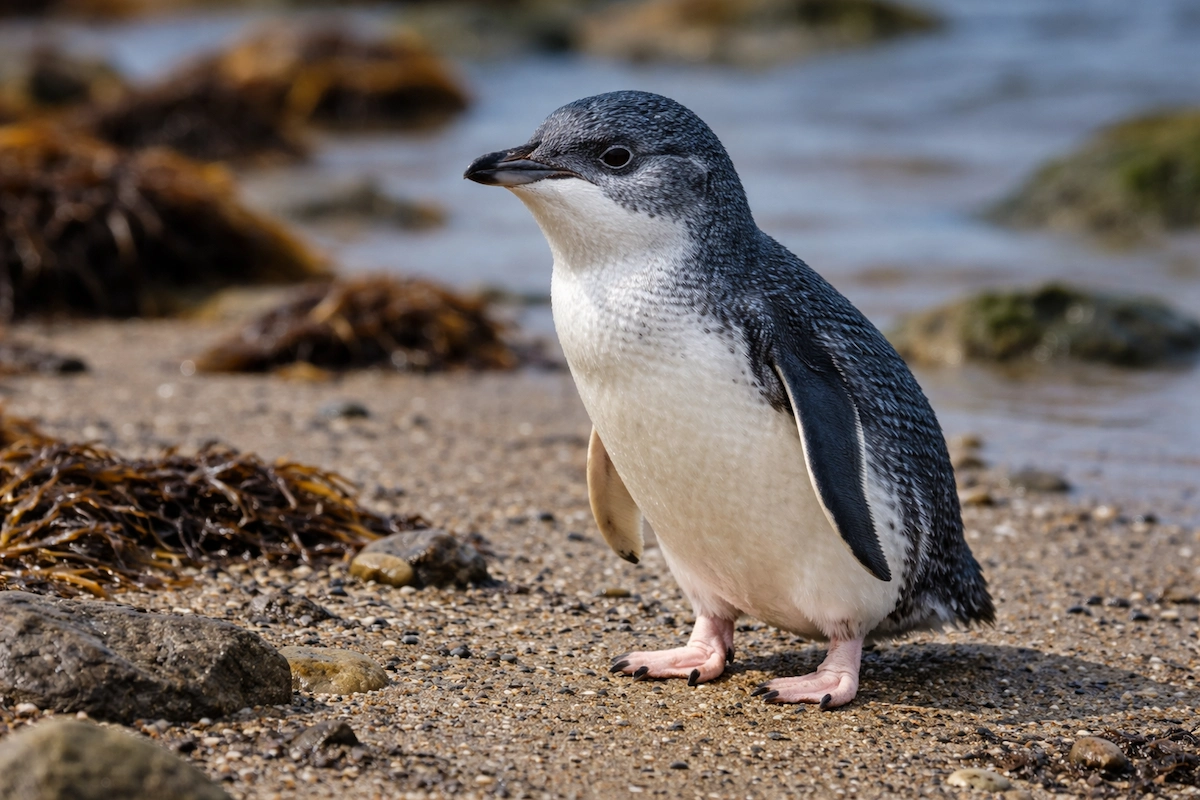
little blue penguin
Short definition: The word little blue penguin refers to the smallest penguin species, known for its bluish feathers and shy behavior, living along coastal areas of Australia and New Zealand, and often returning to shore at night in small groups.
Looking for a clear and natural explanation of the term little blue penguin? This penguin often appears in wildlife guides, documentaries, and coastal stories from Australia and New Zealand. A little blue penguin is known for its small size and its soft blue-gray feathers, which make it look different from most black-and-white penguins. Unlike penguins that live in icy regions, this species prefers milder coastal climates. Below, each meaning is explained in a calm and natural way, with long definitions and realistic examples.
Forms: little blue penguin (singular), little blue penguins (plural)
Related: penguin n., seabird n., fairy penguin n.
Syllable: lit-tle blue pen-guin
-
(Noun) A small penguin species with blue-gray feathers, native to coastal areas of Australia and New Zealand.
A little blue penguin is the smallest penguin species, famous for its blue-gray feathers. Instead of the classic black-and-white look, its back and flippers have a soft bluish tone that stands out in daylight. These penguins spend much of their time at sea hunting small fish and return to land mainly at night. Their small size makes them quick and agile swimmers, even though they look gentle and delicate on land.
At sunset, we saw a little blue penguin emerge from the waves and hurry across the beach toward its burrow.The guide explained that the little blue penguin looks blue because of the structure of its feathers, not because of pigment.Seeing a group of little blue penguins together made them look more like animated toys than wild seabirds.Synonyms: fairy penguin, blue penguin, small penguin, coastal penguin, Australasian penguin, seabird penguin, diving penguin, marine penguin, shore penguin, temperate penguin, island penguin, fish-eating penguin
Antonyms: emperor penguin, king penguin, large penguin, ice-dwelling penguin, flying bird, songbird, inland bird, forest bird, desert bird, freshwater bird, airborne bird, land mammal -
(Noun) A penguin species known for returning to shore after dark to avoid predators and human activity.
The little blue penguin is famous for its nighttime behavior. It usually comes ashore under the cover of darkness, moving quickly from the water to its nesting burrow. This habit helps reduce the risk from predators and human disturbance. When people talk about little blue penguins this way, they often mention evening “penguin parades.”
Tourists gathered quietly to watch the little blue penguins return to land just after sunset.The little blue penguin waited offshore until the beach was dark and calm.Nightfall is the safest time for a little blue penguin to cross the sand.Synonyms: nocturnal penguin, night-returning penguin, cautious penguin, predator-aware species, dusk-active penguin, evening penguin, low-visibility penguin, shore-returning penguin, nighttime seabird, careful penguin, night-active species, burrow penguin
Antonyms: daytime nester, open-coast breeder, exposed penguin, colony surface nester, daylight-active species, highly visible bird, open-beach penguin, fearless wildlife, human-tolerant species, surface breeder, bold penguin, unprotected nester -
(Noun) A penguin that nests in burrows, rock gaps, or sheltered coastal vegetation.
A little blue penguin usually builds its nest in hidden places such as burrows, crevices, or under thick plants. These sheltered nests protect eggs and chicks from weather and predators. Because nesting sites are close to human areas, this species often shares coastlines with towns and beaches. This makes careful habitat management especially important.
The little blue penguin slipped into a burrow hidden beneath coastal grass.Rangers marked nesting areas to protect little blue penguins from disturbance.A nesting little blue penguin will often use the same burrow year after year.Synonyms: burrow-nesting penguin, shelter-nesting penguin, coastal burrower, crevice-nesting seabird, protected-nest penguin, habitat-specialist penguin, ground-nesting penguin, hidden-nest species, shore-nesting penguin, adaptive penguin, land-nesting seabird, survival-adapted species
Antonyms: ice-nesting penguin, open-nesting penguin, exposed breeder, colony surface nester, unsheltered bird, open-area penguin, beach-surface nester, unprotected species, cliff-edge nester, open-coast breeder, surface breeder, non-burrowing species -
(Noun) (By extension) A symbol of approachable wildlife and coastal conservation in Australia and New Zealand.
Outside biology, the little blue penguin is often used as a friendly wildlife symbol. Its small size and gentle behavior make it popular in education, tourism, and conservation campaigns. In this sense, the penguin represents coexistence between people and wildlife along shared coastlines. It is frequently used to promote responsible tourism and habitat protection.
The conservation poster featured a little blue penguin to encourage visitors to protect coastal nests.Children easily connected with the little blue penguin because of its size and calm appearance.Using the little blue penguin as a mascot helped explain coastal conservation rules.Synonyms: wildlife symbol, coastal conservation icon, native-species emblem, nature mascot, seabird symbol, environmental icon, education mascot, biodiversity emblem, protected wildlife image, conservation emblem, coastal wildlife icon, friendly wildlife symbol
Antonyms: generic symbol, abstract icon, corporate logo, non-animal symbol, industrial emblem, urban icon, artificial image, text-only logo, mass-market branding, non-nature theme, commercial symbol, decorative graphic