Definition of mouth

Short definition: The word mouth refers to the part of the face used to speak, eat, and express emotion, and it can also describe the act of forming words silently or carelessly, depending on how it is used in a sentence.

Looking for a clear and natural explanation of the word mouth? The word mouth is very common in English and is used in both literal and figurative ways. Literally, it refers to the opening in the face used for speaking, eating, and breathing. Figuratively, it can describe openings, sources, or ways of speaking. You will hear it in daily conversation, writing, and many fixed expressions. Below, each meaning is explained in a calm and natural way, with enough detail to feel clear, human, and practical.

mouth n., v. /maʊθ/

Forms: mouth, mouths, mouthed, mouthing
Related: lips n., tongue n., speak v.
Syllable: mouth

  1. (Noun) The opening in the face used for speaking eating drinking and breathing.

    The mouth is the opening in the lower part of the face that contains the lips teeth and tongue and is used for talking eating drinking breathing and expressing emotions such as smiling or frowning.

    She covered her mouth in surprise when she heard the unexpected news during the meeting.
    He took a sip of water to clear his mouth before continuing his speech.
    The dentist carefully examined his mouth to check the condition of his teeth and gums.

    Synonyms: oral opening, lips and teeth area, oral cavity, face opening, speaking opening, eating opening, oral space, mouth area, oral region, speech organ, feeding opening, facial opening
    Antonyms: closed face, sealed lips, no opening, covered mouth, shut lips, blocked opening, silence state, closed expression, sealed face, no speech, no intake, stillness

  2. (Noun) An opening or entrance of something such as a river cave or container.

    In a broader sense, a mouth refers to the opening or entrance of a physical structure, such as where a river flows into the sea or where a cave tunnel begins, emphasizing the idea of entry or exit.

    The boat slowed down near the mouth of the river where the water met the open sea.
    They stood at the mouth of the cave unsure of what they would find inside.
    The mouth of the bottle was too narrow to pour the liquid quickly.

    Synonyms: opening, entrance, outlet, opening point, entryway, access point, opening end, passage entrance, inlet, opening section, front opening, gateway
    Antonyms: end, interior, closed area, sealed space, blockage, dead end, closed point, inner section, shut entrance, closed passage, interior core, blocked exit

  3. (Verb) To form words silently or speak without sound often in an exaggerated way.

    To mouth something means to move your lips as if speaking without making a sound, or to say words in a way that looks exaggerated or insincere, often used when sound cannot be heard or when criticizing how something is said.

    She mouthed the words thank you across the room so no one else would notice.
    He mouthed an apology during the presentation after realizing his mistake.
    The actor was criticized for mouthing the lines without real emotion.

    Synonyms: lip read motion, say silently, form words, move lips, speak without sound, exaggerate speech, lip movement, silent speaking, over articulate, fake saying, mime words, silent expression
    Antonyms: speak aloud, say clearly, voice, pronounce, articulate normally, speak out loud, express verbally, talk openly, state clearly, vocalize, say honestly, speak naturally
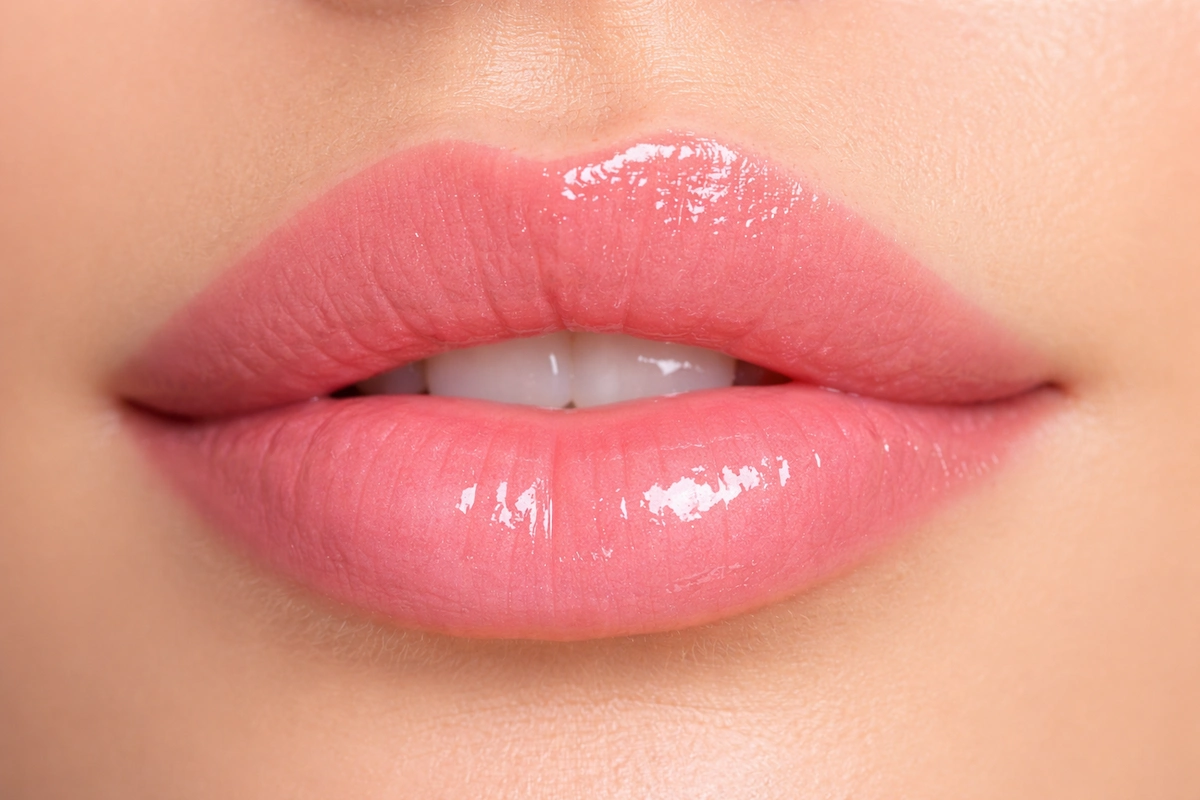
An Explanation of the Word "mouth" in an Image

Close-up of a human mouth showing glossy pink lips slightly open, focusing on lip shape, smooth texture, and natural detail without showing the full face.
A close-up view of a human mouth with soft pink, glossy lips slightly parted, highlighting natural lip texture, gentle shine, and the subtle appearance of teeth in a clean composition.

Conversation Using the Word Mouth

The following conversation takes place between two colleagues after a tense meeting. It shows how the word mouth is used naturally to talk about speaking, silence, and choosing words carefully in everyday English.

The conversation highlights how controlling what we say, or deciding not to speak, can sometimes be more important than reacting immediately.

Kevin: I almost said something during the meeting, but I stopped myself.

Laura: That was probably smart, sometimes it’s better to keep your mouth shut.

Kevin: Yeah, once you open your mouth, you can’t take the words back.

Laura: Exactly, especially when emotions are running high.

Kevin: I could feel my mouth getting dry just thinking about speaking up.

Laura: Same here, stress always shows up that way for me.

Kevin: I’m glad I waited.

Laura: Sometimes silence says more than words.

Phrases Containing the Word Mouth

The phrases below show how the word mouth is commonly used to describe speaking, eating, expression, and behavior in everyday English.

Open your mouth

To begin speaking or eating.

He opened his mouth to respond but stopped, realizing he needed to think more carefully first.

Shut your mouth

To stop talking.

She wanted to shut her mouth, knowing that saying anything more would only make things worse.

Keep your mouth shut

To remain silent.

He decided to keep his mouth shut about the plan until everything was confirmed.

Big mouth

A person who talks too much.

He was known as a big mouth, often sharing secrets without meaning to.

By word of mouth

Through spoken communication.

The restaurant became popular by word of mouth rather than advertising.

Mouth full

Unable to speak while eating.

She tried to answer, but her mouth was full and she had to wait.

Watch your mouth

Be careful what you say.

He was told to watch his mouth after making an inappropriate comment.

Mouth open

Open in surprise.

They stood there with their mouths open, shocked by the sudden announcement.

Put words in someone’s mouth

Claim someone said something they didn’t.

She felt uncomfortable when others started putting words in her mouth.

Mouth the words

To say something silently.

He mouthed the words along with the song without making a sound.

Mouth watering

Making you want to eat.

The smell of the food was so mouth watering that everyone grew hungry.

Mouth dry

A lack of saliva.

His mouth felt dry as he stood up to give the presentation.

Mouth closed

Not speaking.

She kept her mouth closed during the argument to avoid making things worse.

Mouth movement

Motion of lips.

The actor practiced every mouth movement to make the dialogue look natural.

Mouth habit

A repeated behavior.

Chewing gum had become a nervous mouth habit for him.

Mouth shape

The form of lips.

The mouth shape changes depending on the sounds being spoken.

Mouth expression

Emotion shown by lips.

A small smile at the corner of her mouth changed her entire expression.

Mouth breathing

Breathing through the mouth.

Mouth breathing can happen when someone has a cold or blocked nose.

Mouth movement practice

Training speech clarity.

Actors often do mouth movement practice before performing on stage.

Mouth closed smile

A subtle smile.

He gave a mouth closed smile, unsure of how to react.

Words Rhyme with mouth

south
drouth
couth
youth
truth
tooth
booth
sooth
sleuth
uncouth
vermouth
eyetooth
forsooth
untruth
tollbooth
phone booth
sweet tooth
houndstooth
wisdom tooth
word of mouth
down south
deep south
hand to mouth
north and south
bad-mouth
loud-mouth
big-mouth
dry-mouth
cotton-mouth
blue-mouth
POS: Noun, Verb  Category: Body Parts