ship

Short definition: The word ship refers to a large sea vessel built for long journeys, used to transport passengers, cargo, or perform specialized tasks, commonly traveling across oceans and major waterways.

Looking for a clear and natural explanation of the word ship? This word is very common in everyday English and is closely connected to travel, trade, and the sea. A ship is built to move people or goods across water, often over long distances. You’ll hear it in conversations about oceans, ports, history, and global commerce. Below, each meaning is explained in a calm and natural way, with enough detail to feel human and clear.

ship n., v. /ʃɪp/

Forms: ship, ships, shipped, shipping
Related: vessel n., cargo n., port n.
Syllable: ship

  1. (Noun) A large sea-going vessel designed to carry people or goods across water.

    A ship is a large watercraft built to travel on seas or oceans. Ships are commonly used for international trade, long journeys, and sometimes tourism. They are bigger and stronger than small boats and are designed to handle rough water. This is the most common and literal meaning of the word.

    The ship crossed the ocean carrying thousands of containers.
    Passengers watched the sunset from the deck of the ship.
    The old ship had sailed the same route for decades.

    Synonyms: vessel, sea vessel, cargo ship, passenger ship, ocean liner, maritime vessel, freight ship, seagoing craft, transport ship, commercial vessel, watercraft, naval ship
    Antonyms: car, bus, train, truck, airplane, helicopter, land vehicle, road transport, ground vehicle, walking, on foot, aircraft

  2. (Verb) To send or transport goods or items from one place to another.

    To ship something means to send it to a destination, often by truck, ship, or airplane. This usage is very common in business, online shopping, and logistics. It focuses on the movement of goods rather than the vehicle itself. The meaning is practical and widely used in daily life.

    The company will ship your order within two days.
    They shipped the furniture overseas.
    The seller promised to ship the package tomorrow.

    Synonyms: send, deliver, transport, dispatch, mail, forward, transfer, move goods, freight, post, carry, distribute
    Antonyms: receive, keep, hold, store, retain, collect, accept delivery, pick up, stop shipment, cancel sending, withhold, stock

  3. (Verb) To support or imagine a romantic relationship between characters or people.

    In informal and online contexts, ship means hoping two people will be or stay in a romantic relationship. This usage is common in fandoms, social media, and pop culture discussions. It is playful and emotional rather than literal. The meaning comes from the word “relationship.”

    Fans really ship the two main characters.
    She started to ship them after watching the series.
    Online communities love to ship fictional couples.

    Synonyms: support a couple, root for a pairing, imagine romance, favor a relationship, pair up mentally, romanticize characters, hope they end up together, endorse a couple, back a pairing, fantasize a relationship, cheer a romance, like them together
    Antonyms: oppose a pairing, dislike the couple, reject the romance, deny the relationship, break up support, ignore the pairing, separate characters, avoid romantic ideas, criticize the couple, disapprove of the match, end support, dismiss the ship
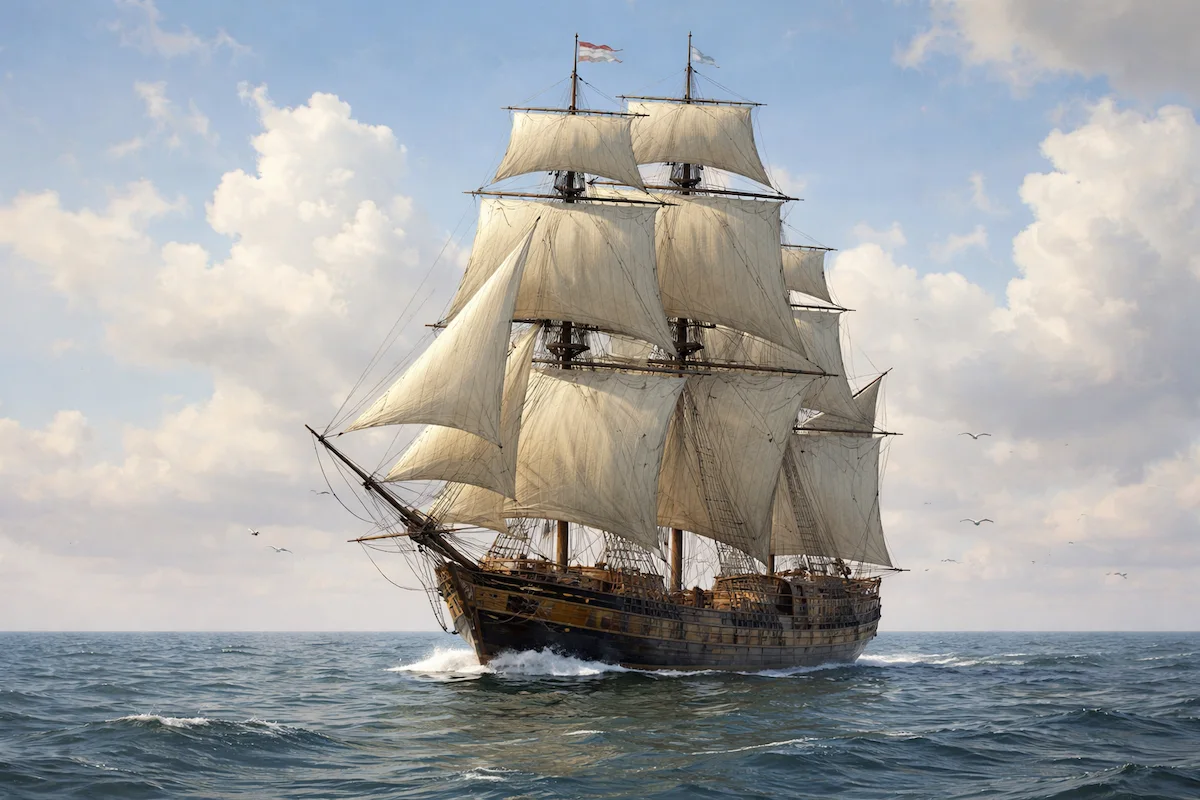
An Explanation of the Word "ship" in an Image

Classic sailing ship with large white sails moving across the ocean, showing tall masts, wooden hull, waves, and a clear sky.
A majestic traditional sailing ship gliding across the open sea, showcasing tall masts, billowing canvas sails, and classic wooden craftsmanship under a bright sky.

Conversation Using the Word Ship

At a busy international deep-water port, logistics managers Sebastian and Elena are overseeing the unloading of cargo. The dialogue explores the ship as the backbone of global trade, discussing massive container vessels, the complexities of maritime navigation, and the historical importance of sea travel.

Sebastian: That container ship is nearly four hundred meters long and can carry over twenty thousand metal crates at a single time.

Elena: It’s a giant; a ship of that scale requires a very deep harbor and a highly skilled pilot to guide it into the dock safely.

Sebastian: I noticed that the ship is registered in Panama, which is common for many large commercial vessels in the shipping industry.

Elena: I read that the average ship takes about two weeks to cross the Pacific Ocean, depending on the weather and the route chosen.

Sebastian: If we can't clear the ship through customs by tomorrow, the manufacturing plant will run out of raw materials for production.

Elena: I saw a luxury cruise ship departing the terminal earlier; it looked like a floating city with its own theaters and pools.

Sebastian: It’s amazing to think that every ship at sea has to follow strict international maritime laws to prevent collisions and pollution.

Elena: I agree; maintaining a ship is a constant battle against the corrosive effects of saltwater and the harsh marine environment.

Sebastian: I’m going to meet the ship's captain to finalize the manifest before the cranes start lifting the remaining containers today.

Elena: Good luck; once the ship is unloaded, it will head back to Singapore to begin the entire cycle of trade all over again.

Phrases Containing the Word Ship

The phrases below show how the word ship is used to talk about sea transport, international trade, travel, and large ocean vessels.

Board a ship

To get on a ship.

Passengers lined up early to board the ship for the long voyage.

Cargo ship

A ship that carries goods.

The cargo ship transported containers across the ocean.

Cruise ship

A ship for leisure travel.

The cruise ship offered entertainment, dining, and ocean views.

Ship captain

The person in command.

The ship captain guided the vessel safely through rough waters.

Ship crew

The people working on a ship.

The ship crew worked in shifts throughout the night.

Ship journey

A trip by ship.

The ship journey took several weeks across the Pacific.

Ship engine

The motor powering a ship.

The ship engine required constant monitoring during the voyage.

Ship arrival

The moment a ship reaches port.

The ship arrival was delayed due to bad weather.

Ship departure

The moment a ship leaves port.

The ship departure was announced over the loudspeaker.

Ship route

The planned sea path.

The ship route avoided dangerous waters.

Ship maintenance

Regular care of a ship.

Ship maintenance is crucial for long-term safety.

Ship transport

Moving goods or people by ship.

Ship transport remains vital for global trade.

Ship terminal

A port facility.

The ship terminal handled thousands of passengers daily.

Ship inspection

A safety check.

The ship inspection ensured compliance with regulations.

Ship navigation

The process of steering a ship.

Modern ship navigation relies on advanced technology.

Ship deck

The open area on a ship.

Passengers relaxed on the ship deck watching the sunset.

Ship harbor

A sheltered port area.

The ship waited in the harbor for clearance.

Ship traffic

Movement of ships.

Heavy ship traffic slowed port operations.

Ship voyage

A long sea journey.

The historic ship voyage changed trade routes forever.

Ship operations

Daily activities on a ship.

Ship operations continued around the clock.

Words Rhyme with ship

chip
clip
dip
drip
flip
grip
hip
lip
nip
quip
rip
sip
skip
slip
strip
tip
trip
whip
zip
equip
outstrip
spaceship
friendship
hardship
partnership
fellowship
leadership
membership
ownership
township
POS: Noun, Verb  Category: Vehicles