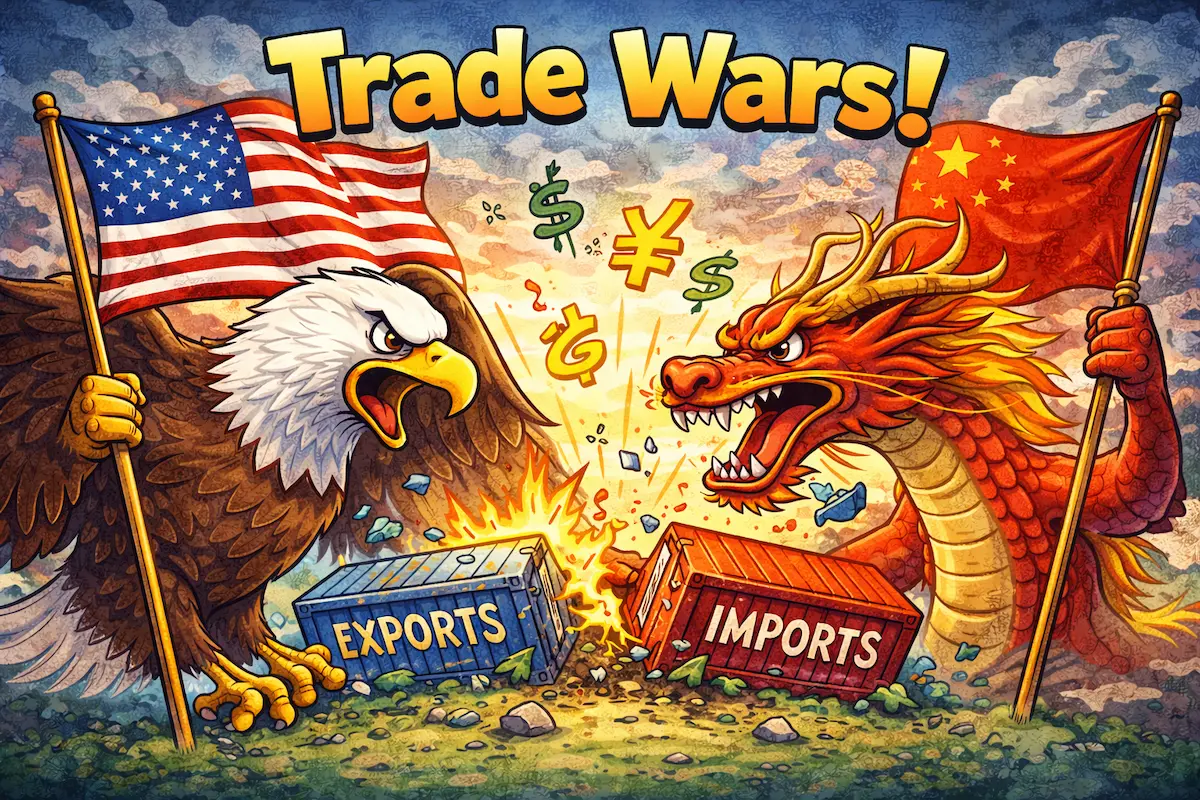
trade wars
Short definition: The term trade wars means a situation where countries keep raising taxes and limits on each other’s goods, creating tension in business and politics, and often making prices higher for both companies and ordinary people.
Looking for a clear and natural explanation of the term trade wars? The phrase trade wars is used when countries compete in the economic world instead of on the battlefield. It usually happens when one country raises taxes on imports, and other countries respond with the same action. These moves can affect businesses, workers, and everyday people through higher prices and fewer choices in the market. Below, each meaning is explained in a simple and human way, so it feels clear even if economics is not your main interest.
Forms: trade war, trade wars
Related: tariff n., sanction n., protectionism n.
Syllable: trade wars
-
An economic conflict between countries.
Trade wars happen when countries try to protect their own industries by putting taxes or limits on foreign goods. Other countries often reply with the same actions, creating a cycle of economic pressure. Instead of helping everyone, this usually makes trade harder for all sides.
The two nations entered a serious trade war over steel imports.Trade wars can hurt small businesses the most.Farmers struggled during the long trade war.Synonyms: economic conflict, tariff battle, trade dispute, economic rivalry, import tax fight, trade tension, commercial conflict, protectionist clash, market struggle, economic standoff, trade confrontation, tariff conflict
Antonyms: free trade, economic cooperation, open markets, trade partnership, global trade harmony, commercial peace, market cooperation, trade agreement, economic unity, international cooperation, mutual trade benefit, open exchange -
A situation that causes higher prices for consumers.
In daily life, trade wars often mean people pay more for goods. When governments increase import taxes, companies usually raise their prices. This makes everyday items more expensive and limits choices in stores.
The trade war caused food prices to rise.Shoppers felt the impact of ongoing trade wars.Electronics became more costly during the trade war.Synonyms: price-raising conflict, cost-increasing dispute, tariff-driven inflation, consumer burden conflict, market price war, expense-boosting trade fight, inflation pressure conflict, trade-cost battle, economic cost struggle, price-impact war, spending strain conflict, buyer-impact dispute
Antonyms: price stability, affordable trade, low-cost market, consumer-friendly trade, cost-saving policies, open pricing, budget-friendly economy, free-market pricing, stable costs, fair trade pricing, low-price environment, economic balance -
A political tool used to pressure other countries.
Governments sometimes use trade wars to gain influence over other nations. Instead of using military force, they use trade rules and market power. This turns economic policy into a form of political pressure.
Leaders used the trade war to demand fairer trade deals.The conflict became more political than economic.Trade wars often appear in power struggles.Synonyms: economic pressure tactic, financial power play, trade leverage strategy, political economy tool, market control method, economic weapon, trade-based influence, tariff diplomacy, commercial pressure tactic, policy-driven conflict, economic bargaining tool, strategic trade move
Antonyms: peaceful diplomacy, political cooperation, friendly negotiations, mutual agreement strategy, open dialogue, conflict-free policy, international teamwork, diplomatic solution, cooperative politics, peaceful relations, shared decision-making, global partnership -
A situation that affects the global economy.
Large trade wars can shake the world economy. When powerful countries clash over trade, smaller nations often feel the effects too. This can slow growth and create worldwide uncertainty.
Global markets reacted to rising trade wars.Investors worried about the long trade war.World leaders met to reduce trade war tensions.Synonyms: global economic tension, international trade conflict, worldwide market struggle, cross-border trade battle, global tariff clash, economic instability factor, world trade dispute, international market pressure, global trade tension, worldwide economic strain, trade-based global conflict, market uncertainty driver
Antonyms: global stability, international cooperation, world trade harmony, economic balance worldwide, peaceful global markets, stable international trade, shared growth, worldwide economic calm, global partnership, open-border trade peace, international economic unity, cooperative world economy -
A modern form of rivalry between nations.
In the modern world, trade wars have become a common way for countries to compete. Instead of fighting with weapons, they compete in markets and industries. This makes trade wars a key feature of today’s global relations.
Many see trade wars as the new kind of conflict.Rivalry moved from battlefields to markets.Trade wars shape modern international politics.Synonyms: modern economic rivalry, market-based conflict, commercial competition clash, trade-centered struggle, economic competition war, industry rivalry conflict, market-power contest, business-based confrontation, trade rivalry, economic dominance fight, industrial competition war, market influence struggle
Antonyms: peaceful coexistence, cooperative competition, friendly rivalry, shared economic growth, joint development, fair competition, collaborative trade, mutual benefit system, peaceful progress, cooperative markets, shared success, balanced competition