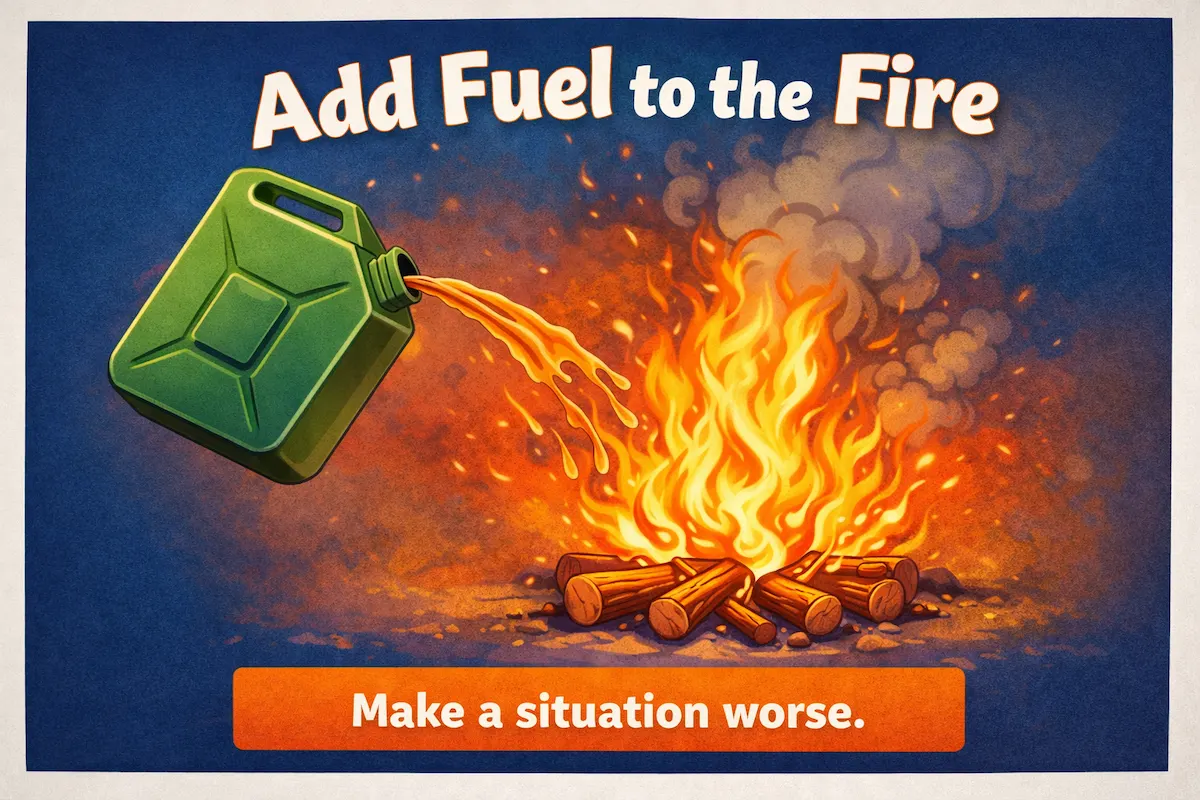
add fuel to the fire
Short definition: The phrase add fuel to the fire means to make a bad or tense situation even worse by saying or doing something that increases anger, conflict, or trouble, instead of calming things down or helping resolve the problem.
Looking for a clear and natural explanation of the phrase add fuel to the fire? This idiom is very common in spoken and written English, especially when talking about conflicts, arguments, or tense situations. To add fuel to the fire means making a bad situation even worse instead of calming it down. You will often hear it in news reports, personal stories, and everyday conversations. Below, each meaning is explained in a calm and natural way, with long definitions and realistic examples.
Forms: add fuel to the fire (fixed idiom)
Related: escalate v., provoke v., worsen v.
Syllable: add fu-el to the fire
-
(Idiom) To make a bad, tense, or dangerous situation even worse through words or actions.
To add fuel to the fire means doing or saying something that increases anger, conflict, or trouble. Instead of calming people down, the action causes emotions to rise even higher. This idiom is often used when someone reacts carelessly or intentionally provokes others. It applies to arguments, rumors, political conflicts, and personal disagreements.
His sarcastic comment only added fuel to the fire during an already heated argument.Sharing the rumor online just added fuel to the fire and made the situation spiral out of control.Instead of apologizing, she defended herself, which only added fuel to the fire.Synonyms: make things worse, escalate the situation, intensify conflict, worsen matters, provoke further, inflame tensions, stir up trouble, aggravate the issue, fan the flames, heighten anger, pour oil on the fire, increase hostility
Antonyms: calm things down, defuse the situation, ease tensions, settle the conflict, cool things off, smooth things over, reduce anger, de-escalate, make peace, quiet the dispute, resolve the issue, soothe emotions -
(Idiom) To unintentionally worsen a problem by reacting emotionally or without thinking.
Sometimes people add fuel to the fire without meaning to. This happens when someone reacts too quickly, speaks without thinking, or responds emotionally. Even good intentions can lead to negative results if the timing or wording is wrong. This sense emphasizes carelessness rather than deliberate provocation.
Trying to explain himself while angry only added fuel to the fire.Her emotional response added fuel to the fire instead of fixing the misunderstanding.Jumping into the argument too early added fuel to the fire for everyone involved.Synonyms: worsen unintentionally, make matters worse, escalate accidentally, inflame emotions, intensify problems, aggravate tensions, complicate things, increase conflict, stir emotions, spark further trouble, worsen the outcome, provoke reactions
Antonyms: calm unintentionally, ease the situation, prevent escalation, reduce tension, avoid conflict, stay neutral, hold back, pause before reacting, think carefully, act gently, cool the mood, maintain peace