redshank

Short definition: The word redshank refers to a wading bird with long red legs and a straight bill, commonly found in wetlands and coastal areas, known for its alert behavior, loud calls, and quick movements while foraging.

Looking for a clear and natural explanation of the word redshank? The word redshank is mainly used in birdwatching, wildlife studies, and nature writing. It refers to a familiar shorebird known for its bright red legs and loud ringing call. You will hear it in discussions about wetlands, rivers, marshes, and coastal mudflats, especially in Europe and Asia. Although not common in everyday conversation, it appears frequently in field guides and birding reports. Below, each meaning is explained in a calm and natural way, with enough detail to feel clear, human, and informative.

redshank n. /ˈrɛdˌʃæŋk/

Forms: redshank, redshanks
Related: shorebird n., wader n., sandpiper n.
Syllable: red-shank

  1. (Noun) A medium sized shorebird with bright red legs and a slender bill often seen wading in shallow water.

    A redshank is a common migratory wading bird easily recognized by its vivid red legs slim body and straight bill, typically found in wetlands rivers estuaries and coastal mudflats where it feeds on insects worms and small aquatic animals.

    The redshank walked briskly along the edge of the marsh its bright red legs standing out clearly against the muddy water.
    Birdwatchers quickly identified the redshank as it flew past calling loudly above the wetland.
    During migration redshanks often gather in large numbers on tidal flats to rest and feed.

    Synonyms: shorebird, wading bird, sandpiper, wetland bird, long legged wader, migratory wader, water edge bird, marsh bird, coastal wader, probing bird, aquatic feeder, migratory shorebird
    Antonyms: forest bird, tree dwelling bird, domestic bird, flightless bird, inland land bird, raptor, seed eating bird, woodland species, urban bird, non migratory bird, ground running bird, landlocked species

  2. (Noun) A shorebird known for its loud clear calls and alert defensive behavior.

    Redshanks are also known for their sharp ringing calls and vigilant behavior, often calling repeatedly when disturbed and acting as warning birds in open wetland environments.

    The loud repeated call of a redshank echoed across the wetland as people approached the nesting area.
    Its constant calling made the redshank easy to locate even before it came into view.
    Researchers note that redshanks often react quickly to potential threats in open habitats.

    Synonyms: vocal shorebird, alert wader, warning bird, vigilant species, loud calling bird, defensive wader, watchful shorebird, signaling bird, protective wetland bird, awareness species, early warning bird, attentive bird
    Antonyms: silent bird, passive species, quiet shorebird, non vocal animal, indifferent bird, unalert species, calm wildlife, non defensive bird, unaware animal, quiet feeder, low response species, inactive bird
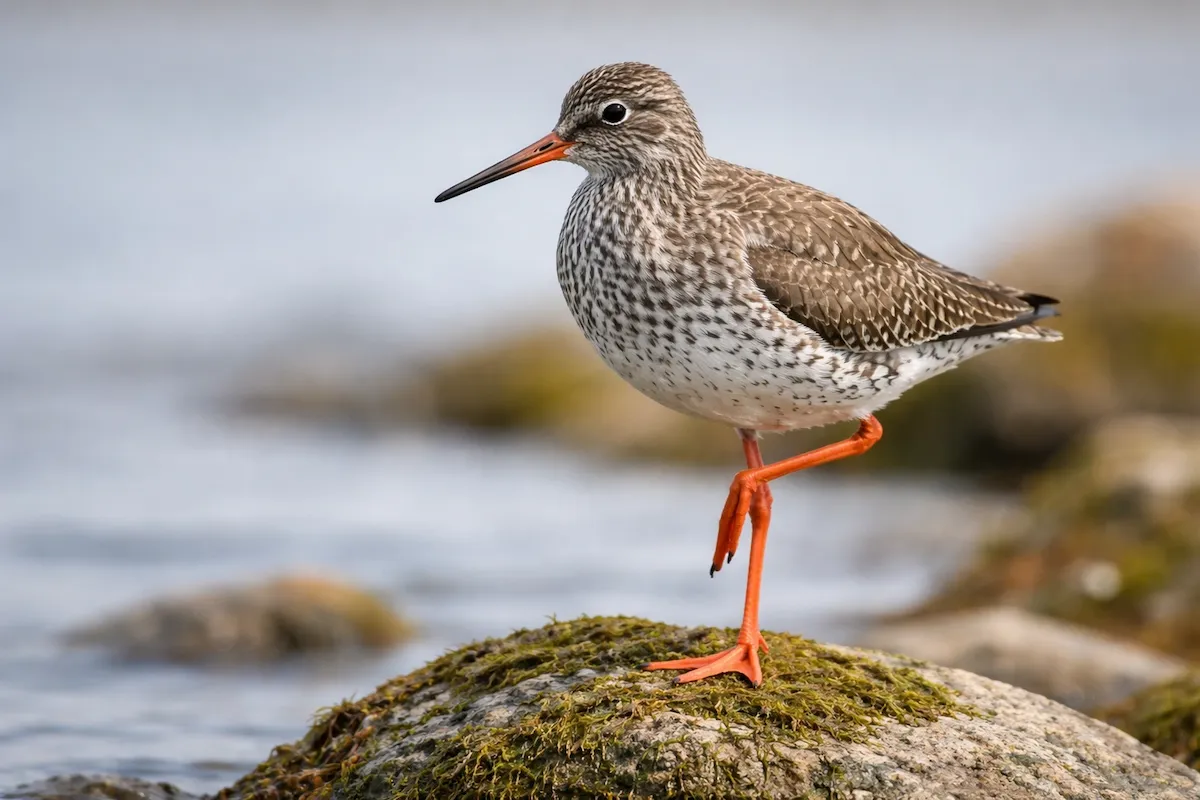
An Explanation of the Word "redshank" in an Image

A redshank bird standing on a rock near shallow water, showing vivid red legs, a thin bill with an orange base, mottled brown feathers, and a soft coastal background.
A sharp wildlife photograph of a redshank perched on a mossy rock by the water, highlighting its bright red legs, slender bill with an orange base, and finely speckled brown plumage.

Conversation Using the Word Redshank

This conversation takes place on a salt marsh between Julian and Fiona. It focuses on the redshank's bright legs and its reputation as the "sentinel of the marsh."

Julian: Be careful not to startle that redshank, Fiona, or it will alert every other bird in the marsh.

Fiona: Why is the redshank so much noisier than all the other shorebirds we've seen today?

Julian: They are known as the "sentinels of the marsh" because a redshank will scream at the slightest sign of danger.

Fiona: I can certainly see why they are called that; those bright orange-red legs on the redshank are impossible to miss.

Julian: The color becomes even more intense during the breeding season, making the redshank quite a handsome bird.

Fiona: Look at how the redshank bobbles its body up and down while it's standing on that wooden post.

Julian: That "teetering" motion is very common in many waders, but the redshank does it with a lot of energy.

Fiona: Does the redshank have any specific markings on its wings that we should look for when it flies?

Julian: Yes, keep an eye out for a very wide white triangular patch on the back of the redshank's wings.

Fiona: There it goes! The redshank just took off and its wings are flashing white exactly as you described.

Julian: Its noisy nature can be annoying for hunters, but for us, the redshank is a great indicator of a healthy wetland.

Fiona: I’ve grown to appreciate the redshank's bold personality; it certainly keeps things lively around here.

Phrases Containing the Word Redshank

The phrases below show how the word redshank is used to describe elegant wading birds, their bright legs, sharp calls, and activity in wetlands and coastal habitats.

Common redshank

A well-known redshank species.

The common redshank walked briskly through shallow water, flashing its bright red legs with every step.

Redshank wading slowly

A redshank moving through water.

The redshank wading slowly paused often to watch for movement beneath the surface.

Redshank calling loudly

A redshank making its sharp call.

The redshank calling loudly echoed across the marsh and warned other birds nearby.

Redshank feeding actively

A redshank searching for food.

The redshank feeding actively chased small insects through shallow pools.

Redshank behavior

The typical actions of redshanks.

Redshank behavior is alert, vocal, and constantly energetic.

Redshank in coastal wetlands

A redshank living near the sea.

A redshank in coastal wetlands fed along muddy channels as the tide receded.

Redshank silhouette

The outline of a redshank.

The redshank silhouette showed long legs and a slender bill.

Redshank in early morning

A redshank active at dawn.

The redshank in early morning light moved steadily through the misty marsh.

Redshank near marsh edges

A redshank close to vegetation.

A redshank near marsh edges stayed alert for predators.

Redshank chasing prey

A redshank pursuing food.

The redshank chasing prey splashed energetically through shallow water.

Redshank flock

A group of redshanks together.

A redshank flock gathered briefly before lifting off together.

Redshank feeding at low tide

A redshank hunting on exposed mud.

The redshank feeding at low tide explored the mudflat carefully.

Redshank resting quietly

A redshank pausing activity.

The redshank resting quietly stood motionless on one leg.

Redshank pair

Two redshanks together.

A redshank pair foraged side by side along the water’s edge.

Redshank across tidal flats

A redshank seen at a distance.

A redshank across tidal flats moved with quick, confident strides.

Redshank watching carefully

A redshank staying alert.

The redshank watching carefully froze at sudden movement nearby.

Redshank in breeding season

A redshank active while nesting.

Redshank in breeding season became especially vocal and defensive.

Redshank feeding quietly

A redshank eating calmly.

The redshank feeding quietly focused on tiny invertebrates.

Redshank near shallow pools

A redshank using calm water.

A redshank near shallow pools hunted methodically.

Familiar redshank

A redshank often seen in the same place.

The familiar redshank returned each year to the same wetland.

Words Rhyme with redshank

bank
blank
crank
drank
frank
hank
lank
plank
rank
sank
tank
thank
yank
clank
flank
spank
swank
prank
shrank
outrank
mountebank
sandbank
gas tank
think tank
point blank
databank
snowbank
riverbank
disembark
greenshank
POS: Noun  Category: Birds