willet

Short definition: The word willet refers to a medium-sized shorebird with long legs and a sturdy bill, commonly found along coastlines and wetlands, known for its loud piercing calls and bold black-and-white wing pattern in flight.

Looking for a clear and natural explanation of the word willet? The word willet is mainly used in birdwatching, wildlife studies, and coastal nature writing. It refers to a large sturdy shorebird known for its loud calls and bold wing patterns in flight. You will hear it in discussions about beaches, salt marshes, mudflats, and coastal wetlands, especially in North America. Although not common in everyday conversation, it appears often in field guides and birding reports. Below, each meaning is explained in a calm and natural way, with enough detail to feel clear, human, and informative.

willet n. /ˈwɪlɪt/

Forms: willet, willets
Related: shorebird n., wader n., sandpiper n.
Syllable: wil-let

  1. (Noun) A large gray brown shorebird with a strong bill and bold black and white wing pattern visible in flight.

    A willet is a robust shorebird commonly found along coasts and wetlands, recognized by its plain gray brown appearance when standing and its striking black and white wing pattern that becomes visible only when it takes flight.

    The willet stood quietly on the mudflat blending into the gray surroundings until it suddenly flew up revealing its bold wing markings.
    Birdwatchers often identify a willet more easily in flight than when it is resting on the shore.
    Willets forage along beaches and tidal flats searching for small crabs insects and marine worms.

    Synonyms: shorebird, wading bird, sandpiper, coastal bird, wetland bird, large wader, beach bird, tidal flat bird, migratory shorebird, probing bird, marine feeder, coastal wader
    Antonyms: forest bird, tree dwelling bird, domestic bird, flightless bird, inland land bird, raptor, seed eating bird, woodland species, urban bird, non migratory bird, ground running bird, landlocked species

  2. (Noun) A shorebird known for loud repeated calls and strong territorial behavior near nesting areas.

    Willets are also known for their loud piercing calls and defensive behavior, especially during breeding season when they aggressively warn intruders and protect nests in open coastal habitats.

    The willet called loudly again and again as people walked too close to its nesting area on the beach.
    Its sharp voice often alerts other birds to potential danger along the shoreline.
    Researchers note that willets are among the most vocal shorebirds in breeding territories.

    Synonyms: vocal shorebird, alert wader, warning bird, territorial shorebird, defensive wader, loud calling bird, nest guarding bird, vigilant species, signaling bird, protective coastal bird, early warning bird, attentive bird
    Antonyms: silent bird, passive species, quiet shorebird, non vocal animal, indifferent bird, unalert species, calm wildlife, non defensive bird, unaware animal, quiet feeder, low response species, inactive bird
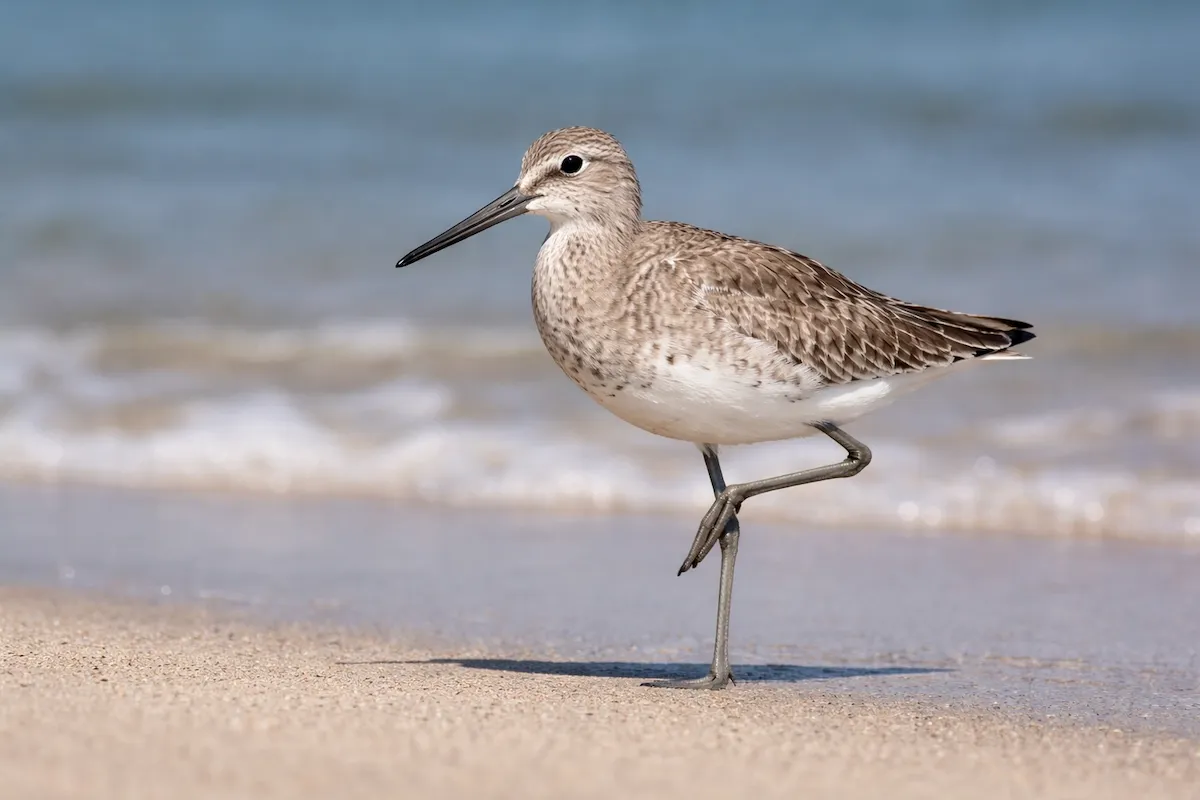
An Explanation of the Word "willet" in an Image

A willet bird standing on wet sand near gentle waves, showing a straight dark bill, pale brown-gray feathers, strong gray legs, and a calm seaside background.
A detailed wildlife photograph of a willet standing on a sandy shoreline, highlighting its sturdy gray legs, straight dark bill, softly patterned brown-gray plumage, and relaxed coastal posture.

Conversation Using the Word Willet

This conversation takes place on a sandy beach between Mark and Julian. It describes the willet's plain appearance when standing versus its striking pattern in flight.

Mark: That gray bird standing near the surf looks a bit plain compared to the others, doesn't it?

Julian: Don't be fooled by its looks while it's still; that’s a willet, and it has a big surprise when it flies.

Mark: Wait, the willet just took off! Look at those amazing black-and-white stripes on its wings!

Julian: It’s a total transformation; the willet goes from a dull gray to a bold, flashing pattern in a second.

Mark: I can hear it calling now—it sounds like it's saying its own name over and over again.

Julian: Exactly, the "pill-will-willet" cry is one of the most recognizable sounds on the Atlantic coast.

Mark: This willet seems much larger and heavier than the sandpipers running around its feet.

Julian: It is; the willet is a large, sturdy shorebird that can handle rougher surf than the smaller species.

Mark: Does the willet stay here all year, or is it just passing through during the winter months?

Julian: Some populations of willet stay in the south, while others migrate far north to breed in the prairies.

Mark: I really appreciate how the willet stands its ground even when the waves get quite high.

Julian: It’s a very confident bird; I’ve always admired the willet for its boldness and that secret wing pattern.

Phrases Containing the Word Willet

The phrases below show how the word willet is used to describe sturdy shorebirds, bold wing patterns, and calm feeding behavior along coasts and wetlands.

Eastern willet

A well-known willet population.

The eastern willet stood quietly along the shoreline, blending perfectly with sand and shells.

Willet wading calmly

A willet moving through shallow water.

The willet wading calmly showed little concern for nearby movement.

Willet calling loudly

A willet making its piercing call.

The willet calling loudly broke the quiet of the coastal marsh.

Willet feeding steadily

A willet searching for food.

The willet feeding steadily probed the sand with slow, deliberate movements.

Willet behavior

The typical actions of willets.

Willet behavior is calm, deliberate, and surprisingly vocal when disturbed.

Willet in coastal wetlands

A willet living near the sea.

A willet in coastal wetlands fed along muddy channels.

Willet silhouette

The outline of a willet.

The willet silhouette appeared chunky with a straight bill.

Willet in early morning

A willet active at dawn.

The willet in early morning light moved slowly through calm water.

Willet near marsh edges

A willet close to vegetation.

A willet near marsh edges remained alert but unhurried.

Willet chasing prey

A willet pursuing food.

The willet chasing prey moved with short, quick steps.

Willet flock

A group of willets together.

A willet flock gathered quietly near the shoreline.

Willet feeding at low tide

A willet hunting on exposed sand.

The willet feeding at low tide explored the beach carefully.

Willet resting quietly

A willet pausing activity.

The willet resting quietly stood motionless as waves passed nearby.

Willet pair

Two willets together.

A willet pair foraged side by side along the shoreline.

Willet across tidal flats

A willet seen at a distance.

A willet across tidal flats moved with steady, unhurried steps.

Willet watching carefully

A willet staying alert.

The willet watching carefully lifted its head at every sound.

Willet in breeding season

A willet active while nesting.

Willet in breeding season became far more vocal and defensive.

Willet feeding quietly

A willet eating calmly.

The willet feeding quietly focused on small crustaceans.

Willet near shallow pools

A willet using calm water.

A willet near shallow pools searched patiently for food.

Familiar willet

A willet often seen in the same place.

The familiar willet returned each season to the same stretch of coast.

Words Rhyme with willet

it
bit
fit
hit
kit
lit
pit
sit
wit
knit
quit
split
admit
submit
permit
bullet
skillet
fillet
billet
toilet
spirit
merit
ferret
inherit
habit
rabbit
limit
unit
profit
benefit
POS: Noun  Category: Birds