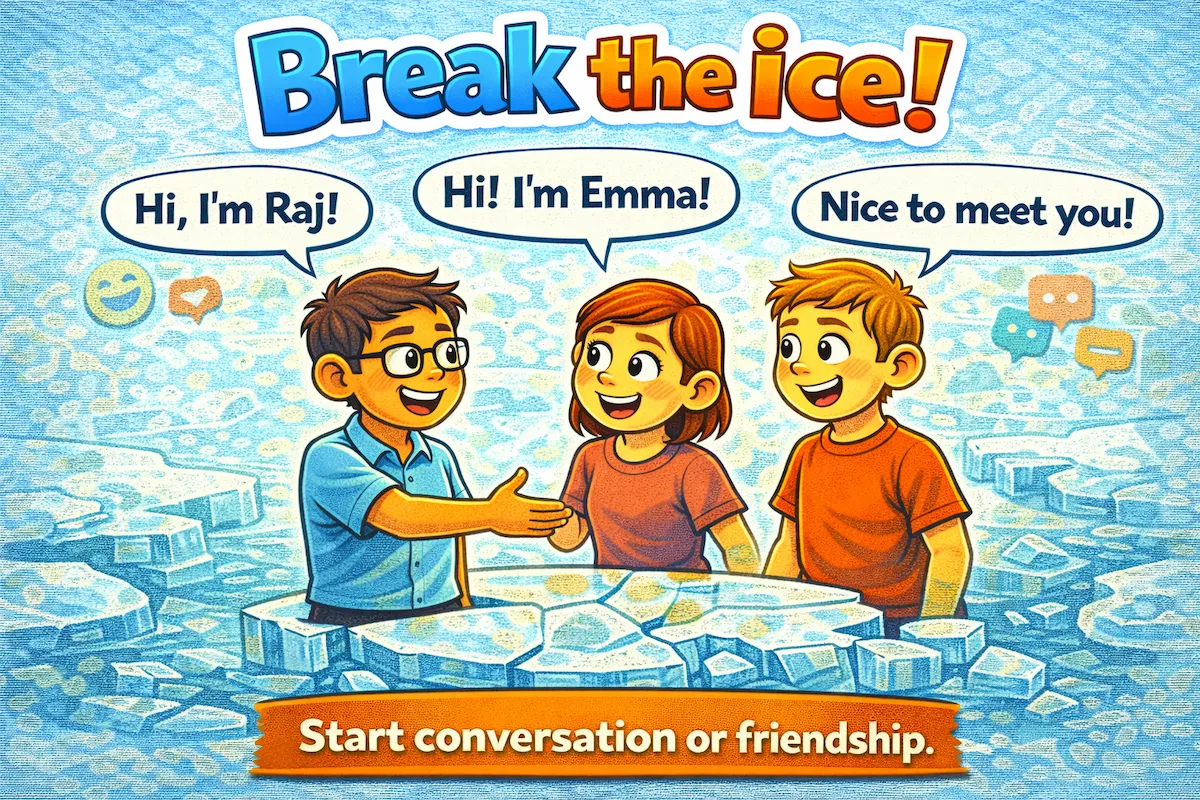
Conversation Using the Idiom Break the ice
At a networking event for young entrepreneurs, organizers Sebastian and Elena are discussing the atmosphere. This conversation highlights the idiom break the ice, which means to say or do something to make people feel more relaxed and comfortable, especially at the beginning of a meeting or social gathering.
Sebastian: The room feels a bit stiff; I should probably start with a joke to break the ice before the keynote speaker arrives.
Elena: That’s a good idea; a little bit of humor is usually the best way to break the ice in a room full of strangers.
Sebastian: I read that 'break the ice' activities are essential for team-building because they encourage people to start communicating more freely.
Elena: I noticed that asking people about their favorite travel destination is an easy way to break the ice during the cocktail hour.
Sebastian: If we don't break the ice now, the group might stay in their small clusters and miss out on valuable networking opportunities.
Elena: I saw a host use a quick trivia game to break the ice, and the energy in the room improved almost immediately.
Sebastian: It’s always the hardest part of any event, but once you break the ice, the rest of the evening usually flows very naturally.
Elena: I agree; I’ll go and introduce a few people to each other to help break the ice at the back of the room.
Sebastian: I’m glad we planned for this; by taking the initiative to break the ice, we’ve made the event much more welcoming.
Elena: Me too; it’s much better to break the ice early than to let the silence continue for the entire first hour.
Phrases Containing the Expression Break the Ice
The phrases below show how the expression break the ice is used to describe
making people feel more relaxed, starting friendly conversation, and reducing awkwardness in new situations.
Break the ice
To reduce tension and make a situation less awkward.
To break the ice, he started with a friendly comment about how everyone survived a busy week and deserved a calmer meeting.
Break the ice with a joke
To ease awkwardness by using humor.
She broke the ice with a joke that was simple and kind, so everyone relaxed without feeling like they were being put on the spot.
Break the ice with small talk
To start conversation casually.
He tried to break the ice with small talk about the city, the food, and the weather, and it slowly turned strangers into a real group.
Break the ice at a meeting
To help people feel comfortable before serious discussion.
The manager broke the ice at the meeting by asking everyone to share one quick win from the week, which instantly warmed up the room.
Break the ice at a party
To start conversations and help guests connect.
To break the ice at the party, she introduced people with a fun detail—like a shared hobby—so the conversation had an easy starting point.
Break the ice in a new team
To build comfort among people who just met.
On the first day, they broke the ice in a new team by doing a short activity that let everyone speak without pressure or embarrassment.
Break the ice in class
To help students relax and participate.
The teacher broke the ice in class by letting students share a personal interest, making the room feel safer for speaking up later.
Break the ice during introductions
To make introductions feel natural.
He broke the ice during introductions by telling a short story about his first awkward day on the job, which made everyone laugh and relate.
Break the ice with a question
To start conversation by asking something friendly.
She broke the ice with a question about weekend plans, and it worked because it was light, open-ended, and easy to answer.
Break the ice quickly
To ease awkwardness fast.
He broke the ice quickly by complimenting the host’s effort and thanking everyone for coming, which immediately lowered the tension.
Break the ice gently
To ease tension without forcing anyone.
She broke the ice gently by speaking to one person at a time, letting the group warm up naturally instead of pushing everyone to perform.
Break the ice naturally
To make people comfortable in an effortless way.
He broke the ice naturally by listening well and responding thoughtfully, which made the conversation feel real instead of scripted.
Break the ice at work
To reduce workplace awkwardness and build rapport.
To break the ice at work, she invited the new hire for a short coffee chat so they could ask questions without feeling judged.
Break the ice before a presentation
To relax the audience before speaking.
He broke the ice before the presentation by admitting he was a little nervous too, which made the audience feel supportive rather than critical.
Break the ice in an interview
To make the interview feel less tense.
The interviewer broke the ice by asking about the candidate’s commute and thanking them for coming, which helped the candidate speak more confidently.
Break the ice through humor
To relax people by making them laugh.
She broke the ice through humor, but she kept it gentle and inclusive so nobody felt targeted or uncomfortable.
Break the ice with a compliment
To start warmly by saying something positive.
He broke the ice with a compliment about her work, and the conversation quickly moved from formal to friendly and cooperative.
Break the ice over coffee
To start talking in a casual setting.
They broke the ice over coffee by sharing small stories about their backgrounds, which made later collaboration feel much easier.
Break the ice in a tense situation
To reduce tension when people feel stressed.
He tried to break the ice in a tense situation by acknowledging the stress openly and suggesting a calm, step-by-step way forward.
Icebreaker to break the ice
A simple activity or question used to make people comfortable.
They used a quick icebreaker to break the ice, and within minutes the group felt more connected and willing to share ideas.