lapwing

Short definition: The word lapwing means a medium-sized wading bird with broad rounded wings and a distinctive crest, often found in open fields or wetlands, known for tumbling flight displays and sharp, expressive calls.

Looking for a clear and natural explanation of the word lapwing? The word lapwing is mainly used in birdwatching, wildlife writing, and nature studies. It refers to a striking shorebird known for its broad wings, slow flapping flight, and distinctive crest in some species. You will hear it in discussions about wetlands, open fields, and migratory birds across Europe and Asia. Although not a common word in daily conversation, it appears often in nature guides and documentaries. Below, each meaning is explained in a calm and natural way, with enough detail to feel clear, human, and informative.

lapwing n. /ˈlæpwɪŋ/

Forms: lapwing, lapwings
Related: plover n., shorebird n., wader n.
Syllable: lap-wing

  1. (Noun) A medium sized shorebird with broad rounded wings and a slow fluttering flight often seen in open fields or wetlands.

    A lapwing is a type of plover known for its wide wings distinctive flight pattern and bold markings, commonly found in open farmland wetlands and grasslands where it feeds on insects and small invertebrates.

    The lapwing circled low over the field with its slow flapping wings making it easy to recognize even from a distance.
    Farmers often see lapwings nesting on open ground where their eggs blend into the soil.
    During migration large groups of lapwings can be seen resting in shallow wetlands.

    Synonyms: plover, shorebird, wading bird, ground nesting bird, open land bird, migratory shorebird, wetland bird, farmland bird, crested plover, wild wader, grassland bird, field bird
    Antonyms: forest bird, tree dwelling bird, domestic bird, cage bird, flightless bird, urban bird, raptor, large predator bird, woodland species, waterfowl, non migratory bird, arboreal bird

  2. (Noun) A bird known for loud calls and defensive behavior to protect its nest.

    Lapwings are also known for their loud warning calls and aggressive defensive behavior, often diving at intruders to protect their nests and chicks on open ground.

    The lapwing called loudly and swooped low when a person walked too close to its nesting area.
    This defensive behavior helps lapwings protect their eggs in exposed fields.
    Birdwatchers are advised to keep distance when lapwings begin their warning displays.

    Synonyms: defensive bird, nest guarding bird, warning calling shorebird, protective plover, aggressive defender, ground nest protector, alert bird, vigilant shorebird, territorial bird, defensive wader, nest defender, watchful bird
    Antonyms: passive bird, non defensive species, nest abandoning bird, indifferent animal, non territorial species, careless nester, unprotective bird, quiet species, non aggressive bird, defenseless wildlife, unaware animal, exposed nester
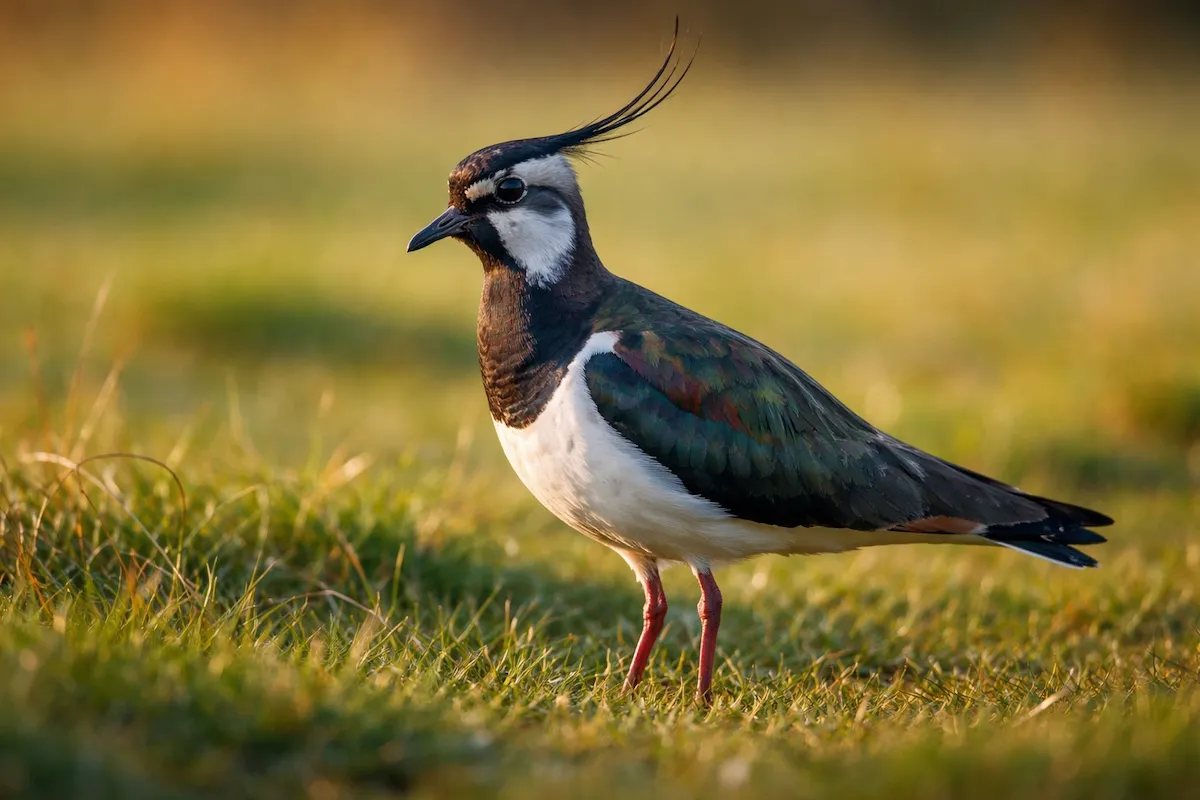
An Explanation of the Word "lapwing" in an Image

A lapwing bird standing on grassy ground, showing its long black crest, dark iridescent wings, white belly, and slender red legs against a blurred natural background.
A clear wildlife photograph of a lapwing standing on open grassland, highlighting its distinctive head crest, iridescent green wings, white chest, and elegant posture in soft natural light.

Conversation Using the Word Lapwing

This conversation takes place in the English countryside between Arthur and Grace. It focuses on the lapwing's acrobatic flight and its cultural significance.

Arthur: The spring air feels wonderful today, especially with the lapwing pairs putting on such a show in the sky.

Grace: I’ve been watching that lapwing for minutes; I love the way it dives and tumbles as if it's falling out of the air.

Arthur: That erratic flight pattern is typical for a lapwing during the breeding season to impress potential mates and defend territory.

Grace: Can you see the iridescent green and deep purple shimmer on the lapwing's feathers when the sun catches them just right?

Arthur: It’s beautiful, and that long, thin crest on the back of the lapwing's head gives it such a distinctive silhouette.

Grace: I remember my grandfather calling the lapwing a 'peewit' because of that haunting, two-note cry it makes over the fields.

Arthur: Many people still use that name, as the lapwing is deeply rooted in the folklore of the British countryside.

Grace: It’s sad to think that the lapwing population is struggling because of modern drainage and changes in how we farm the land.

Arthur: Conservationists are working hard to create more lapwing-friendly habitats, but it’s a slow and difficult process for the birds.

Grace: I really hope they succeed, because a quiet field without the lapwing's display would feel incredibly empty and lifeless.

Arthur: Look, another lapwing just landed near the marshy patch; it seems they really enjoy the wetter parts of the pasture.

Grace: Let’s keep our distance so the lapwing feels safe enough to continue searching for worms and insects in the mud.

Phrases Containing the Word Lapwing

The phrases below show how the word lapwing is used to describe crested plovers, dramatic flight displays, and open grassland habitats.

Northern lapwing

A well-known lapwing species.

The northern lapwing flashed black and white wings as it tumbled through the air.

Lapwing in open fields

A lapwing living in grasslands.

The lapwing in open fields stood alert among grazing livestock.

Lapwing displaying in flight

A lapwing performing aerial displays.

The lapwing displaying in flight twisted and rolled to defend its territory.

Lapwing with long crest

A distinctive physical feature.

The lapwing with long crest bobbed its head while calling loudly.

Lapwing behavior

The typical actions of lapwings.

Lapwing behavior is bold, noisy, and highly territorial.

Lapwing calling repeatedly

A lapwing vocalizing often.

The lapwing calling repeatedly circled overhead in alarm.

Lapwing nesting on farmland

A lapwing breeding near crops.

The lapwing nesting on farmland relied on camouflage to hide its eggs.

Lapwing feeding on insects

A lapwing hunting prey.

The lapwing feeding on insects probed the soil repeatedly.

Lapwing silhouette

The outline of a lapwing.

The lapwing silhouette showed broad wings and a rounded shape.

Lapwing in early morning light

A lapwing active at dawn.

The lapwing in early morning light shimmered with green and purple tones.

Lapwing flock

A group of lapwings together.

A lapwing flock rose suddenly from the field in a burst of sound.

Lapwing watching closely

A lapwing staying alert.

The lapwing watching closely reacted to every movement below.

Lapwing near wetlands

A lapwing living near water.

A lapwing near wetlands fed along muddy edges.

Lapwing in breeding season

A lapwing protecting its nest.

Lapwing in breeding season aggressively chased away intruders.

Lapwing movement

The way a lapwing flies.

Lapwing movement is erratic and highly expressive.

Lapwing resting on grass

A lapwing pausing between activities.

The lapwing resting on grass remained upright and alert.

Lapwing across open plains

A lapwing seen at a distance.

A lapwing across open plains flew low over the ground.

Lapwing defending territory

A lapwing protecting its area.

The lapwing defending territory dove repeatedly at threats.

Lapwing flying at dusk

A lapwing active in low light.

The lapwing flying at dusk became more vocal as light faded.

Familiar lapwing

A lapwing often seen in the same place.

The familiar lapwing returned each spring to the same pasture.

Words Rhyme with lapwing

wing
swing
sing
king
ring
thing
spring
bring
string
fling
sling
sting
cling
zing
everything
anything
something
nothing
offspring
plaything
hamstring
shoestring
bowstring
waxwing
redwing
wellspring
clinging
singing
bringing
ringing
POS: Noun  Category: Birds