oystercatcher

Short definition: The word oystercatcher refers to a bold coastal bird with a strong orange bill, used to pry open shells, commonly seen along rocky shores, known for loud calls and striking black-and-white coloring.

Looking for a clear and natural explanation of the word oystercatcher? The word oystercatcher is mainly used in birdwatching, coastal ecology, and nature writing. It refers to a striking shorebird known for its long bright bill and loud calls along coastlines and tidal flats. You will hear it in discussions about beaches, estuaries, and seabirds that feed on shellfish. Although not common in daily conversation, it appears often in field guides and wildlife documentaries. Below, each meaning is explained in a calm and natural way, with enough detail to feel clear, human, and informative.

oystercatcher n. /ˈɔɪstərˌkætʃər/

Forms: oystercatcher, oystercatchers
Related: shorebird n., wader n., mollusk n.
Syllable: oys-ter-catch-er

  1. (Noun) A large black and white shorebird with a long strong bill used to feed on shellfish along coasts.

    An oystercatcher is a coastal bird recognized by its bold black and white plumage and long orange or red bill which it uses to pry open or break shellfish such as oysters mussels and clams on beaches and tidal flats.

    The oystercatcher walked confidently along the shoreline using its bright bill to probe between shells as waves moved in and out.
    Birdwatchers easily spot oystercatchers because their loud calls and contrasting colors stand out against the sand.
    During low tide oystercatchers gather on exposed mudflats to feed on shellfish.

    Synonyms: shorebird, wading bird, coastal bird, shellfish eating bird, tidal flat bird, seabird, beach bird, mollusk feeder, coastal wader, marine shorebird, feeding wader, coastal species
    Antonyms: forest bird, tree dwelling bird, freshwater bird, inland species, domestic bird, cage bird, raptor, seed eating bird, woodland species, urban bird, non coastal bird, landlocked bird

  2. (Noun) A bird known for loud calls and strong territorial behavior near nesting areas.

    Oystercatchers are also known for their sharp loud calls and defensive behavior especially during breeding season when they actively protect nests on open beaches and gravel areas.

    The oystercatcher called loudly and flew low when people walked too close to its nesting site.
    This strong territorial behavior helps oystercatchers protect eggs laid in exposed coastal areas.
    Researchers often use oystercatchers as examples of vocal and defensive shorebirds.

    Synonyms: territorial shorebird, defensive wader, loud calling bird, nest guarding bird, protective coastal bird, alert seabird, vigilant species, aggressive defender, warning bird, protective shorebird, breeding defender, watchful bird
    Antonyms: passive bird, non territorial species, quiet bird, nest abandoning bird, indifferent species, unprotective animal, non aggressive bird, defenseless wildlife, unaware species, silent bird, careless nester, non defensive animal
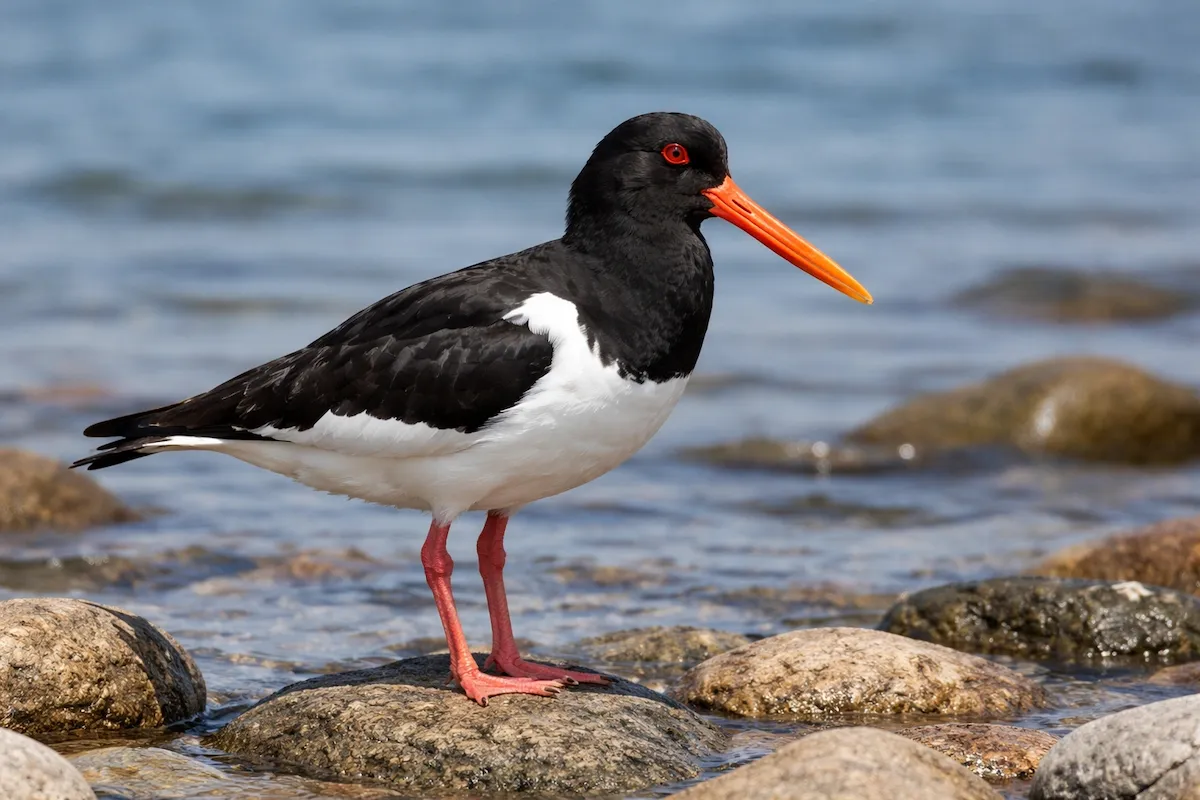
An Explanation of the Word "oystercatcher" in an Image

An oystercatcher bird standing on rocky shoreline, featuring a bright orange bill, red eyes, black-and-white feathers, and pinkish-red legs with calm coastal water behind.
A striking wildlife photograph of an oystercatcher standing on coastal rocks, showcasing its bold black-and-white plumage, long orange bill, red eyes, and sturdy legs near shallow seawater.

Conversation Using the Word Oystercatcher

This conversation takes place on a rocky shoreline between William and his son, Leo. It describes the oystercatcher's feeding techniques and its loud, social behavior.

William: Look over toward those barnacle-covered rocks, Leo; that bird with the long, bright orange beak is an oystercatcher.

Leo: It looks so sharp! Does the oystercatcher actually use that beak to catch and eat real oysters from the sea?

William: It certainly does, though an oystercatcher is just as happy eating mussels, cockles, or even worms from the sand.

Leo: I’m amazed at how the oystercatcher can pry open such a tough shell without hurting its own beak in the process.

William: Each oystercatcher actually specializes in a technique; some are "stabbers" while others are "hammerers" when opening shells.

Leo: That’s so cool! The oystercatcher looks like it's wearing a formal black suit with a very bright orange tie.

William: That's a great way to put it, and those thick pink legs make the oystercatcher look very sturdy for a shorebird.

Leo: Why is that oystercatcher making such a loud, whistling noise while it flies across the water toward the pier?

William: They are very social and vocal birds, so that oystercatcher is likely communicating with the rest of its flock nearby.

Leo: I can hear several others answering back now; the oystercatcher must be one of the loudest birds on this entire beach.

William: They definitely are, and their presence is a good sign that the local shellfish population is healthy and plentiful.

Leo: I think the oystercatcher is officially my new favorite bird to watch whenever we come down to the coast.

Phrases Containing the Word Oystercatcher

The phrases below show how the word oystercatcher is used to describe bold shorebirds, strong bills, and their life along rocky coasts and tidal flats.

Eurasian oystercatcher

A well-known oystercatcher species.

The Eurasian oystercatcher walked confidently along the shoreline, probing between rocks with its bright bill.

Oystercatcher probing shells

An oystercatcher feeding on shellfish.

The oystercatcher probing shells used precise movements to pry open its meal.

Oystercatcher on rocky shores

An oystercatcher living on stones.

The oystercatcher on rocky shores blended black, white, and red against the sea.

Oystercatcher calling loudly

An oystercatcher vocalizing strongly.

The oystercatcher calling loudly echoed above the sound of waves.

Oystercatcher behavior

The typical actions of oystercatchers.

Oystercatcher behavior is bold, alert, and territorial.

Oystercatcher feeding at low tide

An oystercatcher hunting when water recedes.

The oystercatcher feeding at low tide moved quickly across exposed sand.

Oystercatcher silhouette

The outline of an oystercatcher.

The oystercatcher silhouette showed a long bill and sturdy legs.

Oystercatcher pair

Two oystercatchers together.

An oystercatcher pair defended the same stretch of shoreline.

Oystercatcher nesting on shingle

An oystercatcher breeding on gravel.

The oystercatcher nesting on shingle relied on camouflage to hide its eggs.

Oystercatcher in coastal wetlands

An oystercatcher near tidal areas.

An oystercatcher in coastal wetlands fed along muddy channels.

Oystercatcher flying low

An oystercatcher in short flight.

The oystercatcher flying low followed the curve of the beach.

Oystercatcher watching the tide

An oystercatcher staying alert.

The oystercatcher watching the tide waited patiently for feeding time.

Oystercatcher in early morning

An oystercatcher active at dawn.

Seeing an oystercatcher in early morning felt like a quiet coastal ritual.

Oystercatcher flock

A group of oystercatchers together.

An oystercatcher flock gathered near exposed rocks as the tide fell.

Oystercatcher resting on sand

An oystercatcher pausing activity.

The oystercatcher resting on sand tucked one leg beneath its body.

Oystercatcher defending territory

An oystercatcher protecting its area.

The oystercatcher defending territory chased away intruders noisily.

Oystercatcher across tidal flats

An oystercatcher seen at a distance.

An oystercatcher across tidal flats moved steadily between pools.

Oystercatcher feeding quietly

An oystercatcher eating calmly.

The oystercatcher feeding quietly focused entirely on shellfish.

Oystercatcher in breeding season

An oystercatcher active while nesting.

Oystercatcher in breeding season became especially vocal.

Familiar oystercatcher

An oystercatcher often seen in the same place.

The familiar oystercatcher returned each year to the same beach.

Words Rhyme with oystercatcher

catcher
hatcher
matcher
patcher
snatcher
scratcher
batcher
latcher
flycatcher
gnatcatcher
dispatcher
stretcher
fetcher
sketcher
archer
marcher
searcher
teacher
preacher
bleacher
pressure
treasure
measure
leisure
pleasure
nature
creature
feature
future
stature
POS: Noun  Category: Birds