turnstone

Short definition: The word turnstone means a small shorebird famous for flipping over stones and seaweed with its bill, searching for insects and crustaceans, often seen along rocky beaches and coastal shorelines.

Looking for a clear and natural explanation of the word turnstone? The word turnstone is mainly used in birdwatching, wildlife studies, and coastal nature writing. It refers to a small sturdy shorebird famous for flipping stones and debris while searching for food. You will hear it in discussions about rocky shorelines, beaches, and tidal zones around the world. Although not common in everyday conversation, it appears often in field guides and birding reports. Below, each meaning is explained in a calm and natural way, with enough detail to feel clear, human, and informative.

turnstone n. /ˈtɜːrnˌstoʊn/

Forms: turnstone, turnstones
Related: shorebird n., wader n., beach n.
Syllable: turn-stone

  1. (Noun) A small stocky shorebird that turns over stones shells or seaweed to find food.

    A turnstone is a compact migratory shorebird known for its bold patterned plumage and distinctive feeding behavior, actively flipping stones shells and debris along rocky shores and beaches to uncover insects crustaceans and other small prey.

    The turnstone hopped across the rocky shoreline repeatedly flipping small stones with its bill as it searched for hidden insects left behind by the retreating tide.
    Birdwatchers recognized the turnstone by its energetic movements and habit of constantly turning objects along the beach.
    During migration turnstones can be found along coastlines worldwide feeding wherever suitable shore habitat is available.

    Synonyms: shorebird, wading bird, beach bird, coastal wader, rock shore bird, foraging shorebird, debris flipping bird, migratory shorebird, tidal zone bird, coastal feeder, probing bird, shoreline species
    Antonyms: forest bird, tree dwelling bird, domestic bird, flightless bird, inland land bird, raptor, seed eating bird, woodland species, urban bird, non migratory bird, ground running bird, landlocked species

  2. (Noun) A shorebird often used as an example of active problem solving behavior in animals.

    Turnstones are sometimes cited in behavioral studies because of their persistent and methodical feeding style, showing how birds actively manipulate their environment to access food resources.

    The turnstone’s habit of flipping stones is often mentioned as a clear example of learned foraging behavior in birds.
    Researchers observe turnstones to understand how animals adapt feeding strategies to challenging environments.
    Watching a turnstone work through a patch of seaweed reveals how deliberate and focused its feeding behavior can be.

    Synonyms: behavioral study bird, adaptive forager, problem solving bird, active feeder, learning example species, environmental manipulator, resourceful bird, feeding strategy example, intelligent forager, adaptive shorebird, behavioral model, observation species
    Antonyms: passive feeder, non adaptive species, random forager, instinct only feeder, non exploratory bird, inactive species, simple feeding animal, unchanging behavior species, unobservant feeder, static wildlife, non learning species, indifferent forager
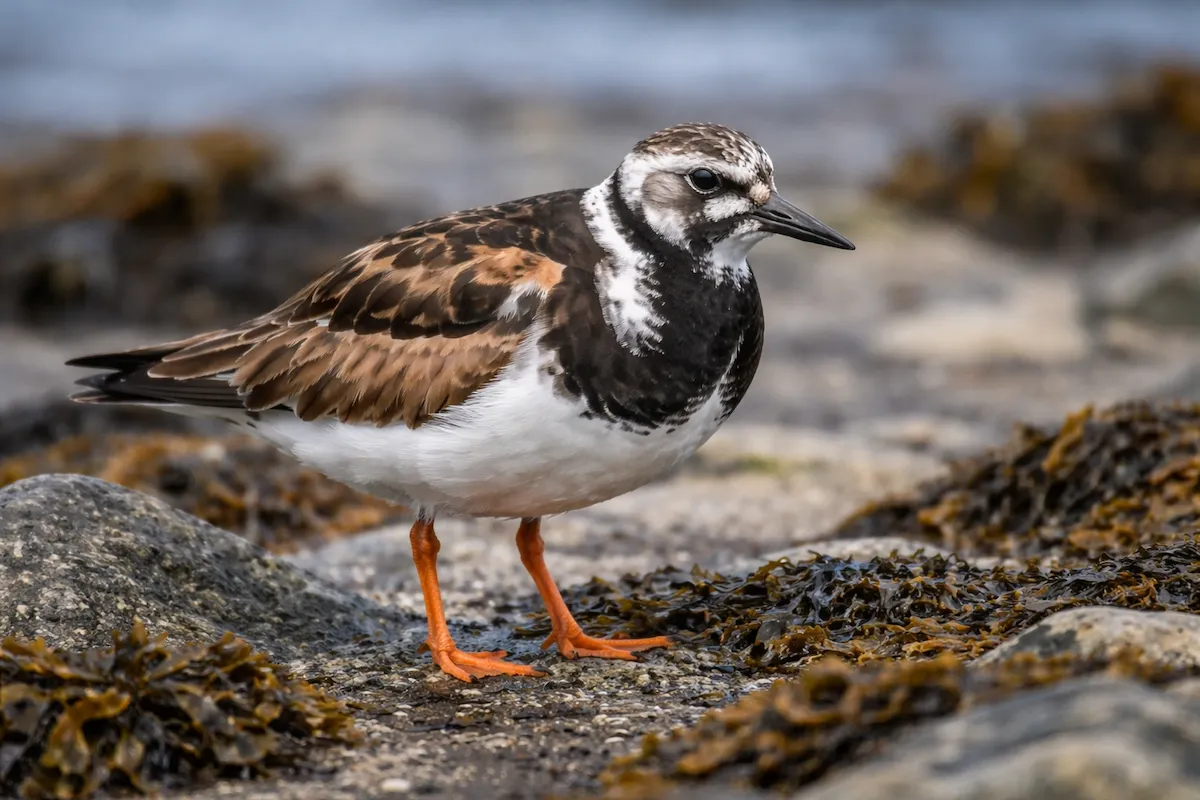
An Explanation of the Word "turnstone" in an Image

A turnstone bird standing among rocks and seaweed, showing orange legs, a short black bill, contrasting black-and-white markings, and a rugged coastal background.
A detailed wildlife photograph of a turnstone standing on a rocky shoreline, highlighting its bold black-and-white chest pattern, rich brown wings, bright orange legs, and alert coastal stance.

Conversation Using the Word Turnstone

This conversation takes place on a rocky jetty between Liam and Sophia. It describes the turnstone's colorful pattern and its habit of flipping over stones and seaweed.

Liam: That bird is actually doing exactly what its name suggests—look at the turnstone flipping that piece of seaweed!

Sophia: It’s so strong! The turnstone just tossed that large shell aside to see what was underneath it.

Liam: They have very short, powerful necks and wedge-shaped bills that are perfect for the turnstone's way of life.

Sophia: The calico pattern of orange, black, and white on the turnstone makes it look like a little harlequin.

Liam: In the winter, the turnstone becomes a bit darker, but you can still see that bold "bib" on its chest.

Sophia: I love how the turnstone is so much braver than the other shorebirds; it doesn't mind if we are nearby.

Liam: They are very approachable, often found on piers and jetties where they scavenge for any edible scraps.

Sophia: I just saw the turnstone find a tiny crab under a rock—it was so quick to grab its prize.

Liam: They are opportunistic feeders; a turnstone will eat almost anything from insects to discarded fish bait.

Sophia: It’s fun to see a turnstone working so hard while the other birds are just standing around resting.

Liam: That work ethic is why the turnstone is one of the most widespread shorebirds in the world.

Sophia: I’m definitely going to look for the turnstone every time we walk along the harbor from now on.

Phrases Containing the Word Turnstone

The phrases below show how the word turnstone is used to describe stocky shorebirds, their habit of flipping stones, and rocky coastal habitats.

Ruddy turnstone

A well-known turnstone species.

The ruddy turnstone hopped across rocks, flipping stones with quick jabs of its bill.

Turnstone flipping stones

A turnstone searching for food.

The turnstone flipping stones revealed insects hidden underneath.

Turnstone on rocky shores

A turnstone living on stones.

The turnstone on rocky shores moved confidently between uneven surfaces.

Turnstone feeding actively

A turnstone searching for prey.

The turnstone feeding actively worked tirelessly along the shoreline.

Turnstone behavior

The typical actions of turnstones.

Turnstone behavior is curious, energetic, and highly resourceful.

Turnstone silhouette

The outline of a turnstone.

The turnstone silhouette looked compact and sturdy against the rocks.

Turnstone in early morning

A turnstone active at dawn.

The turnstone in early morning light searched methodically for food.

Turnstone near tide line

A turnstone close to water.

A turnstone near the tide line followed retreating waves.

Turnstone feeding at low tide

A turnstone hunting on exposed shore.

The turnstone feeding at low tide explored every crevice.

Turnstone resting briefly

A turnstone pausing activity.

The turnstone resting briefly preened its feathers.

Turnstone flock

A group of turnstones together.

A turnstone flock spread out across the rocks.

Turnstone watching carefully

A turnstone staying alert.

The turnstone watching carefully paused between movements.

Turnstone in winter plumage

A turnstone with muted colors.

The turnstone in winter plumage blended into the stones.

Turnstone across rocky flats

A turnstone seen at a distance.

A turnstone across rocky flats moved with quick hops.

Turnstone feeding quietly

A turnstone eating calmly.

The turnstone feeding quietly focused on small crustaceans.

Turnstone pair

Two turnstones together.

A turnstone pair searched the same patch of shoreline.

Turnstone near seaweed

A turnstone feeding among debris.

A turnstone near seaweed flipped strands aside.

Turnstone in migration

A turnstone traveling seasonally.

The turnstone in migration stopped briefly to refuel.

Turnstone hopping quickly

A turnstone moving fast.

The turnstone hopping quickly disappeared between rocks.

Familiar turnstone

A turnstone often seen in the same place.

The familiar turnstone returned each year to the same shoreline.

Words Rhyme with turnstone

stone
bone
cone
lone
zone
phone
drone
prone
shown
known
grown
alone
unknown
overgrown
throne
postpone
cyclone
trombone
backbone
jawbone
wishbone
headphone
cellphone
rhinestone
milestone
tombstone
sandstone
flagstone
limestone
steppingstone
POS: Noun  Category: Birds