"Should Of" vs. "Should Have" – The Sound Trap You Need to Avoid
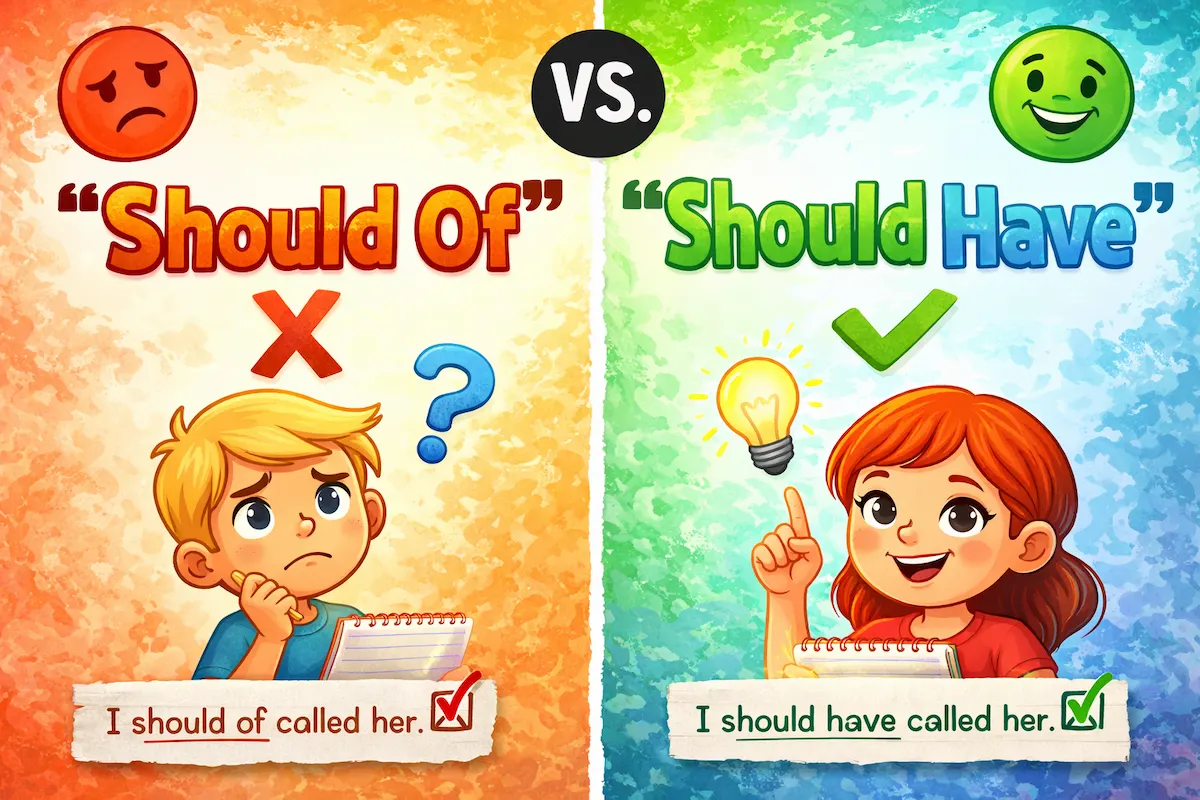
This common-mistakes guide explains why should of is incorrect and how should have functions as a past modal. Learn how pronunciation causes the error, how to fix it instantly, and how to write correctly in both casual and professional English.
Few English mistakes are as common — and as stubborn — as writing should of instead of should have. You’ll see it everywhere: social media posts, emails, comments, even professional writing.
What makes this mistake tricky is that it doesn’t come from misunderstanding grammar. It comes from sound. When people say should’ve out loud, it often sounds exactly like should of.
In this Common Mistakes guide, we’ll break down why should of is always wrong, how should have actually works, and how to permanently escape this sound-based grammar trap.
The Short Answer (Before We Go Deep)
Let’s be clear from the start:
- ✅ Should have — correct
- ❌ Should of — always incorrect
There are zero situations in standard English where should of is grammatically acceptable.
Where Does “Should Of” Come From?
The mistake begins with pronunciation.
Native speakers rarely pronounce should have clearly in fast speech. Instead, it becomes:
should have → should’ve
And when spoken quickly, should’ve sounds almost identical to should of.
Why Your Brain Fills in “Of”
English learners — and even native speakers — subconsciously replace unfamiliar grammar with familiar words.
Since of is a very common word and ’ve is an abstract contraction, people mistakenly choose the spelling that feels recognizable.
Unfortunately, grammar doesn’t care how something sounds.
Understanding “Should Have” Properly
Should have is a modal verb construction used to talk about:
- Past regret
- Missed opportunities
- Better past choices
I should have studied more.
The speaker is reflecting on the past and expressing regret.
The Grammar Pattern: Modal + Have + Past Participle
Should have follows a fixed structure:
should + have + past participle (V3)
She should have called earlier.
This structure is non-negotiable. Replacing have with of breaks the grammar completely.
Why “Of” Makes No Sense Here
Of is a preposition. It cannot function as a verb.
❌ should of done ❌ should of gone ❌ should of known
In all of these examples, a verb is required — and of simply cannot fill that role.
Contractions Are the Real Culprit
The contraction should’ve is short for should have.
should’ve = should have
It is not related to of in spelling or meaning.
Other Modals with the Same Problem
This mistake doesn’t stop with should.
- could have → ❌ could of
- would have → ❌ would of
- might have → ❌ might of
The rule is the same every time.
Why Spellcheck Sometimes Misses It
Spellcheck often ignores this mistake because:
- Of is a real word
- The sentence may still “look” grammatical
That’s why this error survives even in edited writing.
Should Have in Formal Writing
In professional contexts, this mistake can seriously damage credibility.
We should have reviewed the contract more carefully.
Writing should of here would immediately stand out as incorrect.
Should Have in Spoken English
In speech, nobody hears the spelling — which is why the mistake persists.
But writing requires conscious correction.
A Simple Fix That Always Works
Replace the phrase with should have in full.
If “should have” makes sense → use it If it doesn’t → rewrite the sentence
Never rely on sound.
Memory Trick: “Have” Is the Only Option
Modals can only be followed by verbs.
Of is never a verb.
That single rule eliminates the mistake forever.
Practice Test
Please answer the following questions. To see the correct answer, please click the arrow icon.
Choose the correct form: “I ___ studied harder.”
Answer: should have Explanation: Modal verbs require “have” before the past participle.
Is this sentence correct? “We should of left earlier.”
Answer: No. Explanation: “Of” cannot replace the verb “have.”
What does “should have” express?
Answer: Past regret or missed opportunity. Explanation: It reflects on a different past outcome.
Why do people write “should of”?
Answer: Because “should’ve” sounds like “should of.” Explanation: The error is phonetic, not grammatical.
Final Thoughts: Don’t Let Sound Fool You
English spelling doesn’t always match pronunciation, and should have is a perfect example.
Once you understand that of can never follow a modal verb, the mistake disappears for good.
Train your eyes — not your ears — and you’ll never write should of again.