What Does "Stan" Mean? From Eminem to Modern Super-Fans
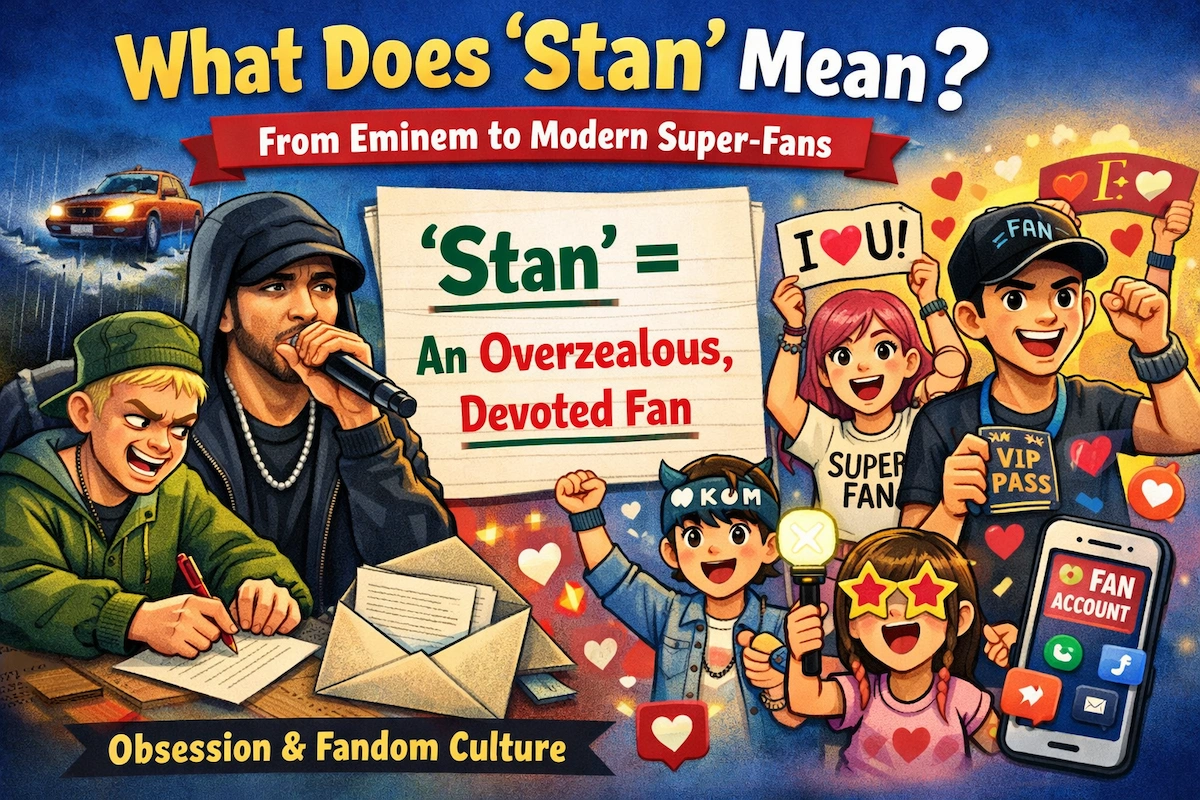
This Social Media Slang usage guide explains the meaning of “stan,” tracing its origin from Eminem’s 2000 song to modern internet culture. Learn how the word evolved from a warning about obsession into a term for intense fandom, and when its use becomes positive, ironic, or toxic.
If you spend time on social media, you’ve probably seen people proudly call themselves a “stan”. You might read comments like “I’m a total stan,” “We need to protect her at all costs,” or “The stans are fighting again.” In 2026, stan is one of the most common words used to describe extreme fan behavior online.
But this word didn’t start as a compliment — and it definitely didn’t start on social media. In fact, stan comes from a dark and unsettling song released in 2000 by Eminem. Over time, its meaning shifted dramatically, turning a warning story into a badge of fandom.
In this usage guide, we’ll explore what stan really means, where it came from, how it evolved into modern internet slang, and why it perfectly captures both the passion and the danger of obsessive fan culture in the digital age.
What Does “Stan” Mean Today?
In modern slang, a stan is an extremely devoted fan of a celebrity, artist, show, or even a brand. The word often implies intense emotional investment, constant online activity, and strong loyalty.
She’s a stan of that pop group and follows everything they do.
Depending on context, stan can be:
- Positive (passionate, supportive)
- Neutral (very dedicated)
- Negative (obsessive or aggressive)
Tone and context decide whether it sounds playful or critical.
The Origin of “Stan”: A Song, Not a Compliment
The word stan comes from the song “Stan”, released in 2000. The song tells the story of a fictional fan named Stan who becomes dangerously obsessed.
In the song, Stan writes increasingly desperate letters, feels personally rejected, and eventually harms himself and others. The story is meant as a warning about unhealthy parasocial relationships.
Originally, calling someone a stan meant they were unhealthily obsessed.
How a Tragic Character Became Internet Slang
For several years after the song’s release, stan was used mostly negatively. Over time, however, online communities began to reclaim and soften the word.
On early internet forums and later on Twitter, fans started using stan humorously to describe intense support rather than dangerous obsession.
I don’t just like her music — I stan.
This shift transformed the word from a warning into a self-aware label.
Stan vs. Fan: What’s the Difference?
All stans are fans, but not all fans are stans.
The difference lies in intensity.
- Fan → enjoys and supports
- Stan → actively defends, promotes, and identifies with
Fan: I like her new album. Stan: I streamed it all night and argued with strangers about it online.
Being a stan usually involves emotional and social commitment.
How “Stan” Became a Verb
One sign that a slang term has fully entered mainstream usage is when it becomes a verb. Stan did exactly that.
I stan artists who write their own music.
As a verb, stan means to support loudly and publicly, often online.
This verb form removes much of the original negativity and emphasizes enthusiasm.
Stan Culture in the Age of Social Media
Social media platforms accelerated stan culture by creating direct connections between fans and public figures.
Likes, replies, reposts, and livestreams create the illusion of personal interaction, which deepens emotional attachment.
In stan culture, fans often:
- Monitor mentions constantly
- Defend their favorite figures aggressively
- Organize campaigns and trends
- Police criticism from outsiders
This behavior can feel empowering or overwhelming, depending on perspective.
Positive Side of Being a Stan
Not all stan behavior is negative. In many cases, stans create supportive, creative communities.
Positive aspects include:
- Community building
- Creative expression (fan art, edits, memes)
- Emotional connection and belonging
- Advocacy and fundraising
For many people, stanning is a meaningful social experience.
When Stan Culture Turns Toxic
Problems arise when loyalty becomes hostility.
Toxic stan behavior can include:
- Harassment of critics
- Doxxing or threats
- Refusal to acknowledge wrongdoing
- Online mob behavior
In these cases, stan regains some of its original negative meaning.
Why People Still Use the Word “Stan”
Despite its dark origin, stan remains popular because it captures a specific kind of modern fandom.
It expresses:
- Intensity
- Identity
- Online participation
- Emotional investment
No older word fully captures all of these ideas at once.
Is “Stan” Always Self-Aware?
Often, yes. Many people use stan ironically or humorously, acknowledging the exaggeration.
I know it’s dramatic, but I stan.
This self-awareness separates modern usage from the original character.
Stan as Identity
In 2026, being a stan is often part of personal identity, especially online.
People may include their fandoms in usernames, bios, and profile images.
This identity-building aspect explains why criticism can feel personal to stans.
Formal vs Informal Usage
Stan remains informal slang.
Avoid using it in:
- Academic writing
- Professional emails
- Formal reports
In these contexts, terms like dedicated fan or avid supporter are more appropriate.
Common Learner Mistakes
Learners sometimes misunderstand stan as simply meaning “like.”
This weakens the word’s impact.
Incorrect: I stan pizza. Better: I love pizza.
Stan implies devotion, not preference.
Why “Stan” Still Matters Linguistically
The evolution of stan shows how language adapts to digital life.
It also demonstrates how communities can reclaim and reshape meaning over time.
Final Thoughts: From Warning to Word of Pride
The word stan began as a cautionary tale about obsession. Today, it represents passion, loyalty, and identity — sometimes to a fault.
Understanding where the word comes from helps explain why it carries both affection and danger.
When people say they “stan,” they’re not just expressing fandom — they’re participating in a uniquely modern form of digital culture.