8 Survival Phrases for Finding a Public Restroom in a Hurry
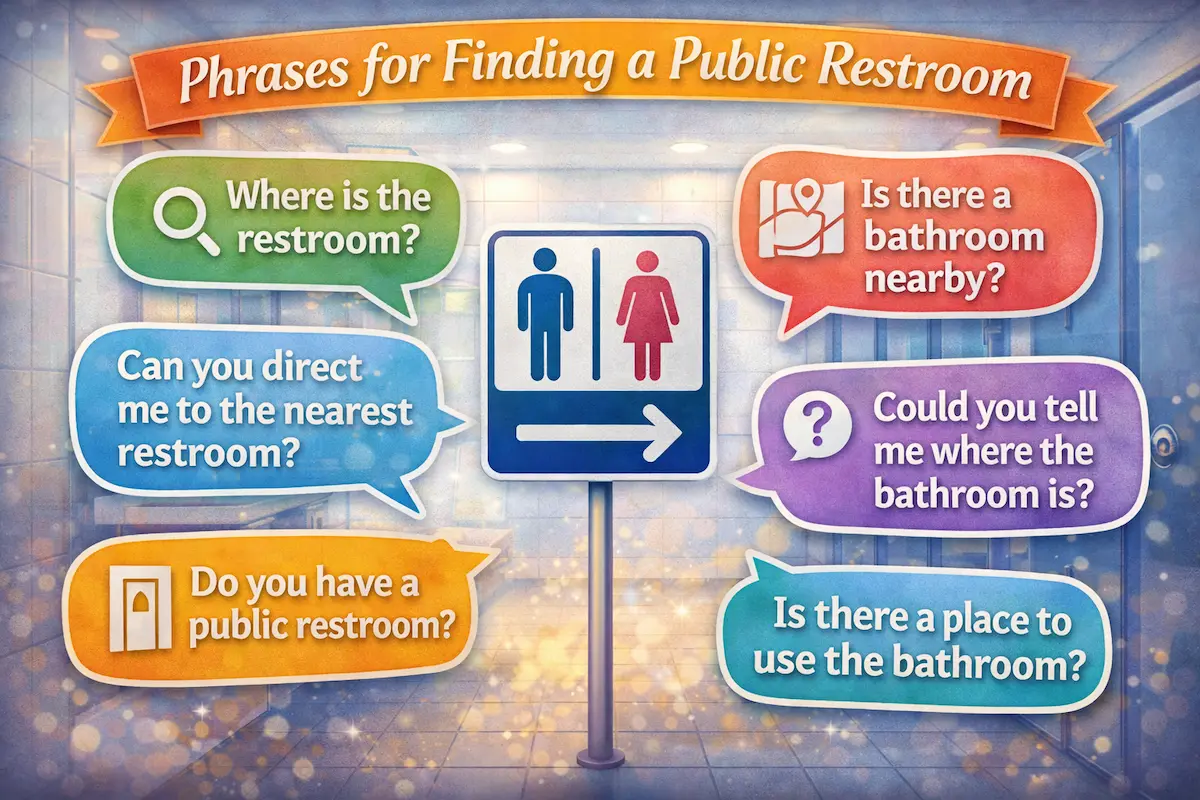
This Travel English guide teaches 8 essential phrases for finding a public restroom in a hurry. Learn polite, natural English to ask for bathrooms or toilets in airports, shops, and city streets without sounding rude or awkward.
Traveling is exciting — new places, new cultures, new food. But there is one universal situation that unites travelers everywhere: the sudden, urgent need to find a restroom. When that moment hits, your vocabulary matters more than your grammar.
In those situations, you don’t need perfect English. You need clear, polite, and fast communication. Knowing the right phrases can save you time, embarrassment, and unnecessary stress.
In this Travel English usage guide, you’ll learn 8 survival phrases that help you find a public restroom quickly and politely — whether you’re in an airport, restaurant, shopping mall, or on the street.
Why Asking Politely Still Matters in an Emergency
Even when you’re in a hurry, politeness goes a long way. In many cultures, being abrupt can make people less willing to help — even if your request is urgent.
A simple “Excuse me” or “Sorry to bother you” can dramatically improve how your question is received.
Restroom, Bathroom, Toilet — What’s the Difference?
Before we jump into phrases, let’s clarify the vocabulary.
- Restroom — very common in American English
- Bathroom — common in both US and UK English
- Toilet — very common in British English and globally understood
All three are understood internationally, but “bathroom” and “restroom” often sound more polite in public places.
Survival Phrase #1: “Excuse me, where’s the restroom?”
This is the safest and most universally accepted phrase.
Excuse me, where’s the restroom?
It’s short, polite, and works almost everywhere.
Survival Phrase #2: “Could you tell me where the bathroom is?”
Adding “could you tell me” softens your request and sounds very polite.
Could you tell me where the bathroom is?
This phrase is ideal when speaking to staff or strangers.
Survival Phrase #3: “Is there a public toilet nearby?”
This phrase is especially useful outdoors or in city areas.
Is there a public toilet nearby?
It signals urgency without sounding rude.
Survival Phrase #4: “Sorry, may I use your restroom?”
Use this phrase in cafés, shops, or small businesses.
Sorry, may I use your restroom?
The apology here is cultural politeness, not guilt.
Survival Phrase #5: “Where can I find the nearest bathroom?”
This phrase works well in airports, stations, and malls.
Where can I find the nearest bathroom?
“Nearest” tells people you’re short on time.
Survival Phrase #6: “Is the restroom on this floor?”
Useful when you’re already inside a building.
Is the restroom on this floor?
This avoids unnecessary directions.
Survival Phrase #7: “Could you point me to the bathroom?”
Great when language barriers exist.
Could you point me to the bathroom?
Gestures plus this phrase work well together.
Survival Phrase #8: “I’m sorry, I really need a restroom.”
This phrase communicates urgency clearly.
I’m sorry, I really need a restroom.
Use this only when time truly matters.
What Not to Say
Some phrases sound too blunt or informal:
- Where’s the toilet? (can sound abrupt)
- I need to pee. (too personal)
- Bathroom now. (unnatural)
Body Language Helps
Pair your words with polite eye contact and a friendly tone. People are more likely to help quickly.
Practice Test
Please answer the following questions. To see the correct answer, please click the arrow icon.
Which word is most common in American English?
Answer: Restroom Explanation: It’s the standard polite term in the US.
Which phrase sounds the most urgent?
Answer: I really need a restroom. Explanation: “Really” signals urgency.
Why should you avoid saying “I need to pee”?
Answer: It’s too personal. Explanation: Public English favors indirect language.
Which phrase is best in a shop or café?
Answer: May I use your restroom? Explanation: It asks permission politely.
Final Thoughts: Confidence Comes from Preparation
Bathroom emergencies happen to everyone — even fluent speakers. Knowing a few survival phrases gives you confidence and control when it matters most.
Memorize two or three of these phrases, and you’ll be prepared anywhere in the world. When you’ve got to go, you’ll know exactly what to say.