How to Use "Modal + Have + V3" to Talk About Past Regrets
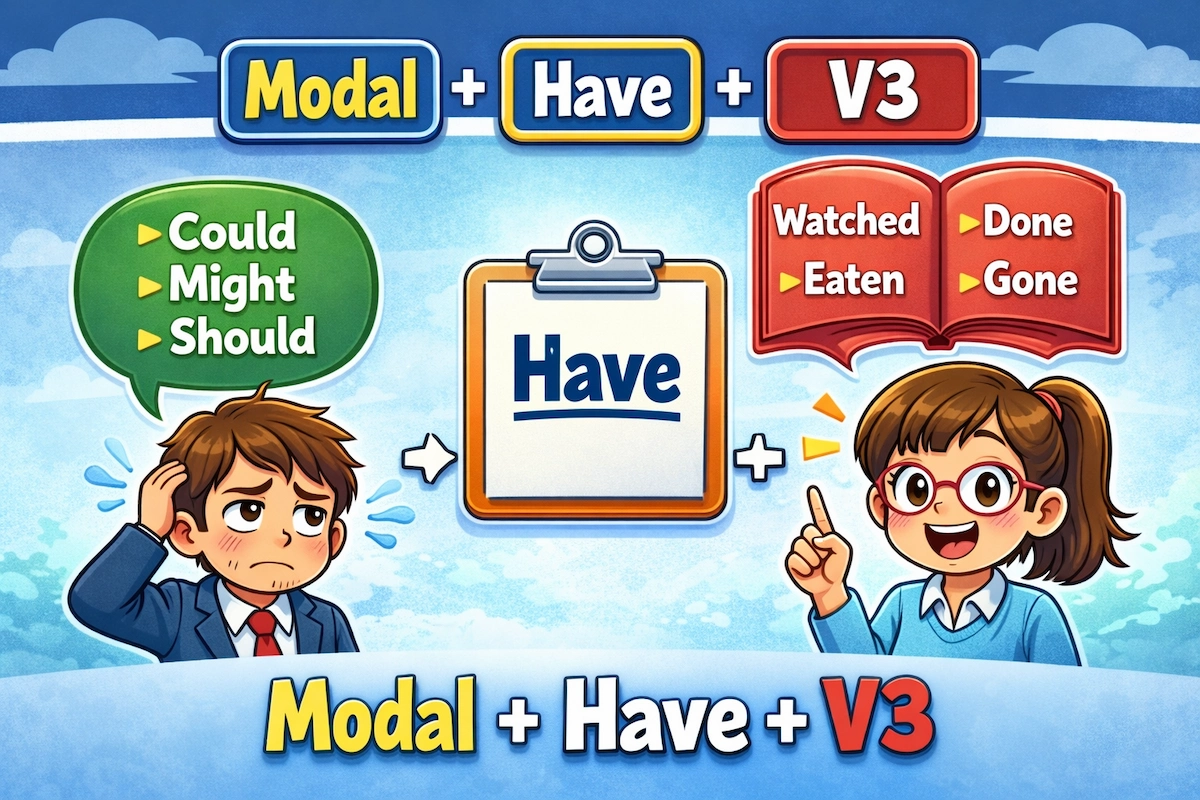
This Sentence Patterns usage guide explains how “modal + have + V3” works in English. Learn how to use “should have,” “could have,” and “must have” to express regret, missed opportunities, and logical conclusions about the past, with clear examples and common mistake warnings.
At some point, everyone looks back and thinks, “I should have done that differently.” English has a very specific and powerful sentence pattern for expressing this kind of reflection: modal + have + V3.
These structures allow you to talk about past regrets, missed opportunities, and even logical conclusions about what probably happened in the past. They are common in daily conversation, storytelling, professional reflection, and even arguments.
In this usage guide, you’ll learn how to use should have, could have, and must have correctly, understand the sentence patterns behind them, and avoid the most common learner mistakes.
What Is “Modal + Have + V3”?
This structure combines:
- A modal verb (should, could, might, must)
- The auxiliary verb have
- A past participle (V3)
should + have + done could + have + gone must + have + forgotten
This pattern always refers to the past, even though modal verbs themselves do not change form.
Why We Use Past Modals
Past modals help us talk about events that are already finished, but still emotionally or logically important.
They are used mainly to:
- Express regret
- Talk about missed chances
- Make deductions about the past
- Speculate about what didn’t happen
Without this pattern, English would sound vague or incomplete when reflecting on the past.
“Should Have” – Past Regret and Criticism
Should have is the most common past modal. It expresses that the speaker believes a different action was the better or correct choice.
I should have studied more for the exam.
The speaker is unhappy with the past action (or lack of action).
Sentence Pattern: “Should Have + V3”
Subject + should have + past participle
She should have told the truth.
This pattern is often used in personal reflection and advice after the fact.
Using “Should Have” About Other People
Should have can also express criticism or disappointment.
They should have informed us earlier.
Tone matters here. This structure can sound judgmental if used carelessly.
Negative Form: “Shouldn’t Have”
The negative form expresses regret about an action that happened but shouldn’t have.
I shouldn’t have said that.
This is extremely common in emotional conversations.
“Could Have” – Missed Possibilities
Could have focuses on possibility rather than obligation.
I could have taken the earlier train.
This sentence means the option existed, but it was not chosen.
Sentence Pattern: “Could Have + V3”
Subject + could have + past participle
We could have finished the project sooner.
This structure often carries a tone of mild regret or reflection.
“Could Have” vs “Should Have”
Compare:
I should have called her. I could have called her.
The first suggests responsibility or expectation. The second suggests opportunity.
“Must Have” – Logical Deduction About the Past
Must have is different. It does not express regret.
Instead, it expresses a strong logical conclusion about what probably happened.
He must have forgotten the meeting.
The speaker is almost certain, based on evidence.
Sentence Pattern: “Must Have + V3”
Subject + must have + past participle
She must have misunderstood the instructions.
This pattern is common in explanations and reasoning.
“Might Have” and “May Have”
These modals express weaker possibility.
He might have missed the bus.
The speaker is unsure and presents one possible explanation.
Using Past Modals in Daily Conversation
These patterns appear constantly in natural English.
I shouldn’t have stayed up so late. We could have handled that better. She must have been exhausted.
Mastering them dramatically improves fluency.
Common Learner Mistake #1: Using Past Simple
Incorrect: I should studied more. Correct: I should have studied more.
Remember: modal verbs do not take past forms directly.
Common Learner Mistake #2: Forgetting V3
Incorrect: She must have go home. Correct: She must have gone home.
The past participle is essential.
Emotional Weight of Past Modals
These structures often carry emotion — regret, frustration, relief, or understanding.
That’s why they are common in storytelling and reflection.
Formal vs Informal Use
Past modals work in both casual and formal English.
Informal: I should have texted you. Formal: The company should have disclosed the information earlier.
Why This Pattern Matters
Without past modals, English speakers would struggle to explain responsibility and reasoning about the past.
These patterns allow nuance — not just what happened, but how we feel about it.
Final Thoughts: Talking About the Past with Precision
The structure modal + have + V3 is essential for expressing regret, possibility, and deduction.
Once mastered, it opens the door to deeper, more natural conversations about past experiences.
Past events may be fixed — but how you talk about them doesn’t have to be.