Cookies vs. Biscuits – A Sweet Guide to Dessert Vocabulary
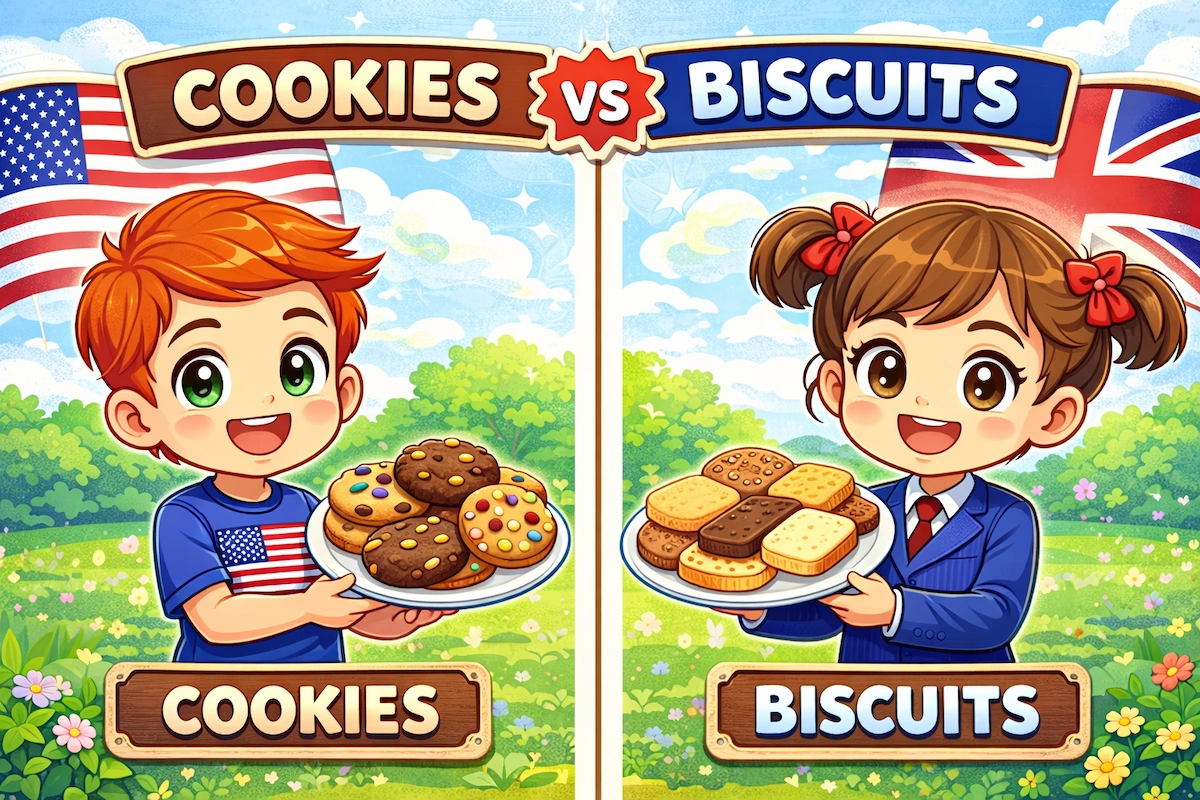
This American vs British usage guide explains how “cookies” and “biscuits” mean different things in the US and the UK. Learn why American biscuits are bread-like, British biscuits are sweet desserts, and how to choose the right word when ordering food or chatting internationally.
Few everyday food words cause as much confusion between American and British English as cookies and biscuits. They look similar, taste sweet, and often appear next to a cup of tea or coffee — yet ordering the wrong one in the wrong country can lead to a very unexpected experience.
If you ask for a biscuit in the United States, you’ll likely receive something soft, warm, and bread-like. Ask for a biscuit in the UK, and you’ll be handed something crunchy, sweet, and perfect for dipping in tea. Same word, wildly different expectations.
In this usage guide, we’ll break down what cookies and biscuits mean in American and British English, explore common sentence patterns, and help you avoid awkward — and sometimes confusing — dessert misunderstandings.
Why Dessert Vocabulary Is Tricky
Food vocabulary evolves with culture. Ingredients, traditions, and daily habits shape how words are used — and once a meaning becomes standard in a region, it rarely changes.
With cookies and biscuits, the confusion comes from:
- Different baking traditions
- Different textures and flavors
- Different cultural associations
Understanding these differences is essential for travel, conversation, and everyday fluency.
What “Cookie” Means in American English
In American English, a cookie is a sweet baked treat, usually round, flat, and soft or chewy.
She baked chocolate chip cookies for the party.
American cookies are typically:
- Sweet
- Soft or chewy
- Often large
- Filled with chocolate chips, nuts, or fillings
Cookies are desserts, snacks, or comfort food — not bread.
Common Cookie Types in the U.S.
Americans use the word cookie broadly.
- Chocolate chip cookies
- Oatmeal cookies
- Sugar cookies
- Peanut butter cookies
If it’s sweet and baked, it’s probably called a cookie.
What “Biscuit” Means in American English
In the United States, a biscuit is not a dessert at all.
An American biscuit is a soft, fluffy, bread-like item, often served warm.
We had biscuits and gravy for breakfast.
American biscuits are:
- Soft
- Flaky
- Savory or mildly buttery
- Served with meals, not tea
Asking for a biscuit in the U.S. will never get you a crunchy dessert.
What “Biscuit” Means in British English
In British English, a biscuit is what Americans call a cookie.
Would you like a biscuit with your tea?
British biscuits are:
- Crunchy or crisp
- Sweet (usually)
- Designed for dipping in tea
- Sold in packets, not baskets
This is the default meaning of biscuit in the UK.
Common British Biscuits
In the UK, biscuit varieties are well-defined.
- Digestive biscuits
- Shortbread biscuits
- Chocolate biscuits
- Cream biscuits
All of these would likely be called cookies in American English.
Does Britain Use the Word “Cookie”?
Yes — but differently.
In British English, cookie usually refers to a specific type of biscuit:
- Large
- Soft or chewy
- Often American-style
They sell American-style cookies at the café.
So in the UK, cookies are a subcategory of biscuits.
Side-by-Side Comparison
American English: - Cookie → sweet baked dessert - Biscuit → soft bread-like side dish
British English: - Biscuit → sweet crunchy dessert - Cookie → large or chewy biscuit
Same words, different food.
Why This Confusion Matters
In everyday conversation, the confusion is often humorous. But in travel, dining, or professional contexts, misunderstandings can be awkward.
Imagine ordering biscuits with tea in the U.S. and receiving bread — or asking for biscuits and gravy in the UK.
Common Learner Mistake #1
Incorrect (UK context): I love American biscuits with chocolate chips. Correct: I love American cookies with chocolate chips.
Common Learner Mistake #2
Incorrect (US context): I had a biscuit for dessert. Correct: I had a cookie for dessert.
How Native Speakers Avoid Confusion
Native speakers often clarify by adding description.
Do you mean biscuits like cookies, or biscuits like bread?
Context and tone usually solve the problem quickly.
Sentence Patterns You’ll Hear
American: - I baked cookies last night. - Biscuits go well with gravy.
British: - I’ll have a biscuit with my tea. - These cookies are very American-style.
Cultural Associations
In the UK, biscuits are linked to:
- Tea culture
- Hospitality
- Afternoon breaks
In the U.S., cookies are associated with:
- Home baking
- Comfort food
- Dessert and snacks
Why American vs British Vocabulary Is Worth Learning
These differences show how language reflects daily life.
Learning them improves:
- Listening comprehension
- Cultural awareness
- Confidence in conversation
And sometimes, it saves you from ordering the wrong food.
Tips for International English
- Notice who you’re speaking to
- Listen for accent clues
- When unsure, describe the food instead of naming it
Final Thoughts: Same Sweet Tooth, Different Words
Cookies and biscuits prove that English is shaped by culture, not logic.
By understanding how Americans and Brits use these words differently, you avoid confusion and sound more natural in international conversations.
One language, two desserts — choose wisely.