"Lightening" vs. "Lightning" – The Most Common Weather Error
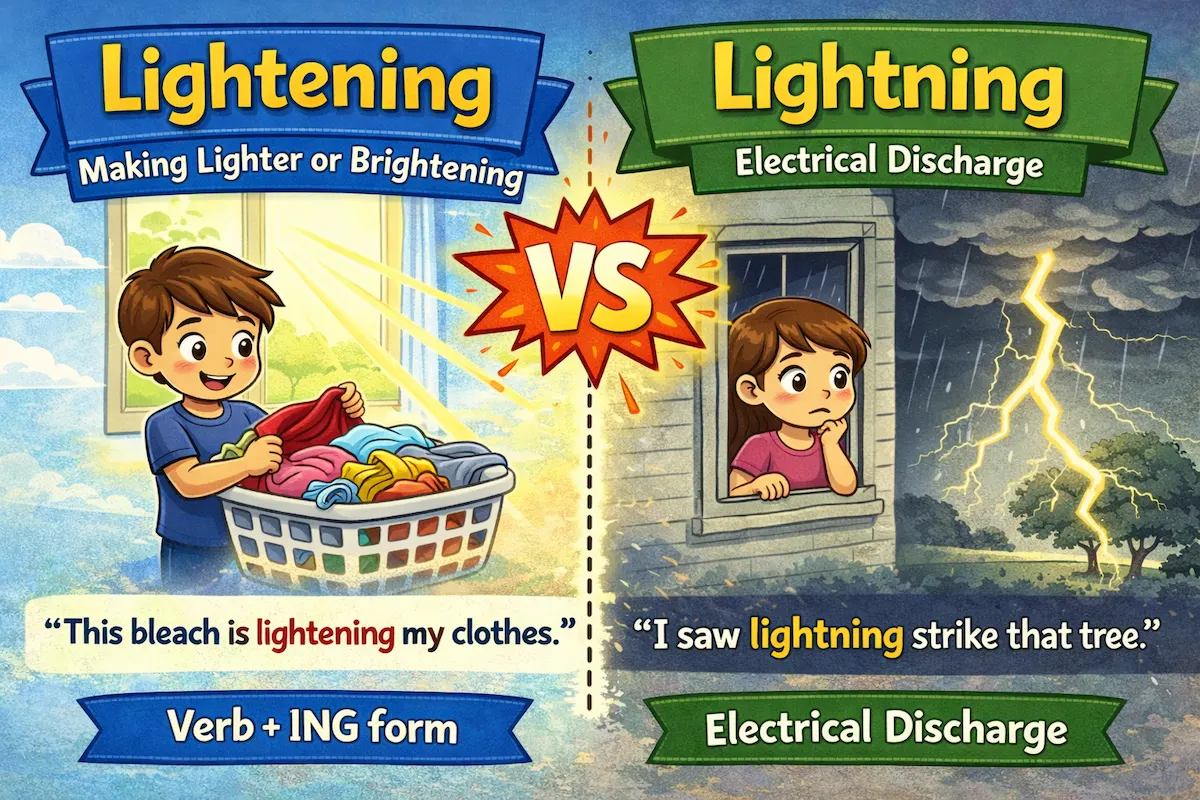
This guide explains the difference between “lightening” and “lightning,” why the mistake is so common, and how to remember the correct spelling. Learn simple rules, clear examples, and practice questions to make sure you never confuse these two words again.
If you’ve ever typed about a storm and hesitated between lightening and lightning, you’re not alone. This is one of the most common spelling mistakes in English — even among native speakers.
The confusion makes sense. The words look similar. They sound almost identical. And both are connected to the idea of light. But here’s the truth: only one of them describes the dramatic flash in the sky during a storm.
In this guide, we’ll break down the difference between lightening and lightning, explain why the mistake happens so often, and give you foolproof tricks to choose the right word every time.
Quick Definition Check
Let’s start with the simplest rule:
- Lightning → the flash of electricity in the sky
- Lightening → making something lighter
Only lightning is related to weather.
The lightning lit up the entire sky.
She is lightening her workload this week.
What Does “Lightning” Mean?
Lightning is a noun. It refers to the sudden electrical discharge that occurs during a storm.
It is fast, powerful, and visually dramatic — which is why the word is often used metaphorically to describe speed or intensity.
The lightning struck a tree near the road.
His reaction was lightning fast.
Notice something important: there is no verb form “to lightning” in standard English.
What Does “Lightening” Mean?
Lightening is the present participle of the verb lighten.
To lighten means:
- To reduce weight
- To reduce burden or seriousness
- To make something brighter in color
He’s lightening his bag before the trip.
A joke helped lighten the mood.
Why This Mistake Is So Common
The confusion comes from three main reasons:
- They sound almost identical
- They share the word “light”
- Both are visually associated with brightness
When people think of storms, they think of light — so their fingers instinctively add the extra “e.”
The One-Letter Difference That Changes Everything
The key difference is this:
- Lightning → no extra “e”
- Lightening → has an “e” because it comes from lighten
That single letter completely changes the meaning.
A Memory Trick That Always Works
Use this simple rule:
👉 If there’s an “e,” think of “less.”
- Lightening → less weight, less burden
- Lightning → no “e,” just electricity
The sky does not get lighter — it flashes.
Common Wrong Sentences (And Fixes)
❌ The lightening was very bright last night. ✅ The lightning was very bright last night.
❌ Lightning the load will help. ✅ Lightening the load will help.
Metaphorical Uses: Be Careful
Both words can be used metaphorically, which adds to the confusion.
The news caused lightning-fast reactions online.
His comment helped lighten the tension.
The metaphor still follows the same rule: electricity vs. reduction.
Grammar Breakdown
- Lightning → noun only
- Lightening → verb form (present participle)
If you need a verb, lightning is never the answer.
Why This Mistake Matters
This error is especially noticeable in:
- Weather reports
- School writing
- News articles
- Professional communication
Using the wrong word can instantly undermine credibility.
Practice Test
Please answer the following questions. To see the correct answer, please click the arrow icon.
The storm produced loud thunder and bright _____.
Answer: lightning Explanation: The sentence refers to a weather phenomenon.
She is _____ her schedule to reduce stress.
Answer: lightening Explanation: She is reducing a burden.
Which word is a verb form?
Answer: lightening Explanation: It comes from the verb “lighten.”
Which spelling should never be used for weather?
Answer: lightening Explanation: Weather always uses “lightning.”
Why is this mistake so common?
Answer: Similar spelling and pronunciation. Explanation: Both words look and sound alike.
Final Thoughts: One Flash, No “E”
When in doubt, remember this:
👉 The sky flashes — it does not get lighter.
Mastering small differences like this instantly improves your writing accuracy and confidence.
And once you notice it, you’ll start spotting this mistake everywhere.