Why "Meaning" Isn't Always "Definition" - The Dictionary Secret You Need to Know
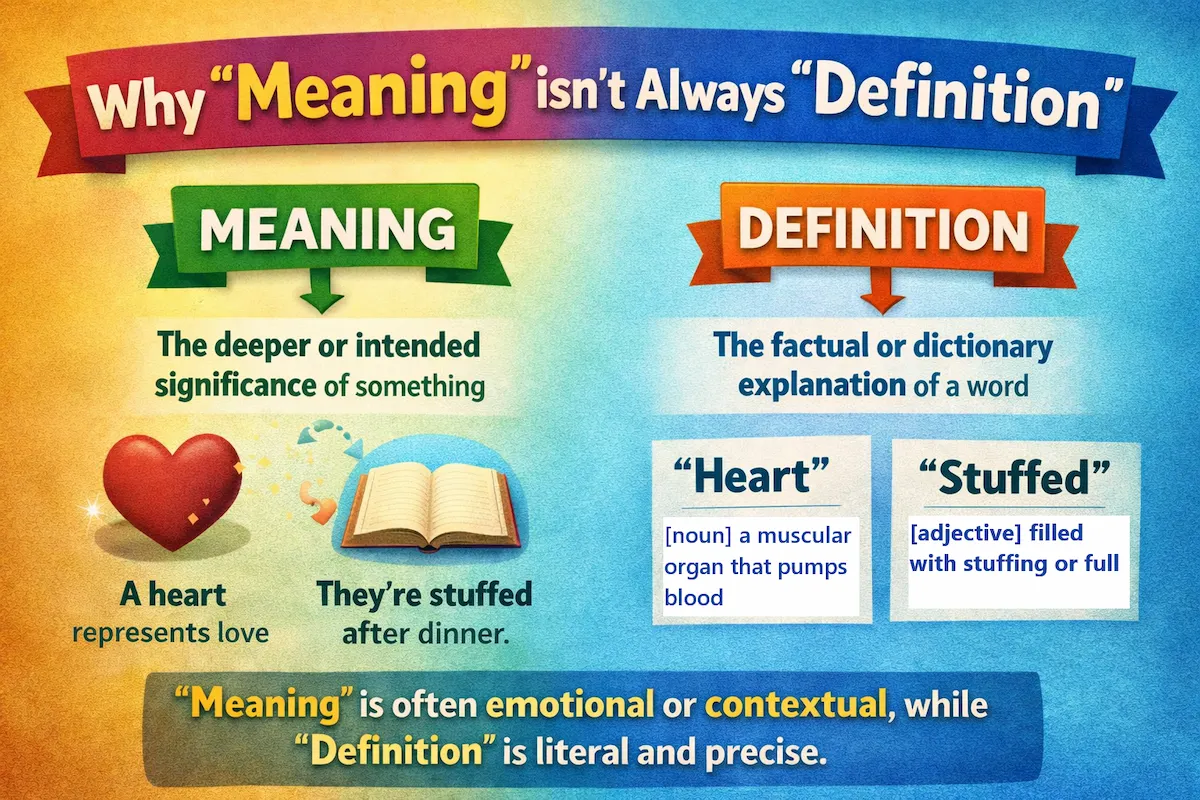
This guide explains the difference between meaning and definition in English. Learn why dictionaries can’t capture tone and context, how real meaning shifts in sentences, and how understanding this nuance improves reading, writing, and communication skills.
Many English learners — and even experienced writers — assume that meaning and definition are the same thing. After all, when we want to understand a word, we open a dictionary and read its definition. Case closed, right?
Not exactly. In real language use, a word’s dictionary definition often tells only part of the story. The actual meaning of a word depends heavily on context, intention, culture, and situation.
In this confusing words guide, you’ll uncover the subtle but important difference between meaning and definition, why dictionaries can’t capture everything, and how understanding this distinction will dramatically improve your reading comprehension, writing accuracy, and communication skills.
What Is a Definition?
A definition is a formal explanation of what a word refers to. It is designed to be:
- Clear
- Concise
- Stable
- Reference-based
Definitions are created so that dictionaries can provide a shared reference point for all speakers of a language.
Definition of “chair”: a piece of furniture designed for sitting, typically having a back and four legs.
What Is Meaning?
Meaning is how a word is actually understood in real communication.
Meaning includes:
- Context
- Speaker intention
- Emotional tone
- Cultural associations
Meaning is flexible, dynamic, and sometimes subjective.
The Core Difference in One Sentence
A definition explains what a word is; meaning explains what a word does in a sentence.
Why Dictionaries Can’t Capture Full Meaning
Dictionaries aim for precision, not emotion or nuance.
They cannot fully explain:
- Implied messages
- Irony or sarcasm
- Social tone
- Situational meaning
Context Changes Meaning Instantly
Consider this word:
“Fine.”
Dictionary definition: acceptable or satisfactory.
Actual meanings in real life:
- Agreement
- Annoyance
- Disappointment
- Passive resistance
The definition stays the same, but the meaning changes completely.
Literal Meaning vs Intended Meaning
Sometimes the literal definition conflicts with the intended message.
“That’s interesting.”
Definition suggests curiosity. Meaning often suggests polite disinterest.
Why This Confuses Language Learners
Many learners rely heavily on dictionaries and assume that using the definition correctly guarantees natural communication.
Unfortunately, this often leads to:
- Overly literal sentences
- Awkward phrasing
- Misinterpreted tone
- Social misunderstandings
Definition Is Static, Meaning Is Dynamic
Definitions rarely change quickly.
Meanings evolve constantly through:
- Culture
- Technology
- Social trends
- Generational usage
Example: Slang and Modern Usage
A dictionary may define a word formally, while modern speakers use it ironically or humorously.
“Literally” used to mean “not figuratively.” Today, it often intensifies exaggeration.
Why Writers Must Think Beyond Definitions
Good writing requires awareness of how readers will interpret meaning — not just what a dictionary says.
The same definition can produce very different reader reactions.
Meaning Lives in Sentences, Not Lists
Vocabulary lists teach definitions.
Sentences teach meaning.
The word “cold” means something very different in:
- A cold drink
- A cold personality
- A cold morning
How Dictionaries Try to Bridge the Gap
Modern dictionaries include:
- Usage notes
- Example sentences
- Context labels
These help, but they still cannot replace real exposure to language.
Common Mistake: Treating Meaning as Fixed
Learners often believe:
One word = one meaning
In reality, most common words have multiple meanings depending on context.
How Native Speakers Understand Meaning
Native speakers rely on:
- Situation
- Facial expression
- Shared cultural knowledge
- Previous conversation
This is why dictionary-only learning feels incomplete.
Practical Rule for Learners
Use the dictionary to learn definitions. Use real sentences to learn meaning.
Practice Test
Please answer the following questions. To see the correct answer, please click the arrow icon.
Is a dictionary definition always equal to real-world meaning?
Answer: No. Explanation: Meaning depends on context, tone, and intention.
Which is more flexible: meaning or definition?
Answer: Meaning Explanation: Meaning changes with usage and situation.
Can one definition produce multiple meanings?
Answer: Yes. Explanation: Context alters interpretation.
Should learners ignore dictionary definitions?
Answer: No. Explanation: Definitions provide structure but not full meaning.
What best helps you learn real meaning?
Answer: Seeing words used in sentences and real situations. Explanation: Meaning lives in context.
Final Thoughts: Dictionaries Are Maps, Not the Territory
A dictionary definition gives you direction, but meaning is discovered through experience.
When you stop treating definitions as the final answer and start observing how words behave in real communication, your English becomes more natural, accurate, and confident.