"Can I borrow...?" vs. "May I use...?" – Asking to Borrow
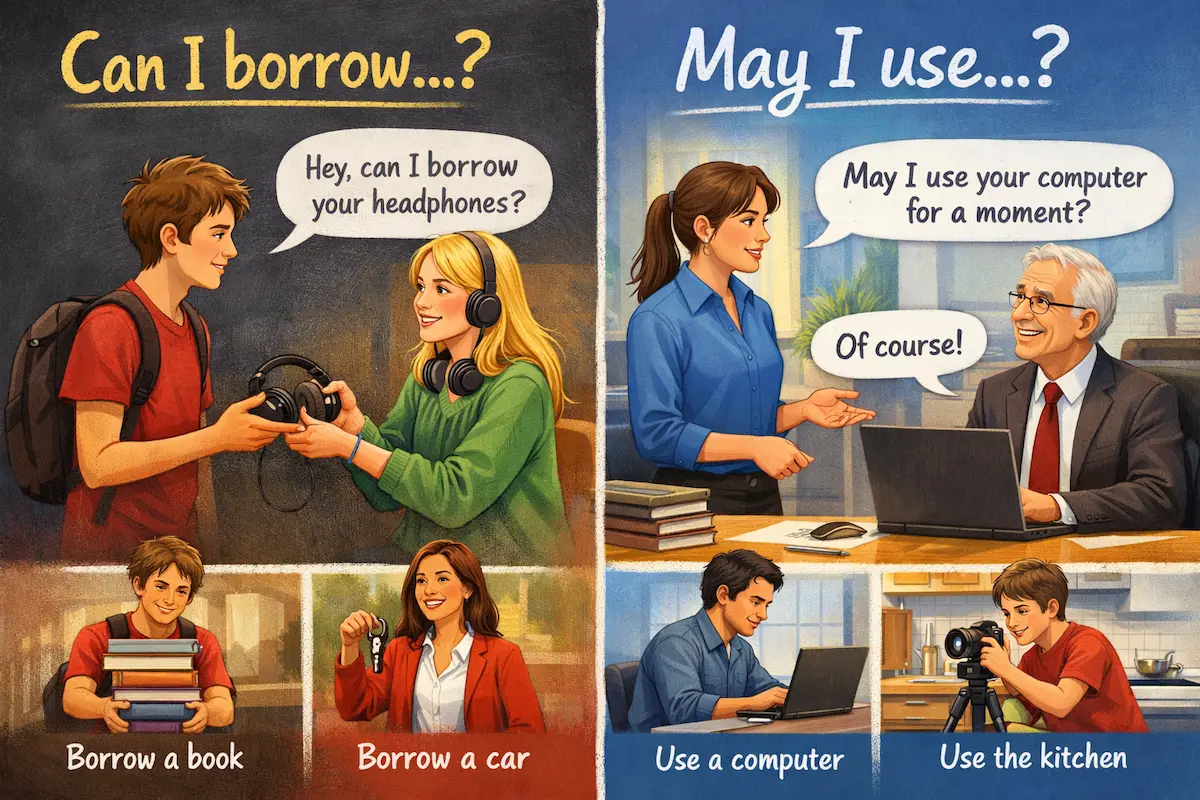
This synonyms-in-context guide explains the nuance between borrowing and using in English. Learn when “Can I borrow…?” implies taking something away and why “May I use…?” sounds more polite for brief, on-the-spot access in daily and professional situations.
Asking for permission is one of the most common social interactions in English. But surprisingly, many learners — and even fluent speakers — still confuse “Can I borrow…?” and “May I use…?”.
On the surface, these two questions seem almost identical. Both are polite. Both involve asking for access to something that belongs to someone else. But in real-life English, they signal very different intentions.
In this usage guide, we’ll explore the subtle but important difference between borrowing and using, explain when each phrase sounds natural, and help you avoid awkward misunderstandings in daily, professional, and social contexts.
Why This Distinction Matters
Language is not just about grammar — it’s about expectation.
When you say “borrow”, you create an expectation that the object will leave the owner’s control and be returned later. When you say “use”, you signal temporary access, usually right where you are.
Mixing these two can confuse the listener and sometimes make your request sound inappropriate or inconvenient.
What Does “Can I Borrow…?” Really Mean?
Borrow means to take something with the intention of returning it later.
Can I borrow your pen?
This sentence implies:
- You will take the pen away
- You will keep it for some time
- You will return it later
Even if the time is short, the assumption of temporary ownership is present.
Common Contexts for “Borrow”
You typically use borrow when:
- You plan to leave the room or location
- The item will be with you for minutes, hours, or days
- The owner won’t need it immediately
Can I borrow your charger for the afternoon?
What “Borrow” Can Accidentally Signal
Sometimes, using borrow can feel too intrusive — especially if the object is personal or essential.
Can I borrow your phone?
This can sound alarming unless context is clear.
What Does “May I Use…?” Mean?
Use means to access or operate something without taking it away.
May I use your phone?
This usually implies:
- You will stay nearby
- The owner can observe or reclaim it immediately
- The use will be brief
Why “Use” Often Sounds Politer
Because “use” suggests minimal disruption, it often feels more considerate.
May I use your laptop for a minute?
This signals respect for the owner’s time and property.
Can vs May: Does It Matter?
Technically:
- Can = ability
- May = permission
In modern English, can is widely accepted in casual conversation. However, may still sounds more polite and formal.
Borrow vs Use in Everyday Situations
Borrow: Can I borrow your book overnight? Use: May I use your book to check one page?
The difference is not politeness — it’s duration and control.
Professional Contexts: Choose Carefully
In offices, schools, and shared spaces, choosing the wrong verb can make your request sound careless.
Better: May I use the conference room for 10 minutes? Risky: Can I borrow the conference room?
Rooms and systems are typically used, not borrowed.
Social Etiquette and Personal Items
Personal items like phones, wallets, or headphones require extra sensitivity.
Using use often feels safer and less invasive.
What Native Speakers Expect
Native speakers subconsciously process:
- Will I lose access to this item?
- For how long?
- Is this convenient for me?
Your word choice answers these questions instantly.
Common Learner Mistake
Incorrect: Can I borrow your computer to check my email? Correct: May I use your computer to check my email?
The incorrect version suggests taking the computer away.
Politeness Boosters You Can Add
You can soften either request with:
- Excuse me
- For a moment
- If you don’t mind
Excuse me, may I use your charger for a moment?
Practice Test
Please answer the following questions. To see the correct answer, please click the arrow icon.
Which verb implies taking something away and returning it later?
Answer: borrow Explanation: Borrow implies temporary ownership.
Which phrase sounds better for brief, on-the-spot access?
Answer: May I use… Explanation: It suggests minimal disruption.
Why can “borrow” sound intrusive?
Answer: It implies removal and delayed return. Explanation: This may inconvenience the owner.
Is “Can I borrow…?” grammatically wrong?
Answer: No. Explanation: The issue is nuance, not grammar.
Final Thoughts: Small Words, Big Signals
The difference between borrow and use is not about politeness alone — it’s about respect, expectation, and clarity.
Choosing the right verb shows social awareness and fluency. When in doubt, ask yourself: Am I taking this away, or just using it here?