"Believe In" vs. "Believe" – Trust vs. Truth
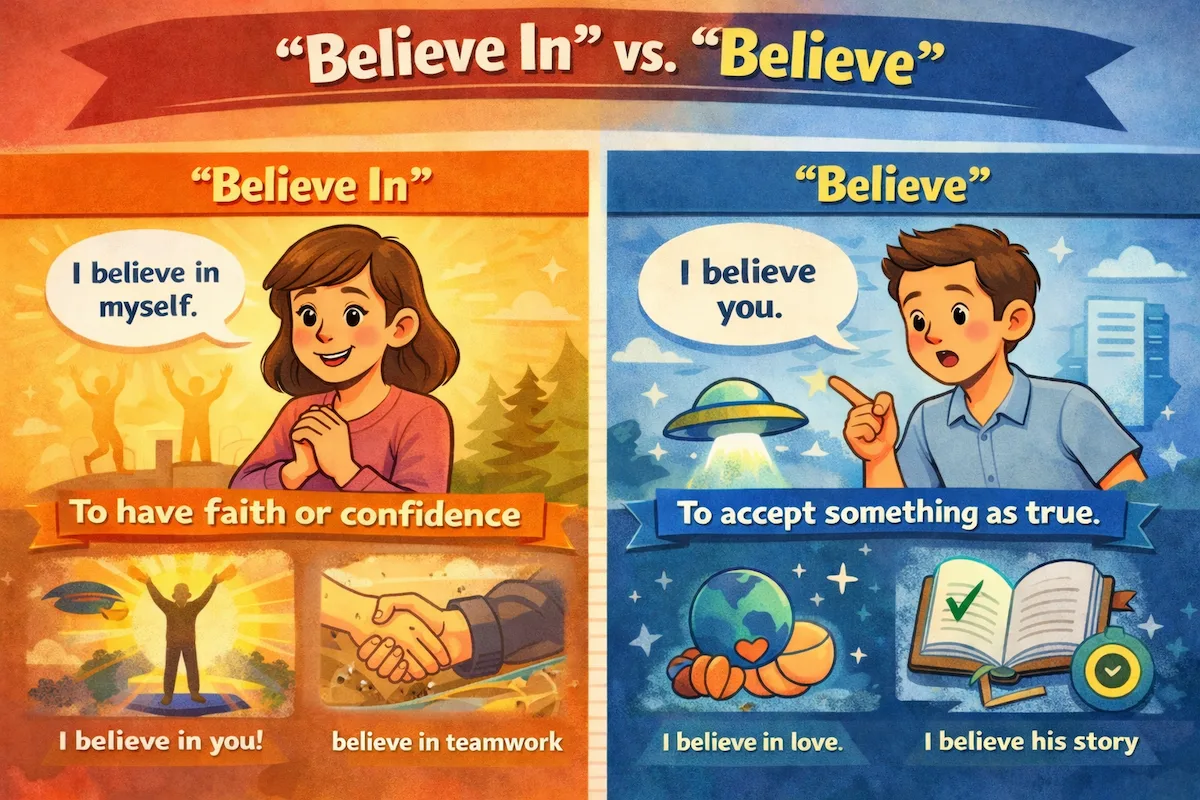
This guide explains the difference between “believe” and “believe in” in English. Learn how “believe” is used for truth and credibility, while “believe in” expresses trust, faith, and emotional support, with clear examples and practice questions.
The verbs “believe” and “believe in” look almost identical, but that small preposition in changes everything. Many English learners assume the two forms are interchangeable — but native speakers feel a clear difference in meaning.
Choosing the wrong one doesn’t usually break grammar, but it does change what you are saying emotionally. Are you trusting someone’s honesty, or are you expressing faith in their values, abilities, or existence?
In this Preposition Tips guide, you’ll learn the deep difference between believe and believe in, how each one works in real sentences, and how to avoid one of the most common meaning mistakes in English.
The Core Difference in Simple Terms
Let’s start with the clearest possible distinction:
- Believe → accepting something as true
- Believe in → having trust, faith, or confidence
One is about truth. The other is about trust.
What Does “Believe” Mean?
Believe is used when you think a statement, fact, or claim is true.
I believe what she said.
Here, you are judging the truthfulness of information.
You are not expressing emotional support or faith — only acceptance of a statement as accurate.
Common Uses of “Believe”
“Believe” commonly appears with:
- Statements
- Facts
- Claims
- Stories
- Explanations
I believe the report is accurate. Do you believe him?
In each case, the focus is credibility.
What Does “Believe In” Mean?
Believe in goes beyond facts. It expresses faith, trust, or confidence.
I believe in you.
This does not mean “I think you are telling the truth.” It means:
I trust your ability, values, or potential.
Things We Commonly “Believe In”
- People
- Ideas
- Values
- Principles
- Causes
- Existence (religion, philosophy)
She believes in hard work. They believe in equality.
Believe vs. Believe In: Side-by-Side
I believe him. I believe in him.
These two sentences mean very different things:
- I believe him → I think he is telling the truth
- I believe in him → I trust his character or potential
Why This Difference Matters Emotionally
Saying “I believe in you” is deeply emotional and supportive.
Saying “I believe you” is neutral and factual.
Mixing them up can weaken encouragement — or unintentionally remove warmth.
Believing Statements vs. Believing People
Even when talking about people, the grammar changes the meaning.
I believe what he said. I believe in what he’s trying to do.
The first judges honesty. The second shows support.
Religious and Philosophical Usage
In religious contexts, believe in refers to belief in existence.
Do you believe in God?
Using “believe” without “in” here would sound incomplete.
Can “Believe” and “Believe In” Ever Overlap?
Rarely — and when they do, the meaning shifts subtly.
I believe his story. I believe in his story.
The first means you think it’s true. The second suggests you support or value its message.
Common Mistakes Learners Make
- ❌ I believe you can do it. (when meaning emotional support)
- ❌ I believe in what she said. (when judging truth)
Correct versions:
I believe in you. I believe what she said.
A Simple Memory Trick
Ask yourself:
Am I judging truth, or expressing trust?
- Truth → believe
- Trust → believe in
Formal vs. Informal Usage
Both forms are neutral and acceptable in formal and informal English.
What changes is emotional tone — not politeness level.
Business and Professional English
I believe the data supports our decision. We believe in our team’s ability to deliver.
Notice how reports use believe, while leadership language often uses believe in.
Practice Test
Please answer the following questions. To see the correct answer, please click the arrow icon.
Which form expresses trust in a person’s ability?
Answer: Believe in. Explanation: It shows confidence or faith.
“I ___ what he said.” Which word fits?
Answer: Believe. Explanation: You are judging truth.
Is “I believe in the report” natural?
Answer: Usually no. Explanation: Reports are judged for accuracy, not faith.
Which sentence expresses encouragement?
Answer: I believe in you. Explanation: It expresses emotional support.
Does adding “in” always change the meaning?
Answer: Yes. Explanation: It shifts from truth to trust.
Final Thoughts: One Word, Two Worlds
“Believe” and “believe in” may look similar, but they live in different emotional worlds.
Use believe when facts matter. Use believe in when people, values, and potential matter.
Mastering this distinction will instantly make your English clearer, warmer, and more precise.