"Miss the Boat" – 5 Idioms for Lost Opportunities
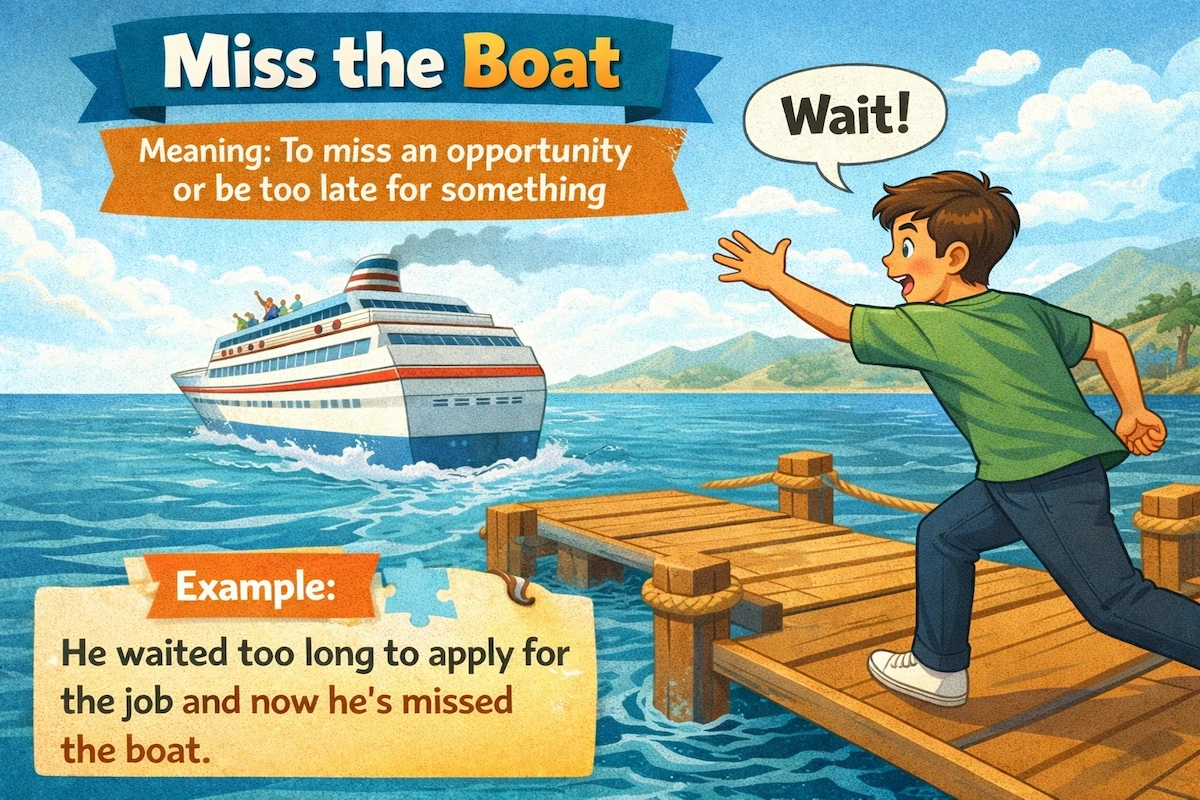
This idioms-and-phrases usage guide explains the meaning of “miss the boat” and related idioms like “miss out” and “that ship has sailed.” Learn how English expresses regret, timing, and missed opportunities in personal and business contexts.
Everyone has experienced that uncomfortable feeling of realizing something important has already passed. The chance is gone, the moment has moved on, and all you can say is, “It’s too late now.” In English, this idea appears again and again — especially through idioms.
One of the most common idioms for this situation is “miss the boat”. It’s short, vivid, and emotionally loaded. But it’s not the only phrase English speakers use to talk about lost opportunities.
In this usage guide, you’ll learn what “miss the boat” really means, where it comes from, and five natural idioms English speakers use to describe regret, bad timing, and chances that slipped away — in both life and business.
What Does “Miss the Boat” Mean?
Miss the boat means to fail to take advantage of an opportunity because you acted too late.
I wanted to invest early, but I missed the boat.
The key idea is timing. The opportunity was available — but not anymore.
Where Did the Idiom Come From?
The phrase comes from a very literal situation. Before planes and fast transport, missing a boat often meant missing your only chance to travel.
Once the boat left the dock, there was no second option.
Over time, the image became metaphorical — and now applies to jobs, money, relationships, and decisions.
When “Miss the Boat” Is Commonly Used
Native speakers use this idiom when:
- The opportunity was time-limited
- Others acted faster
- Regret is involved
- The moment cannot be repeated
By the time I applied, all the positions were filled — I missed the boat.
Idiom #1: “Miss the Boat”
This idiom focuses on late action.
He waited too long to negotiate, and now he’s missed the boat.
It often sounds reflective rather than emotional — a calm acceptance of reality.
Idiom #2: “Miss Out”
Miss out means to fail to experience or obtain something desirable.
Don’t skip the meeting, or you’ll miss out on important updates.
Compared to “miss the boat,” miss out is more general and less final.
Miss the Boat vs Miss Out
Miss the boat → the chance is gone forever Miss out → you didn’t get something, but life continues
Both express loss, but with different emotional weight.
Idiom #3: “Let It Slip Through Your Fingers”
This idiom emphasizes lack of control.
She had a great opportunity, but she let it slip through her fingers.
It suggests regret mixed with self-blame.
Idiom #4: “The Window Has Closed”
This phrase highlights limited time.
The window has closed for early registration.
It sounds neutral and professional, especially in business contexts.
Idiom #5: “That Ship Has Sailed”
This idiom is closely related to “miss the boat,” but it feels more final.
I thought about switching careers, but that ship has sailed.
It often implies acceptance rather than frustration.
Choosing the Right Idiom
Ask yourself:
- Is the opportunity permanently gone?
- Is the tone emotional or neutral?
- Is this personal or professional?
The answers guide your choice.
Using These Idioms in Business English
Idioms can appear in professional settings — but tone matters.
We missed the boat on early adoption, but we can still compete.
“The window has closed” often sounds safer in formal contexts.
Common Learner Mistake
Incorrect: I lost the boat. Correct: I missed the boat.
Idioms rarely allow word changes.
Practice Test
Please answer the following questions. To see the correct answer, please click the arrow icon.
Which idiom best fits a situation where an opportunity is permanently gone?
Answer: Miss the boat. Explanation: It emphasizes late action and no second chance.
Which phrase sounds most neutral in a business report?
Answer: The window has closed. Explanation: It avoids emotional language and sounds professional.
Which idiom suggests personal regret and self-blame?
Answer: Let it slip through your fingers. Explanation: It implies lost control over the situation.
Which idiom is closest in meaning to “didn’t get the experience”?
Answer: Miss out. Explanation: It focuses on not experiencing something desirable.
Why Idioms About Timing Are So Common
Timing shapes careers, relationships, and success. English reflects this reality through vivid metaphors.
Boats, ships, windows, and fingers all represent moments that move — and don’t wait.
Final Thoughts: Timing Is the Message
Idioms like “miss the boat” help English speakers express regret without long explanations.
Learning these phrases allows you to communicate emotional nuance, timing, and reflection naturally — whether you’re talking about life choices or business decisions.
Sometimes the lesson isn’t about what happened — but about when.