"To Prep" vs. "To Revise" – Studying for Your Exams
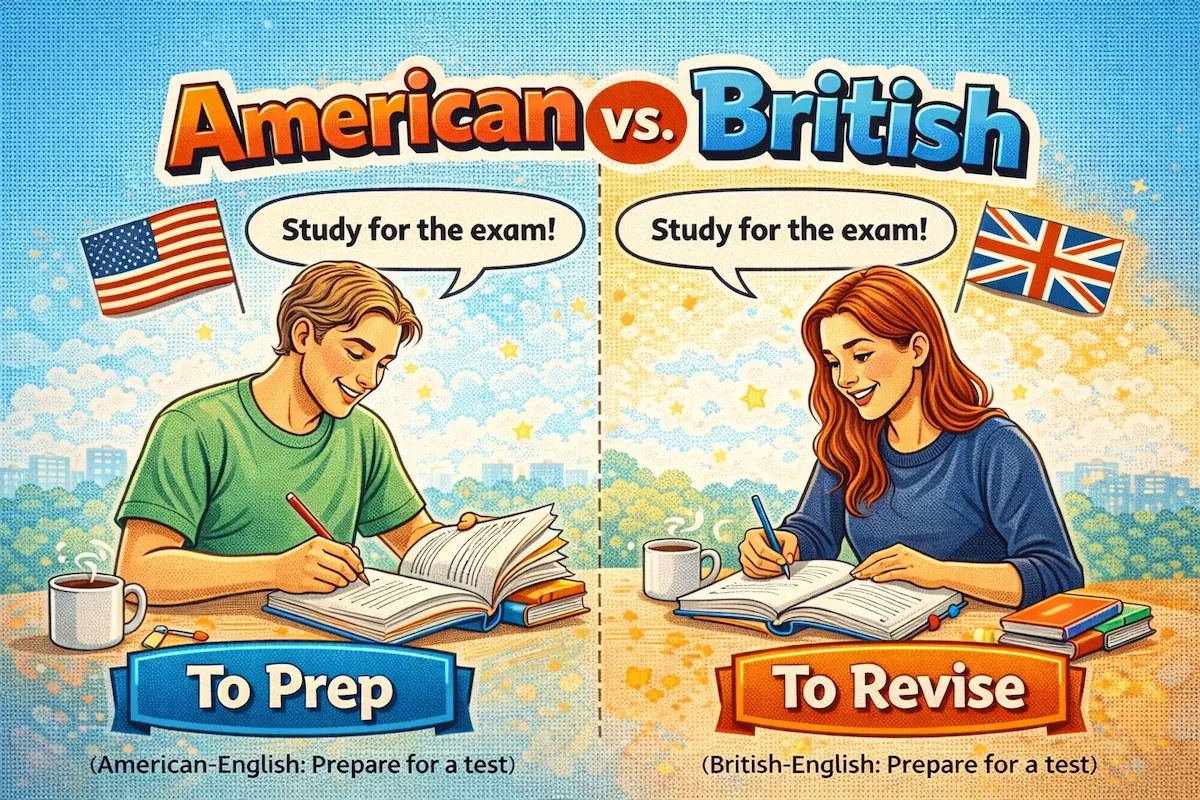
This American vs British guide explains why Americans prep or study for exams while British students revise. Learn how these study verbs reflect different education cultures, when each term sounds natural, and which word is safest to use in international or academic English.
If you’ve ever watched an American movie and heard someone say, “I need to prep for my exam,” then switched to a British TV show where a student says, “I’m revising for my exams,” you might wonder: are they talking about the same thing?
The answer is yes — but the vocabulary choice reflects a deeper difference between American and British English. Words like prep, study, and revise all relate to learning, but they carry different cultural habits and expectations.
In this usage guide, we’ll break down the difference between to prep and to revise, explain how Americans and Brits talk about exams, and show you how to sound natural depending on which variety of English you’re using.
The Shared Goal: Getting Ready for an Exam
At the core, both expressions describe the same activity:
- Reviewing material
- Practicing questions
- Preparing mentally for a test
However, the language used reflects different educational traditions.
How Americans Talk About Studying
In American English, the most common verb is simply study.
I’m studying for my biology exam.
This phrase covers everything from reading textbooks to doing practice tests.
What Does “To Prep” Mean in American English?
To prep is an informal shortening of “to prepare.”
I need to prep for my finals this weekend.
It sounds casual, energetic, and modern — very common in student speech.
Prep Beyond Exams
In American English, prep is flexible.
prep for an interview prep for a presentation prep dinner
This makes “prep” feel action-oriented and practical.
How British English Uses “Revise”
In British English, students almost never say “study for an exam.”
Instead, they use revise.
I’m revising for my maths exam.
To an American ear, this can sound strange at first.
What “Revise” Means to Brits
In British English, revise means:
- Reviewing previously learned material
- Going over notes
- Refreshing knowledge
It does not mean “edit” in this context.
Why Americans Rarely Use “Revise” for Exams
In American English, revise usually means to edit or improve writing.
I need to revise my essay.
Saying “revise for an exam” sounds unusual to most Americans.
Study vs Revise: Same Action, Different Focus
Conceptually:
American focus → learning + preparing British focus → reviewing + reinforcing
The verbs highlight different stages of learning.
Prep vs Revise: Informality vs Tradition
Another key difference is tone.
prep → informal, conversational revise → neutral, academic
This reflects broader cultural attitudes toward education.
Which One Should You Use?
The answer depends on your audience.
- Talking to Americans → study / prep
- Talking to Brits → revise
- International context → study
Using These Words in International English
In international or academic English, study is the safest choice.
Students should study regularly for exams.
It’s understood everywhere.
Common Learner Confusion
Confusing: I revised my exam yesterday. Better: I revised for my exam yesterday.
“Revise” needs the preposition for when talking about exams.
Related Vocabulary Differences
This prep vs revise contrast fits a larger pattern.
American: take an exam British: sit an exam
American: grades British: marks
Does One Sound More Professional?
Not really — they’re just different norms.
Using the “wrong” one won’t cause confusion, but it may signal which variety of English you’re used to.
Prep in Academic Writing
Avoid prep in formal academic writing.
Informal: Students should prep before exams. Formal: Students should prepare for exams.
Revise Outside Education
Outside the classroom, both varieties use revise similarly.
revise a plan revise a document
The difference appears mainly in exam contexts.
Practice Test
Please answer the following questions. To see the correct answer, please click the arrow icon.
Which term do British students usually use for exam preparation?
Answer: revise Explanation: British English uses “revise” for reviewing exam material.
Which word sounds most natural in American student speech?
Answer: study or prep Explanation: Americans commonly say “study for” or “prep for” exams.
Which word is safest in international English?
Answer: study Explanation: “Study” is universally understood.
Does “revise” mean “edit” in British exam contexts?
Answer: No. Explanation: It means reviewing previously learned material.
Why These Differences Matter
Understanding small vocabulary differences helps you adapt quickly.
It shows cultural awareness and improves comprehension when listening to different English accents.
Final Thoughts: Same Goal, Different Words
Whether you prep, study, or revise, the goal is the same: doing your best on your exam.
Knowing which word fits which variety of English helps you sound natural, confident, and culturally fluent.