"Look" vs. "Glance" vs. "Stare" – The Duration of Vision
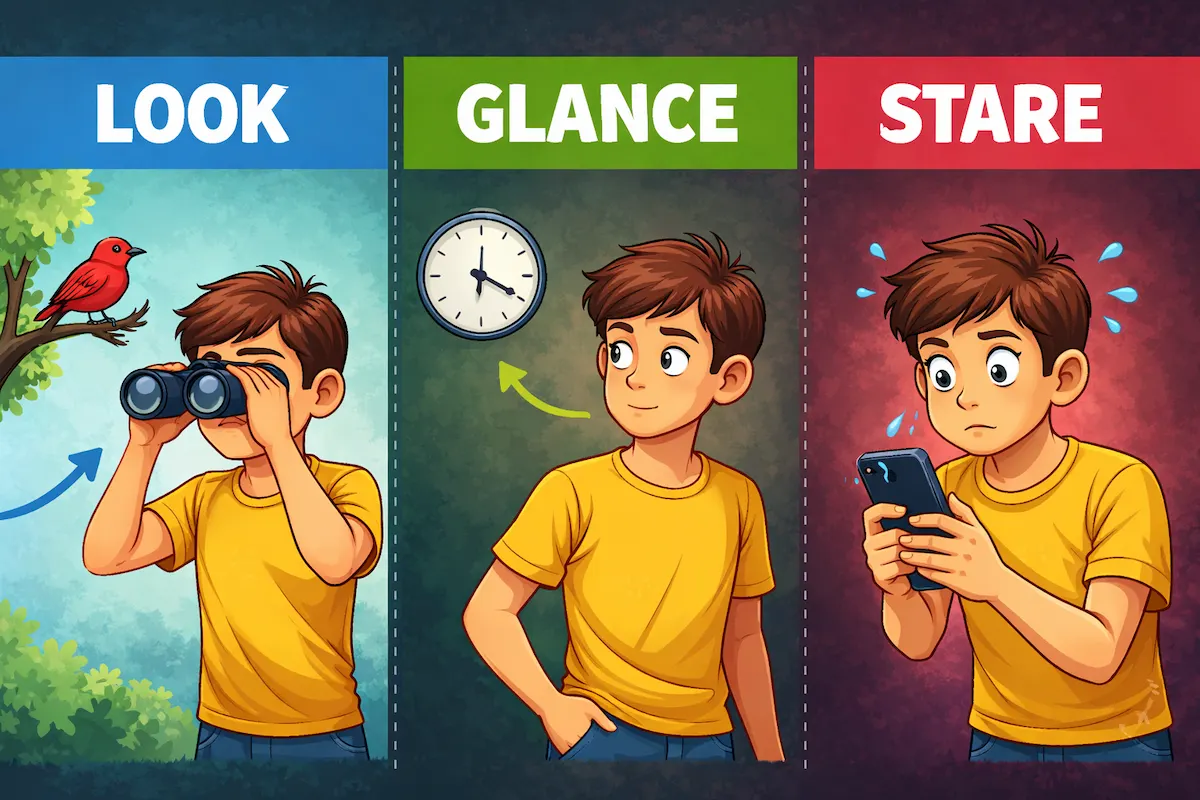
This synonyms-in-context guide explains how look, glance, and stare differ in duration, intention, and social impact. Learn when a quick glance is polite, when a look is neutral, and why staring can sound rude or intense in English.
In English, many verbs seem similar on the surface but carry very different meanings once you look closely. The verbs look, glance, and stare all describe using your eyes — yet they differ in duration, intention, and social meaning.
Choosing the wrong one doesn’t usually break grammar, but it can completely change the tone of your sentence. A harmless description can suddenly sound rude, creepy, or awkward — simply because the wrong verb was used.
In this synonyms-in-context guide, you’ll learn how look, glance, and stare differ, how long each action lasts, and how native speakers interpret these words in real social situations.
Why Duration Matters in Visual Verbs
One of the biggest differences between these verbs is time.
- Glance → very short
- Look → neutral or flexible
- Stare → long and intense
Duration affects how polite, curious, or uncomfortable the action feels.
Understanding “Look”
Look is the most general and neutral of the three verbs. It simply means directing your eyes toward something.
Look at this photo.
The verb does not specify how long the action lasts or how intense it is.
Sentence Patterns with “Look”
Common patterns include:
- look at + object
- look for + object
- look around
She looked at the menu carefully.
Social Meaning of “Look”
Look is socially safe. It does not imply judgment, rudeness, or intensity.
That’s why it’s the default choice in both spoken and written English.
Understanding “Glance”
Glance means to look quickly and briefly.
He glanced at his phone during the meeting.
The action is short and often subtle.
Sentence Patterns with “Glance”
Glance is usually followed by:
- glance at + object
- glance over + text
She glanced over the report before the meeting.
Social Meaning of “Glance”
A glance often suggests:
- Discretion
- Speed
- Low commitment
It can even imply politeness — for example, avoiding eye contact for too long.
Understanding “Stare”
Stare means to look for a long time with strong focus.
He stared at the screen in silence.
This verb carries emotional weight.
Sentence Patterns with “Stare”
Typical patterns include:
- stare at + object/person
- stare into + space
She stared into the distance.
Social Meaning of “Stare”
In many contexts, stare can sound:
- Rude
- Uncomfortable
- Confrontational
When used about people, it often suggests breaking social norms.
Side-by-Side Comparison
She looked at me. → neutral She glanced at me. → quick and subtle She stared at me. → intense and uncomfortable
Intentional vs Accidental Vision
Look and stare are usually intentional.
Glance can be intentional or accidental.
Emotional Context Matters
Stare is often used to show:
- Shock
- Anger
- Confusion
They stared at each other in disbelief.
Why “Stare” Can Sound Rude
In many cultures, prolonged eye contact is uncomfortable.
Using stare reflects that social tension in language.
Using Adverbs with These Verbs
Modifiers change nuance:
- look closely
- glance briefly
- stare intensely
Common Learner Mistakes
- Using “stare” when “look” is intended
- Overusing “look” in descriptive writing
- Ignoring the social weight of “stare”
Practice Test
Please answer the following questions. To see the correct answer, please click the arrow icon.
Choose the best verb: “He ___ at the clock and left.”
Answer: glanced Explanation: The action is quick and brief.
Which verb sounds rude when describing eye contact?
Answer: stare Explanation: It implies long, intense focus.
Which verb is the most neutral?
Answer: look Explanation: It carries no social judgment.
Is this sentence natural? “She stared at the menu quickly.”
Answer: No. Explanation: “Stare” implies duration, which conflicts with “quickly.”
Final Thoughts: Eyes Speak Before Words
Look, glance, and stare all describe vision — but they tell very different stories about time, intention, and emotion.
Mastering these subtle differences helps you describe scenes more naturally and avoid accidental rudeness in English communication.