What Does "POV" Mean? How to Use Point of View on TikTok and Instagram
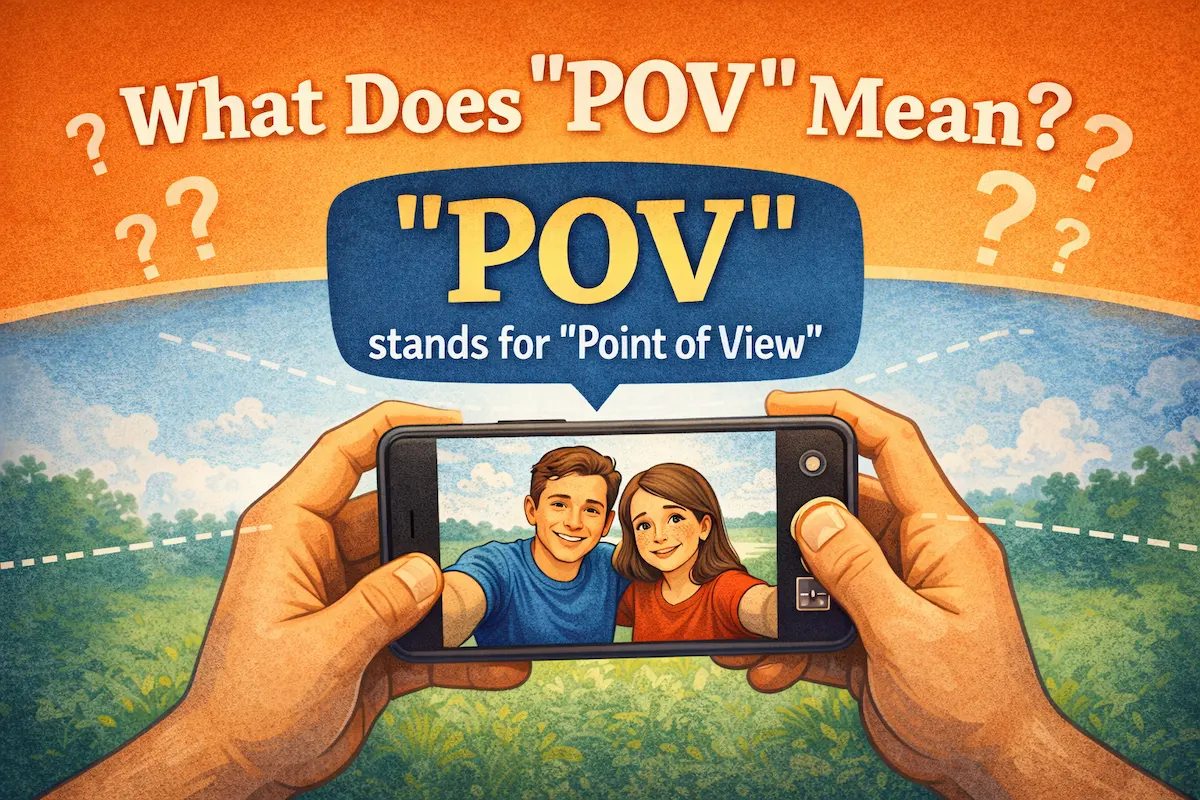
This guide explains the meaning of POV in social media culture and how it evolved from a storytelling term into viral slang. Learn how to write effective POV captions, avoid common mistakes, and create relatable TikTok and Instagram content that feels immersive.
If you scroll through TikTok or Instagram long enough, you will definitely see videos starting with one word in all caps: POV.
Sometimes the video makes perfect sense. Other times, you might wonder why the “point of view” doesn’t seem logical at all. Is POV being used correctly, or has it become something else entirely?
In this social media slang guide, you’ll learn what POV really means, how it evolved from a technical storytelling term into viral slang, and how to use it properly on TikTok and Instagram without confusing your audience.
What Does “POV” Mean Originally?
POV stands for Point of View.
Traditionally, it describes the perspective from which a story is told.
The novel is written from the main character’s point of view.
In film and photography, POV refers to seeing something as if through someone’s eyes.
How POV Entered Social Media Culture
On platforms like TikTok, POV shifted from a technical storytelling term to a format label.
Creators began using “POV” to invite viewers into a specific situation or role.
POV: You’re the new kid at school.
The goal is immersion, not accuracy.
What POV Means in Social Media Slang
In modern slang, POV often means:
- Imagine yourself in this situation
- You are experiencing this moment
- This is meant to be relatable
It’s less about camera angle and more about emotional perspective.
Why POV Videos Are So Popular
POV content works because it:
- Creates instant engagement
- Feels personal
- Encourages empathy
- Makes viewers feel included
Instead of watching someone else’s story, the viewer becomes the character.
POV on TikTok vs. Instagram
While both platforms use POV, the tone differs slightly.
- TikTok POV → narrative, dramatic, or humorous
- Instagram POV → aesthetic, emotional, or lifestyle-focused
Correct POV Structure
A classic POV caption follows this structure:
POV: + situation involving the viewer
Example:
POV: You realize it’s Friday tomorrow.
Common POV Themes
- School and work life
- Relationships
- Embarrassing moments
- Dream scenarios
- Emotional realizations
POV vs. “Imagine”
“Imagine” invites thought.
“POV” invites embodiment.
Imagine you win the lottery. POV: You just won the lottery.
Why Some POVs Feel “Wrong”
Many creators misuse POV by showing content that contradicts the viewer’s perspective.
❌ POV: You’re crying (but the camera shows someone else crying)
This breaks immersion, but it has become socially accepted.
POV Has Evolved Beyond Logic
On social media, POV no longer needs to be technically accurate.
It now functions as a storytelling signal rather than a strict definition.
Using POV Ironically
Many users now use POV humorously or sarcastically.
POV: You said “one more episode.”
Grammar Patterns with POV
Common sentence patterns:
POV: You + verb POV: When you + situation POV: That moment when you + realization
Where POV Sounds Natural
- TikTok captions
- Instagram Reels
- Relatable memes
- Short-form video storytelling
Where POV Sounds Wrong
- Academic writing
- Professional emails
- Formal presentations
POV vs. First Person Writing
POV slang often uses second person (“you”), not first person (“I”).
This is what makes it immersive.
Why Brands Use POV Content
Brands love POV because it:
- Feels authentic
- Encourages interaction
- Boosts watch time
Practice Test
Please answer the following questions. To see the correct answer, please click the arrow icon.
What does POV stand for?
Answer: Point of View. Explanation: It refers to perspective.
In social media slang, what does POV usually invite?
Answer: The viewer to imagine themselves in a situation. Explanation: POV creates immersion.
Is POV always used logically on TikTok?
Answer: No. Explanation: Slang usage prioritizes relatability over technical accuracy.
Which pronoun is most common in POV captions?
Answer: “You.” Explanation: It places the viewer inside the scenario.
Should POV be used in formal writing?
Answer: No. Explanation: It is informal slang.
Final Thoughts: POV Is About Connection
In social media culture, POV is no longer just a storytelling term — it’s a way to build instant emotional connection.
When used well, it makes your content relatable, immersive, and highly shareable. Just remember: POV works best when the viewer truly feels like they’re part of the moment.