10 "Time" Idioms That Will Save Your Daily Conversations
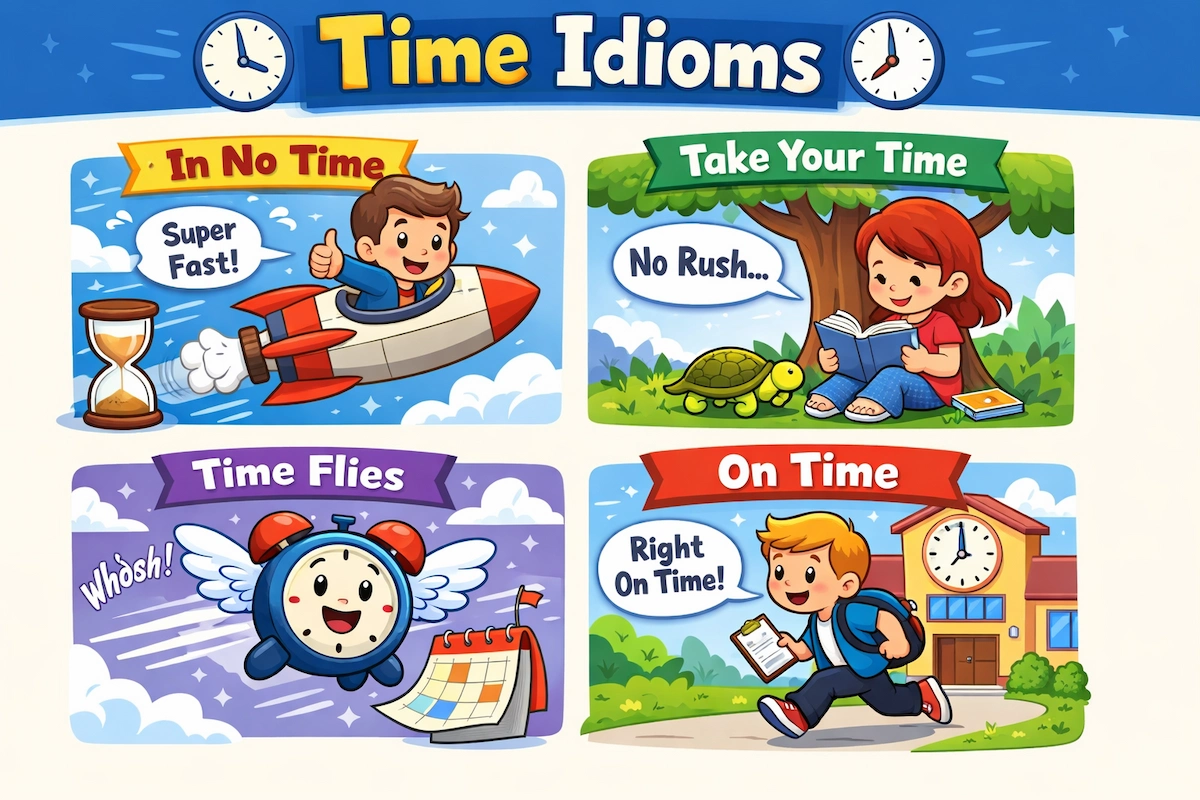
This usage guide explains 10 common “time” idioms used in daily conversations. Each idiom is explained clearly with natural examples, helping you understand fast-paced spoken English and sound more relaxed, fluent, and confident in everyday situations.
Time is one of the most common topics in daily conversation. We talk about time when we’re late, busy, stressed, relaxed, excited, or waiting for something to happen. Because of that, English has developed dozens of idioms built around the word time.
The problem is that many learners understand the word time literally, but struggle when it appears inside idiomatic expressions. Native speakers use these idioms naturally every day — at work, with friends, in text messages, and in casual chats — often without even realizing it.
In this usage guide, you’ll learn 10 essential “time” idioms that can instantly improve your daily conversations. Each idiom is explained in a clear, natural way, with realistic examples you can actually use in real life — not textbook sentences that sound stiff or artificial.
Why “Time” Idioms Matter in Daily Conversations
Daily conversations move fast. People don’t usually speak in full, carefully planned sentences. Instead, they rely on familiar expressions that communicate ideas quickly and emotionally. Time idioms do exactly that.
When someone says “I’m pressed for time” or “It’s about time”, they’re not talking about clocks or calendars. They’re expressing pressure, relief, frustration, or urgency — all in just a few words.
If you understand and use these idioms correctly, you won’t just understand English better — you’ll sound more natural, relaxed, and confident in everyday interactions.
1. “About time”
About time is used when something happens later than expected, and the speaker feels relief, impatience, or mild annoyance about the delay.
It’s about time you replied to my message — I sent it this morning and thought you’d forgotten about it.
In daily conversations, this idiom often carries emotion. It can sound playful among friends, but slightly critical if the context is tense, so tone matters.
2. “In no time”
In no time means very quickly or sooner than expected. It’s commonly used to reassure someone or to describe fast results.
Don’t worry about the setup — we’ll have everything ready in no time once everyone arrives.
This idiom is perfect for daily conversation because it sounds optimistic and encouraging, especially when someone feels rushed or stressed.
3. “At the same time”
At the same time is used to talk about two things happening together, or to introduce a contrast between two ideas.
I’m excited about the new job, but at the same time I’m nervous about starting somewhere completely new.
In spoken English, this idiom helps you express mixed feelings naturally, which happens a lot in real-life conversations.
4. “Time flies”
Time flies is used when you’re surprised at how quickly time has passed, usually during enjoyable or busy moments.
I can’t believe it’s already evening — time really flies when you’re catching up with old friends.
This is one of the most common and friendly time idioms, often used in casual chats, phone calls, and social situations.
5. “Kill time”
Kill time means to do something just to make the waiting period feel shorter. It does not have any violent meaning in daily usage.
We have an hour before the movie starts, so let’s grab a coffee and kill some time nearby.
This idiom is extremely useful in everyday conversation, especially when talking about waiting, delays, or free moments.
6. “On time”
On time means arriving or happening at the expected or scheduled time — not early and not late.
The train was actually on time today, which was a nice surprise considering the weather.
Although this phrase looks simple, it’s often confused with in time. In daily conversation, on time is about schedules and punctuality.
7. “At the right time”
At the right time refers to something happening when it is most appropriate or useful, not just according to a clock.
You called at the right time — I was just thinking about asking you for advice.
This idiom is common in friendly conversations and often carries a positive or grateful tone.
8. “From time to time”
From time to time means occasionally, but not regularly or frequently.
I don’t eat fast food often, but from time to time it’s nice to treat myself.
This idiom helps you sound natural when talking about habits without sounding too strict or absolute.
9. “Take your time”
Take your time is used to tell someone there is no rush and they don’t need to hurry.
Take your time choosing — we’re not in a hurry and the store isn’t closing anytime soon.
In daily conversations, this phrase sounds polite, relaxed, and reassuring, which makes it very useful in social situations.
10. “All the time”
All the time means very often or constantly. It’s commonly used to talk about habits, repeated actions, or frequent situations.
He checks his phone all the time, even when we’re in the middle of a conversation.
This idiom is extremely common in spoken English and helps you sound more natural when describing everyday behavior.
How to Use Time Idioms Naturally
The key to using time idioms well is not memorization, but context. Listen to how native speakers use them in conversations, shows, and real-life situations. Notice the emotion behind the words, not just the meaning.
Start by choosing two or three idioms from this list and using them consciously during the week. Once they feel natural, add a few more. Over time, they’ll become part of your everyday English without effort.
Also remember that idioms are flexible. You don’t need to force them into every sentence. Use them when they genuinely fit the situation, and your English will sound much more authentic.
Final Thoughts: Small Idioms, Big Impact
Time idioms may look small, but they have a big impact on how natural your English sounds. They help you express feelings, manage conversations, and connect with people more easily in daily life.
By understanding and using these 10 “time” idioms, you’ll find that everyday conversations feel smoother and more enjoyable. And once you start noticing them, you’ll realize just how often native speakers rely on them — all the time.