"Fix" vs. "Resolve" – Closing the Loop on Workplace Issues
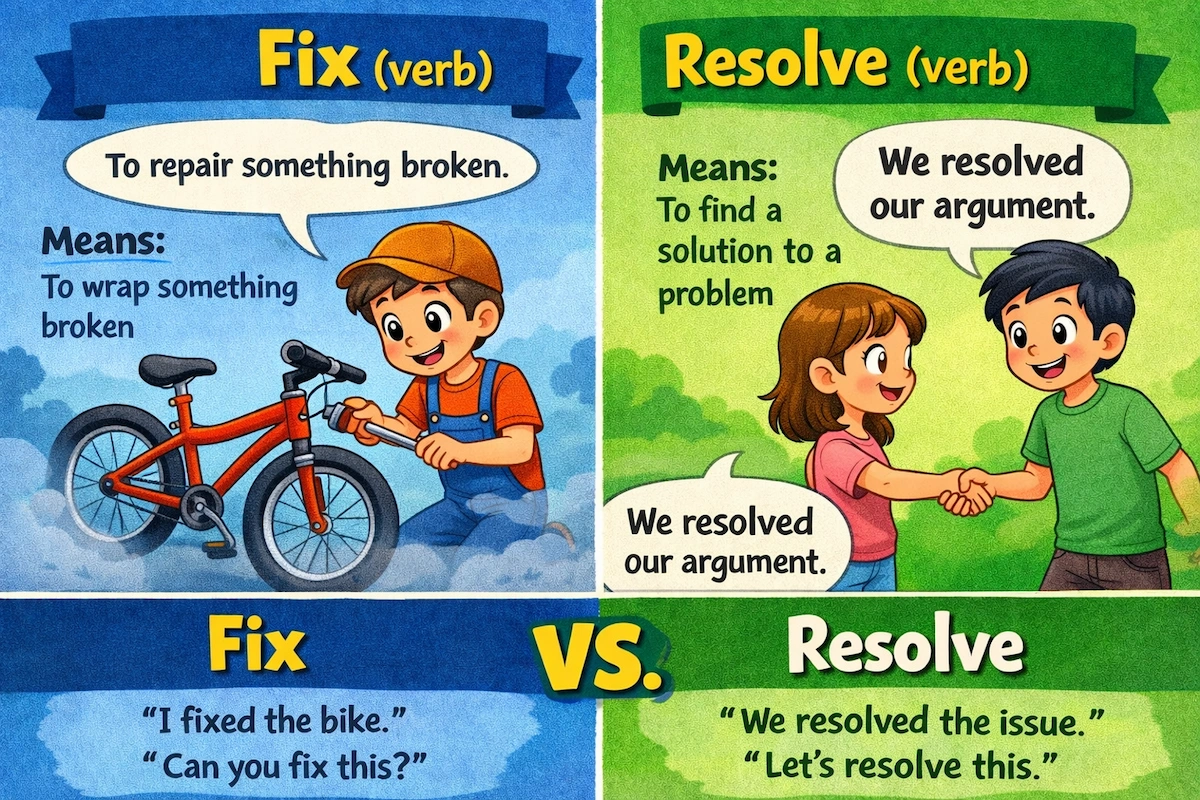
This formal-vs-informal usage guide explains how “fix” and “resolve” differ in workplace English. Learn why “fix” sounds casual, why “resolve” signals professional closure, and how to choose the right verb when discussing technical issues, conflicts, and client concerns.
In the workplace, problems happen every day. A system breaks. A client complains. A misunderstanding grows into tension. When we talk about solving these problems in English, two verbs appear again and again: fix and resolve.
At first, they seem interchangeable. After all, both suggest that something is broken and needs to be dealt with. But in professional communication, choosing between fix and resolve is not just about vocabulary — it’s about tone, responsibility, and how seriously you frame the issue.
In this usage guide, we’ll explore the real difference between fix and resolve, why “fix” often sounds too casual for workplace issues, and why “resolve” has become the preferred verb in professional problem-solving and conflict management.
Why Word Choice Matters in Workplace Problem-Solving
When you describe how a problem was handled, you are also communicating:
- How complex the issue was
- How seriously it was taken
- Whether it is fully closed or still ongoing
- Your level of professionalism
This is why managers, executives, and formal documents rarely say “we fixed it” — even when the problem is technically solved.
“Fix”: The Informal, Practical Verb
Fix is one of the most common verbs in everyday English. It means to repair, correct, or make something work again.
I fixed the printer this morning.
The word feels:
- Direct
- Practical
- Hands-on
- Informal
In casual conversation, “fix” is perfectly natural.
Typical Contexts Where “Fix” Works Well
Native speakers commonly use fix for:
- Technical repairs
- Small problems
- Personal tasks
- Everyday inconveniences
Don’t worry, I’ll fix the typo later.
The issue here is minor and informal.
Why “Fix” Can Sound Too Casual at Work
In professional settings, “fix” can unintentionally minimize the problem.
We fixed the client issue.
This sentence may sound vague or incomplete. Did you:
- Address the root cause?
- Communicate with stakeholders?
- Prevent the issue from happening again?
“Fix” focuses on the action, not the outcome.
“Resolve”: The Professional Closure Verb
Resolve means to find a solution to a problem or conflict in a complete and satisfactory way.
The issue has been resolved.
This verb implies:
- Analysis
- Decision-making
- Communication
- Finality
“Resolve” signals that the loop is closed.
Why “Resolve” Sounds More Formal
Unlike “fix,” resolve is abstract rather than physical.
It is commonly used in:
- Business reports
- Customer support updates
- Meeting summaries
- Legal and policy language
The conflict was resolved through mediation.
Fix vs Resolve: A Meaning Shift
Fix → repair the problem Resolve → eliminate the problem and its consequences
This subtle shift is why “resolve” is preferred when outcomes matter.
Technical Issues: Fixing vs Resolving
In technical teams, both verbs may appear — but with different scopes.
The engineer fixed the bug. The team resolved the incident.
The first sentence focuses on code. The second includes communication, documentation, and prevention.
Conflicts and Complaints
When people are involved, “fix” often sounds inappropriate.
❌ We fixed the disagreement. ✔ We resolved the disagreement.
Conflicts are not repaired like machines — they are resolved.
Customer Communication
Compare the tone:
We fixed your issue. We have resolved your concern.
The second sounds calmer, more respectful, and more professional.
Why Managers Prefer “Resolve”
Leaders focus on outcomes, not just actions.
Saying an issue is “resolved” communicates:
- Accountability
- Completion
- Stability
It reassures stakeholders.
Common Learner Mistake #1
Informal: I fixed the conflict with my colleague. Professional: I resolved the conflict with my colleague.
Common Learner Mistake #2
Informal report: The issue was fixed yesterday. Formal report: The issue was resolved yesterday.
When “Fix” Is Still Acceptable at Work
“Fix” is not forbidden. It works when:
- The issue is minor
- You’re speaking informally
- You’re talking about tools or objects
I’ll fix the formatting before sending the file.
Choosing the Right Verb Instantly
Ask yourself:
Am I describing a repair — or a completed solution?
Repair → fix Completed solution → resolve
Why “Resolve” Signals Professional Maturity
Using “resolve” shows that you think beyond quick repairs.
It suggests you consider:
- Root causes
- Long-term impact
- Clear closure
This is why it dominates professional vocabulary.
Final Thoughts: Closing the Loop
Fix and resolve are not enemies — they serve different purposes.
Use fix for practical, hands-on repairs. Use resolve when you want to show that an issue has been fully addressed, communicated, and closed.
In the workplace, words don’t just describe actions — they define outcomes.