"Good" vs. "Satisfactory" vs. "Exceptional" – The Performance Scale
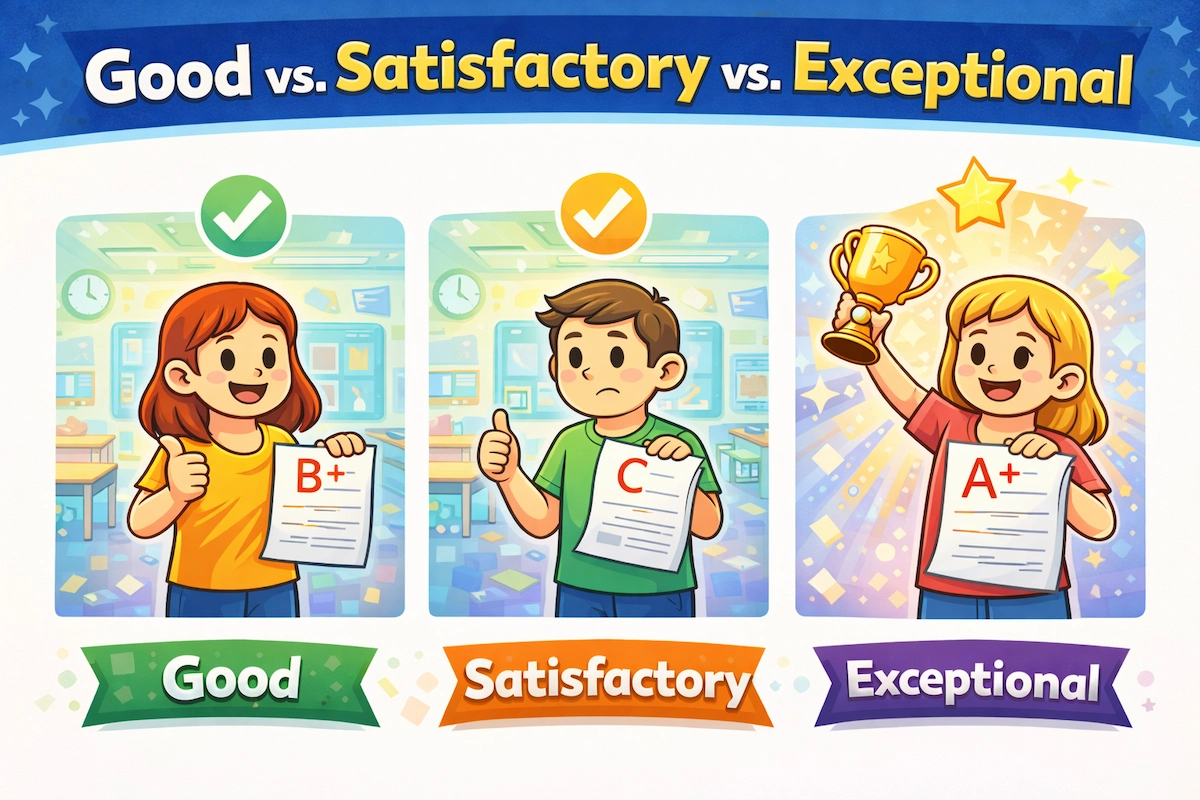
This Formal vs Informal usage guide explains the difference between “good,” “satisfactory,” and “exceptional” in performance evaluations. Learn what each word really implies, how tone changes with context, and how to choose the right level of praise or assessment in professional and everyday English.
In professional and academic settings, performance is rarely described with extreme language. Instead of words like “amazing” or “terrible,” people often rely on a more measured vocabulary. Three words appear again and again in evaluations, reports, and feedback sessions: good, satisfactory, and exceptional.
At first glance, these words seem straightforward. But in reality, they operate on a subtle performance scale that can be confusing — especially for non-native speakers. Depending on context, tone, and formality, each word can carry more meaning than it appears to on the surface.
In this usage guide, we’ll explore how good, satisfactory, and exceptional are used across formal and informal contexts, what they really imply, and how to choose the right word when evaluating performance, work quality, or results.
Why Performance Language Is Often Indirect
In many professional cultures, especially in workplaces and academic environments, feedback is delivered carefully. Direct criticism or exaggerated praise can feel uncomfortable or unprofessional.
That’s why performance language often sounds neutral. Words like good and satisfactory may appear positive, but their true meaning depends on where they sit on the evaluation scale.
Understanding this scale helps you read between the lines — and avoid misunderstandings when you’re the one giving feedback.
The Performance Scale: An Overview
While every organization uses slightly different terminology, many performance systems follow a similar pattern:
- Below expectations
- Satisfactory
- Good
- Exceptional
Notice that good is not the highest level — and satisfactory is often the minimum acceptable standard.
Let’s look at each word more closely.
What Does “Satisfactory” Really Mean?
Satisfactory is one of the most misunderstood evaluation words. Many learners assume it means “good enough” in a positive sense — but in formal contexts, it usually means met the minimum requirements.
In performance reviews, satisfactory often signals that the work was acceptable, but not impressive.
Her performance this quarter was satisfactory and met all basic expectations.
This sentence sounds neutral, but it doesn’t suggest strong enthusiasm. It implies there’s room for improvement.
In informal conversation, however, satisfactory can sound stiff or even slightly negative.
The service was satisfactory, but nothing special.
Here, the word subtly suggests disappointment — especially compared to warmer words like “good” or “great.”
Formal vs Informal Use of “Satisfactory”
In formal writing, satisfactory is common and acceptable. You’ll see it in reports, evaluations, and academic assessments.
In informal speech, however, it can sound distant or overly critical.
Informal: The results were okay.
Formal: The results were satisfactory.
Both sentences describe the same outcome, but the tone is very different.
What Does “Good” Mean on the Scale?
Good is one of the most flexible words in English. Its meaning changes dramatically depending on context.
In everyday conversation, good often expresses genuine approval.
You did a good job on that presentation.
In professional evaluations, however, good usually sits above satisfactory but below exceptional.
His overall performance this year was rated as good.
This suggests solid, reliable work — but not outstanding or remarkable.
In formal contexts, good can actually be a measured, restrained compliment rather than enthusiastic praise.
Why “Good” Can Sound Weak in Formal Writing
In academic or corporate writing, good is sometimes avoided because it’s vague.
Compare these two sentences:
The results were good.
The results met the project objectives and demonstrated strong consistency.
The second version sounds more precise and professional. That’s why formal writing often replaces good with more specific descriptions.
What Does “Exceptional” Mean?
Exceptional sits at the top of the performance scale. It describes work that clearly exceeds expectations and stands out from the norm.
In professional settings, this word is used carefully and sparingly.
Her leadership during the project was exceptional and exceeded all expectations.
This kind of language signals strong praise, high impact, and often special recognition.
Unlike good or satisfactory, exceptional leaves little ambiguity. It clearly communicates excellence.
Formal vs Informal Use of “Exceptional”
In formal contexts, exceptional sounds professional and powerful.
The candidate demonstrated exceptional analytical skills.
In informal speech, however, it may sound exaggerated or overly serious.
Informal: The food was amazing.
Formal: The food quality was exceptional.
Both express praise, but the tone and setting determine which feels natural.
Reading Between the Lines in Feedback
One of the most important skills in professional English is interpreting what people really mean.
If a manager says your work is “satisfactory,” they’re usually signaling that improvement is expected.
If they say it’s “good,” you’re doing well — but there’s still room to grow.
If they say it’s “exceptional,” you’re likely among the top performers.
Choosing the Right Word When Giving Feedback
When you’re the one giving feedback, word choice matters even more.
- Use satisfactory when expectations were met but not exceeded
- Use good for consistent, reliable performance
- Use exceptional sparingly, for truly outstanding results
Overusing strong praise can reduce its impact, while underusing it can demotivate others.
Common Learner Mistakes
English learners often make these mistakes with performance language:
- Using satisfactory to mean “very good”
- Using good in highly formal writing
- Using exceptional too casually
Being aware of formality levels helps avoid awkward or misleading feedback.
Final Thoughts: Words Set Expectations
Good, satisfactory, and exceptional may seem like simple adjectives, but in professional communication they carry clear signals about performance and expectations.
Understanding how these words function on a scale — and how their tone changes between formal and informal settings — helps you communicate more clearly, confidently, and appropriately.
Choosing the right word doesn’t just describe performance. It shapes how that performance is understood.