What Does "Extra" Mean? When Someone is Doing Too Much
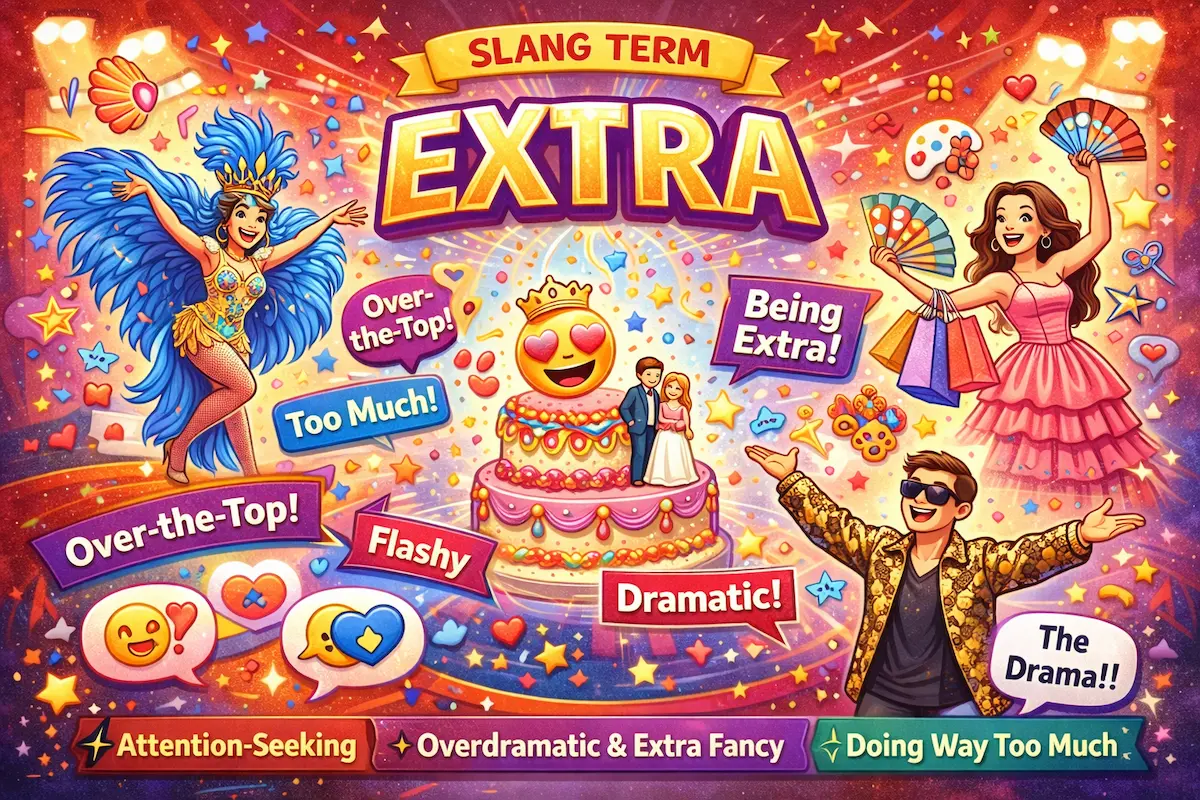
This guide explains the slang meaning of “extra,” how it evolved from its original definition, and when it sounds playful or critical. Learn how to use “extra” naturally in social media and conversation, with examples and practice questions to avoid misuse.
If you’ve ever watched a video, read a comment, or listened to a friend and thought, “Wow, that’s a bit much,” chances are someone nearby described the situation with a single word: extra.
In modern social media slang, extra has nothing to do with quantity, bonuses, or leftovers. Instead, it has become one of the most popular ways to describe behavior that feels over-the-top, dramatic, or unnecessarily intense.
In this guide, we’ll explore what extra really means in slang, how it’s used in everyday conversation, when it’s playful versus insulting, and how to use it naturally without sounding awkward or outdated.
The Basic Slang Meaning of “Extra”
In social media slang, extra describes a person who is doing more than the situation requires.
This “more” can be:
- Too emotional
- Too dramatic
- Too attention-seeking
- Too intense for the moment
She wore a full evening gown to a casual brunch. That’s extra.
How “Extra” Is Different from the Original Meaning
Traditionally, extra simply means “additional” or “more than expected.”
Can I get extra sauce?
Slang extra keeps the idea of “more,” but applies it to behavior instead of objects.
Is Being “Extra” Always Bad?
Not always. Context and tone matter.
Sometimes, calling someone extra is playful or affectionate.
He’s so extra, but that’s why we love him.
Other times, it’s clearly critical.
Stop being extra. It’s not that serious.
“Extra” as a Personality Trait
Many people now use extra as a self-description.
Saying “I’m extra” often means:
- I’m expressive
- I’m dramatic (on purpose)
- I enjoy standing out
I know I’m extra, but I love celebrating everything.
Common Situations Where People Say “Extra”
You’ll often hear or see extra used when:
- Someone overreacts emotionally
- An outfit is overly flashy
- A reaction feels exaggerated
- A minor issue gets huge attention
“Extra” vs. “Dramatic”
While extra and dramatic are similar, they’re not identical.
- Dramatic → emotional or exaggerated reactions
- Extra → unnecessary effort or intensity
Crying over a typo? That’s dramatic and extra.
Using “Extra” as an Adjective
In slang, extra usually functions as an adjective.
That response was extra.
He’s being extra today.
It does not need “very” or “too” — it already implies excess.
Using “Extra” with “Doing Too Much”
A common explanation or paraphrase of extra is:
doing too much
Posting ten stories about a coffee order? That’s extra.
Social Media Examples
On platforms like TikTok and Instagram, extra is often used in captions and comments.
When you dress up just to stay home 😂 so extra
Emojis often soften the judgment and make it playful.
“Extra” vs. “Overreacting”
Overreacting focuses on emotional response.
Extra focuses on effort, performance, or unnecessary intensity.
He didn’t just complain — he made a video about it. Extra.
Can “Extra” Be Offensive?
Yes, depending on tone and relationship.
Calling a stranger extra can sound dismissive or rude.
Among friends, it’s usually safe and humorous.
How to Respond If Someone Calls You “Extra”
Common responses include:
- Owning it: “Yeah, I am.”
- Laughing it off
- Explaining yourself if needed
The reaction depends on whether it was meant playfully or critically.
Using “Extra” Correctly in Conversation
To sound natural:
- Use it informally
- Keep sentences short
- Match the tone of the situation
That outfit is extra, but it works.
When NOT to Use “Extra”
Avoid using extra in:
- Formal writing
- Professional emails
- Serious emotional discussions
In those contexts, use words like excessive or unnecessary.
Practice Test
Please answer the following questions. To see the correct answer, please click the arrow icon.
What does “extra” mean in slang?
Answer: Over-the-top or unnecessary behavior. Explanation: It describes doing more than needed.
Is calling someone “extra” always negative?
Answer: No. Explanation: It can be playful or affectionate depending on tone.
Can “extra” describe fashion?
Answer: Yes. Explanation: It often refers to outfits that stand out a lot.
Should you use “extra” in formal writing?
Answer: No. Explanation: It’s informal slang.
What phrase is similar to “extra”?
Answer: “Doing too much.” Explanation: Both express unnecessary effort or intensity.
Final Thoughts: Extra Is About Excess
At its core, extra is about imbalance — when effort, emotion, or display outweighs what the moment calls for.
Used correctly, it’s a powerful, compact way to comment on modern behavior without long explanations.
Just remember: sometimes being extra is fun — and sometimes it’s exactly what people are rolling their eyes at.