Zebra Crossing vs. Crosswalk – Pedestrian Safety Terms
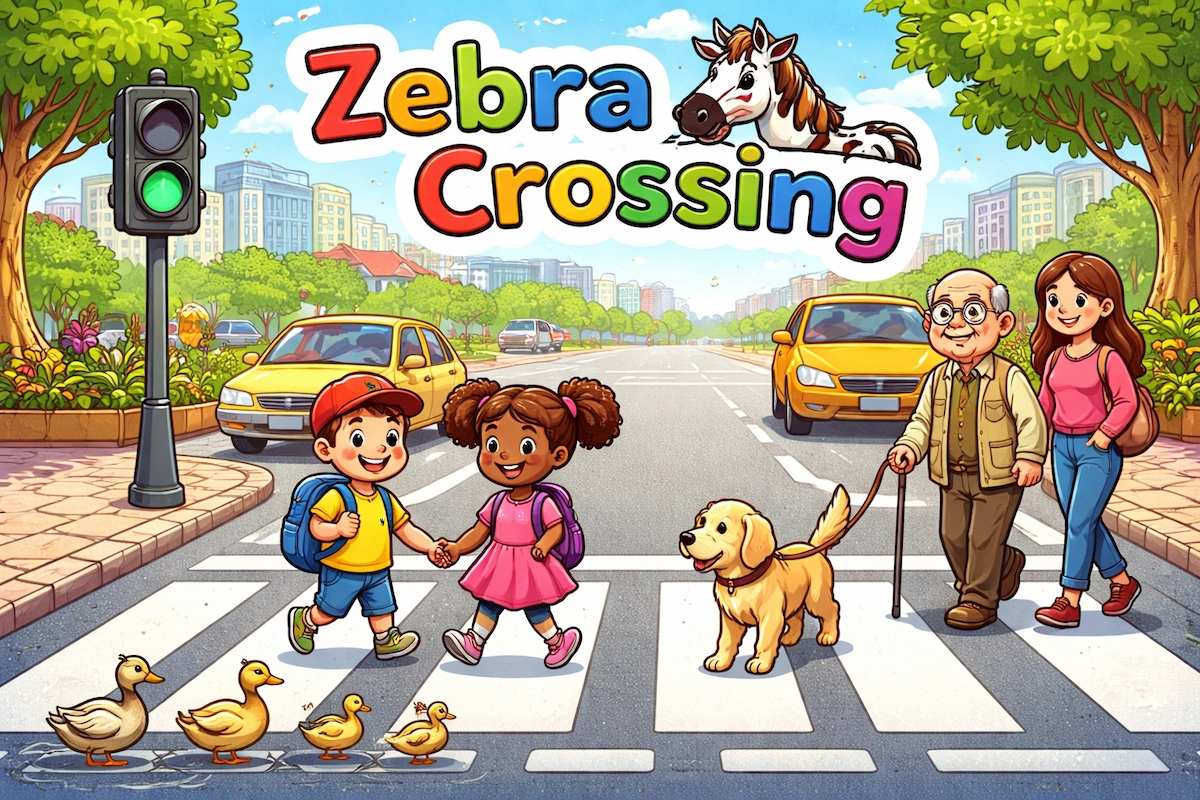
This American vs British usage guide explains the difference between “zebra crossing” and “crosswalk.” Learn why British English uses animal-based names like zebra and pelican for pedestrian crossings, how these systems work, and how to use the correct term depending on whether you’re in the US or the UK.
If you’ve ever traveled between the United States and the United Kingdom, you may have noticed something curious about street signs. In the US, people talk about a crosswalk. In the UK, you’ll hear zebra crossing, pelican crossing, or even puffin crossing.
At first, this difference sounds amusing — why are animals suddenly involved in traffic safety? But these terms aren’t jokes or slang. They reflect different naming traditions, systems, and approaches to pedestrian safety in American and British English.
In this usage guide, we’ll explore the difference between zebra crossing and crosswalk, explain where these terms come from, and help you understand how pedestrian safety language changes between American and British English.
What Is a “Crosswalk” in American English?
In American English, a crosswalk is a designated place where pedestrians can safely cross a road. It is usually marked by white lines painted across the street and may or may not include traffic signals.
Please use the crosswalk when crossing the street.
The term is direct and descriptive: it combines cross and walk, clearly stating its function.
In the US, crosswalk is used in:
- Traffic laws
- Road signs
- Driver education
- Everyday conversation
You might also hear the phrase pedestrian crossing, but crosswalk is by far the most common.
What Is a “Zebra Crossing” in British English?
In British English, a zebra crossing is a specific type of pedestrian crossing marked by bold black-and-white stripes on the road.
The name comes from the visual resemblance to a zebra’s stripes.
Drivers must stop when someone is waiting at a zebra crossing.
Unlike many crosswalks in the US, zebra crossings in the UK often give pedestrians priority without requiring traffic lights.
Why the British Use Animal Names
The UK has a tradition of giving pedestrian crossings memorable, descriptive names. These names often form acronyms or visual associations that are easy to remember.
The most famous examples include:
- Zebra crossing
- Pelican crossing
- Puffin crossing
- Toucan crossing
While they sound playful, each term refers to a specific type of crossing with distinct rules.
What Is a “Pelican Crossing”?
A pelican crossing is a signal-controlled pedestrian crossing used in the UK.
The word pelican is actually an acronym for:
PEdestrian LIght CONtrolled crossing
These crossings use traffic lights that pedestrians activate by pressing a button.
Wait for the green signal before crossing at a pelican crossing.
Puffin and Toucan Crossings
British English continues the animal theme with more advanced crossings.
A puffin crossing uses sensors to detect when pedestrians are still crossing, adjusting signal timing accordingly.
A toucan crossing allows both pedestrians and cyclists to cross together — “two can cross.”
Cyclists should use the toucan crossing instead of the road.
These names combine humor, function, and memorability.
Do Americans Use These Animal Terms?
No. In American English, these animal-based terms are rarely used or understood.
An American speaker would almost always say crosswalk, regardless of whether traffic lights are present.
There’s a crosswalk at the next intersection.
Using terms like zebra crossing in the US may confuse listeners.
Differences in Legal Language
Terminology also reflects legal systems.
In the UK, different crossings come with different legal obligations for drivers.
In the US, crosswalk is a broad legal term, and specific rules depend on state or local law.
This difference explains why British English needs more precise labels.
Formal vs Informal Usage
In both varieties of English, these terms are used formally and informally.
British formal: Pedestrians have priority at zebra crossings.
American informal: Just use the crosswalk over there.
The difference lies in variety, not formality.
Why These Differences Matter for Learners
Understanding these terms helps with:
- Travel safety
- Reading signs correctly
- Understanding local instructions
- Avoiding confusion in conversation
Using the correct term for the country you’re in makes your English sound more natural.
Common Learner Mistakes
Learners sometimes mix the systems:
- Saying “zebra crossing” in the US
- Calling every UK crossing a “crosswalk”
- Assuming animal names are informal slang
These aren’t serious errors, but they can signal unfamiliarity with local usage.
A Simple Rule to Remember
Use this shortcut:
- In the US → crosswalk
- In the UK → zebra crossing (or specific animal term)
Match your vocabulary to your location.
Language Reflects Culture
American English favors direct, functional naming. British English often uses creative, system-based labels.
Neither approach is better — they simply reflect different linguistic traditions.
Final Thoughts: Watch the Road, Watch the Words
Whether you’re using a crosswalk or waiting at a zebra crossing, understanding local terminology helps you stay safe and communicate clearly.
These small vocabulary differences highlight how language adapts to culture, systems, and everyday life.
When in doubt, follow the signs — and use the words locals use.