How to Handle Inappropriate Jokes or Comments in a Meeting
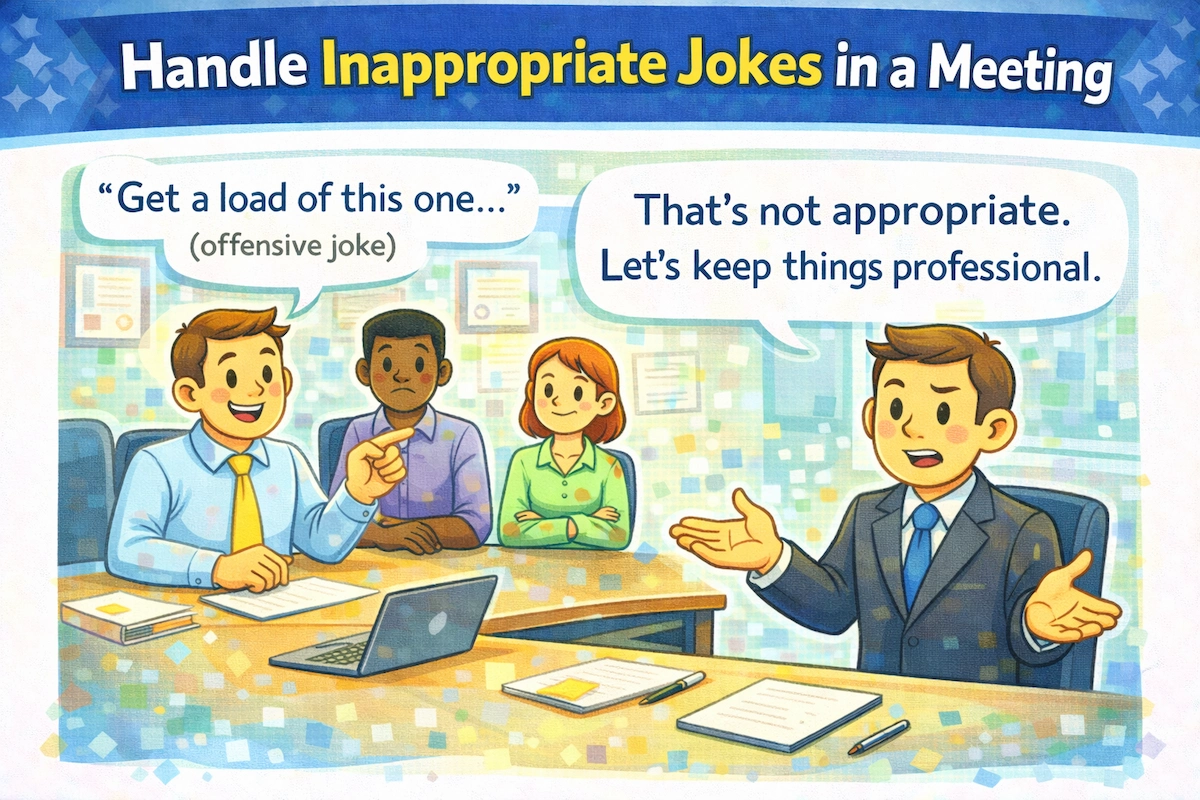
This Business Meetings usage guide explains how to handle inappropriate jokes or comments at work. Learn when to redirect a conversation, when to address behavior directly, and how to set firm professional boundaries while keeping meetings respectful, productive, and on track.
Business meetings are meant to be productive, respectful, and focused. Yet almost everyone has experienced an uncomfortable moment when someone makes an inappropriate joke or comment. It might be subtle, awkward, poorly timed, or clearly unprofessional — but either way, it changes the tone of the room.
These moments are difficult because they put people in a social dilemma. If you ignore the comment, it may feel like silent approval. If you react too strongly, you risk being seen as confrontational or disruptive. The challenge is responding in a way that protects professionalism without escalating the situation.
In this usage guide, you’ll learn how to handle inappropriate jokes or comments in meetings using two practical strategies: Redirect and Address. These techniques help you set boundaries calmly, maintain authority, and keep meetings on track.
What Counts as an Inappropriate Comment?
Inappropriate comments don’t always involve extreme language. In many workplaces, the problem is subtle rather than obvious.
Common examples include:
- Jokes that stereotype a group
- Comments about appearance or personal life
- Humor that dismisses someone’s role or expertise
- Remarks that undermine inclusion or respect
Even if the speaker “meant no harm,” the impact on the room still matters.
Why These Moments Feel So Uncomfortable
In meetings, people are expected to collaborate smoothly. An inappropriate comment breaks that expectation and creates tension.
Many professionals hesitate to respond because they worry about:
- Looking overly sensitive
- Damaging working relationships
- Interrupting the flow of the meeting
- Challenging someone with more authority
Understanding this pressure helps explain why silence is common — but silence is not always the best option.
The Cost of Saying Nothing
Ignoring inappropriate remarks may feel easier in the moment, but it often has long-term consequences.
Silence can:
- Normalize unprofessional behavior
- Make others feel uncomfortable or unsupported
- Damage team trust
- Undermine meeting effectiveness
Addressing issues calmly helps protect the meeting environment for everyone.
Two Professional Response Strategies
You don’t need to confront every situation the same way. Effective responses usually fall into two categories:
- Redirect – when the comment is mild or ambiguous
- Address – when the comment crosses a clear boundary
Choosing the right approach depends on context, severity, and your role.
The Redirect Technique
Redirecting is about steering the conversation back to business without calling out the speaker directly. This approach is ideal when the comment is awkward but not overtly offensive.
Let’s bring the focus back to the agenda so we can stay on schedule.
The goal is not to debate the comment, but to close the door on it.
When to Use Redirect
Redirect works best when:
- The comment was meant as casual humor
- The meeting is time-sensitive
- You want to avoid public confrontation
- The impact was limited but noticeable
This technique maintains professionalism while signaling boundaries.
Examples of Redirecting Language
Let’s keep things focused and move on to the next point.
I think we should stay on topic and continue with the discussion.
Let’s take that offline and return to the agenda.
These responses are neutral, firm, and effective.
The Address Technique
Addressing is more direct. It acknowledges the comment and sets a clear boundary. This approach is necessary when a remark is inappropriate enough that ignoring it would send the wrong message.
I don’t think that comment is appropriate for this meeting.
Addressing does not mean attacking. It means stating expectations clearly and calmly.
When to Use Address
Addressing is appropriate when:
- The comment targets a group or individual
- The remark undermines professionalism
- The behavior is repeated
- Others visibly react or disengage
In these cases, clarity matters more than comfort.
Examples of Addressing Language
Let’s keep our comments respectful and relevant to the meeting.
I’m not comfortable with that kind of joke in a professional setting.
That comment doesn’t align with how we conduct meetings here.
These statements are firm without being aggressive.
Managing Power Dynamics
Responding can feel especially challenging if the speaker is senior to you.
In these cases, tone matters even more than wording. Calm, neutral language helps maintain professionalism.
Let’s refocus on the agenda so we can make progress.
If addressing directly feels risky, follow up privately after the meeting.
If You’re the Meeting Leader
Facilitators have a responsibility to protect the meeting environment.
A brief, neutral intervention often works best.
Let’s pause there and keep the discussion professional.
Your response sets the standard for everyone else.
Handling the Situation After the Meeting
Sometimes the best response happens after the meeting ends.
A private conversation allows for clarity without public pressure.
I wanted to mention something from the meeting earlier that didn’t sit well with me.
This approach often leads to better understanding and long-term improvement.
What to Avoid
When responding to inappropriate comments, avoid:
- Sarcasm or mocking
- Public shaming
- Emotional reactions
- Escalating language
Staying composed strengthens your credibility.
Why These Skills Matter
Knowing how to respond professionally in uncomfortable moments is a key leadership skill. It shows emotional intelligence, confidence, and respect for others.
Teams function better when boundaries are clear and consistently upheld.
Final Thoughts: Calm Responses Set Strong Boundaries
Inappropriate jokes or comments don’t need dramatic reactions to be addressed effectively. Calm, intentional responses often have the strongest impact.
Whether you choose to redirect or address directly, the goal is the same: protect professionalism, maintain respect, and keep the meeting productive.
When handled well, even awkward moments can reinforce a healthy workplace culture.