Empathy vs. Sympathy: How to Use These Words Correctly in Socializing
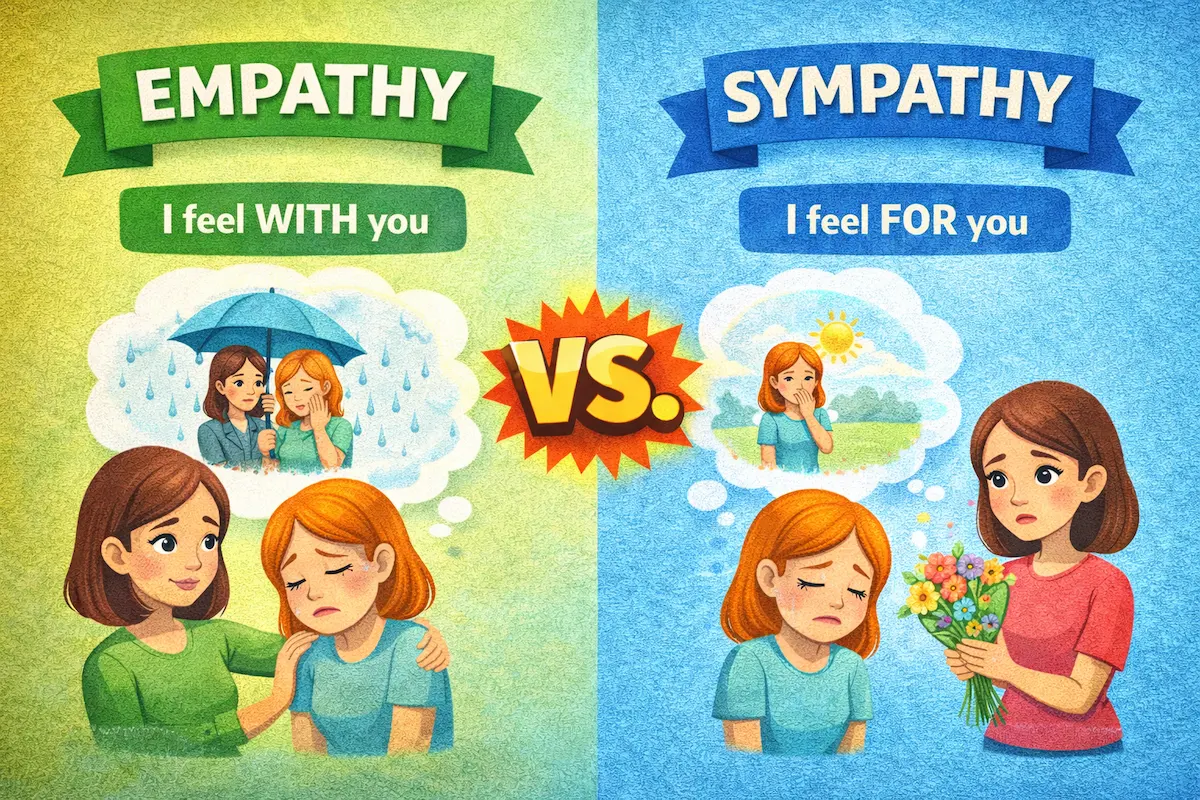
This guide explains empathy vs sympathy with clear definitions, examples, and social contexts. Learn why empathy means feeling with someone, sympathy means feeling for them, and how choosing the right word improves social English and emotional intelligence.
In social conversations, emotional words matter just as much as grammar. Choosing the wrong word can make you sound distant, awkward, or even insensitive — even when your intention is kind.
One of the most commonly confused emotional word pairs in English is empathy vs. sympathy. They are often used interchangeably, but they describe very different emotional responses.
In this confusing words guide, you’ll learn the real difference between empathy and sympathy, how native speakers use them in socializing, and how choosing the right one can instantly improve your emotional intelligence and social English.
Why Empathy and Sympathy Are Often Confused
The confusion happens because both words involve emotions, care, and concern for others. In many languages, there is only one word for both ideas.
In English, however, empathy and sympathy describe different emotional positions.
What Does “Sympathy” Mean?
Sympathy means feeling for someone.
When you show sympathy, you recognize another person’s pain or difficulty, but you remain emotionally separate from it.
I feel sympathy for her after hearing about her loss.
Sympathy often includes pity, concern, or kindness — but not shared emotional experience.
Common Contexts for Sympathy
- Condolences
- Sad news
- Formal expressions of care
- Situations you haven’t personally experienced
Please accept my deepest sympathy.
What Does “Empathy” Mean?
Empathy means feeling with someone.
When you show empathy, you emotionally understand and connect with another person’s experience — often because you have felt something similar.
I empathize with how overwhelming that situation must feel.
Common Contexts for Empathy
- Close relationships
- Deep conversations
- Shared experiences
- Emotional support
Empathy creates connection rather than distance.
The Core Difference in One Line
Sympathy = “I feel sorry for you.” Empathy = “I understand how you feel.”
Why Empathy Is Stronger in Socializing
In casual social interactions, empathy often feels warmer and more personal than sympathy.
Sympathy can sometimes sound formal or distant — especially among friends.
How Sympathy Can Sound Unintentionally Cold
While sympathy is polite, it can create emotional space.
I sympathize with your situation.
This sentence is grammatically correct but emotionally reserved.
How Empathy Builds Emotional Trust
Empathy signals emotional presence.
I can imagine how stressful that must have been for you.
This shows understanding, not just acknowledgment.
Empathy in Everyday Social English
Native speakers often express empathy indirectly.
- That sounds really tough.
- I’ve been there.
- I get why you feel that way.
These phrases communicate empathy without using the word itself.
Sympathy in Formal and Public Contexts
Sympathy is more common in:
- Formal writing
- Public statements
- Professional messages
The company expressed sympathy to the affected families.
Grammar Patterns: Empathy vs. Sympathy
Typical structures:
Feel sympathy for someone Show sympathy to someone Empathize with someone
Notice the different prepositions.
Common Learner Mistakes
- Using sympathy when empathy is expected
- Overusing formal phrases in casual conversation
- Avoiding emotional language altogether
Empathy vs. Sympathy in Difficult Conversations
In sensitive situations, empathy usually feels more supportive.
❌ I sympathize with your breakup. ✅ I know breakups can be really painful.
When Sympathy Is the Better Choice
Sympathy is appropriate when:
- You lack personal experience
- The situation requires formality
- You want respectful distance
Emotional Intelligence and Word Choice
Choosing empathy or sympathy correctly shows social awareness.
It signals that you understand not just the language, but the emotional context behind it.
Quick Decision Rule
Shared feeling → empathy Observed feeling → sympathy
Practice Test
Please answer the following questions. To see the correct answer, please click the arrow icon.
Which word means feeling with someone: empathy or sympathy?
Answer: Empathy Explanation: Empathy involves shared emotional understanding.
Which is more common in formal condolences?
Answer: Sympathy Explanation: Sympathy is standard in formal expressions of care.
“I understand exactly how you feel” shows which emotion?
Answer: Empathy Explanation: It signals emotional connection.
Is sympathy always cold or negative?
Answer: No Explanation: It is polite and respectful, just less emotionally close.
Which word improves casual social bonding?
Answer: Empathy Explanation: It builds emotional connection in socializing.
Final Thoughts: Understanding vs. Feeling For
Empathy and sympathy are not interchangeable — and that difference matters in social English.
Sympathy acknowledges someone’s pain. Empathy connects with it. When you choose the right word, you don’t just sound fluent — you sound emotionally aware, considerate, and genuinely human.