"Hang in There" – 7 Encouraging Idioms for Difficult Times
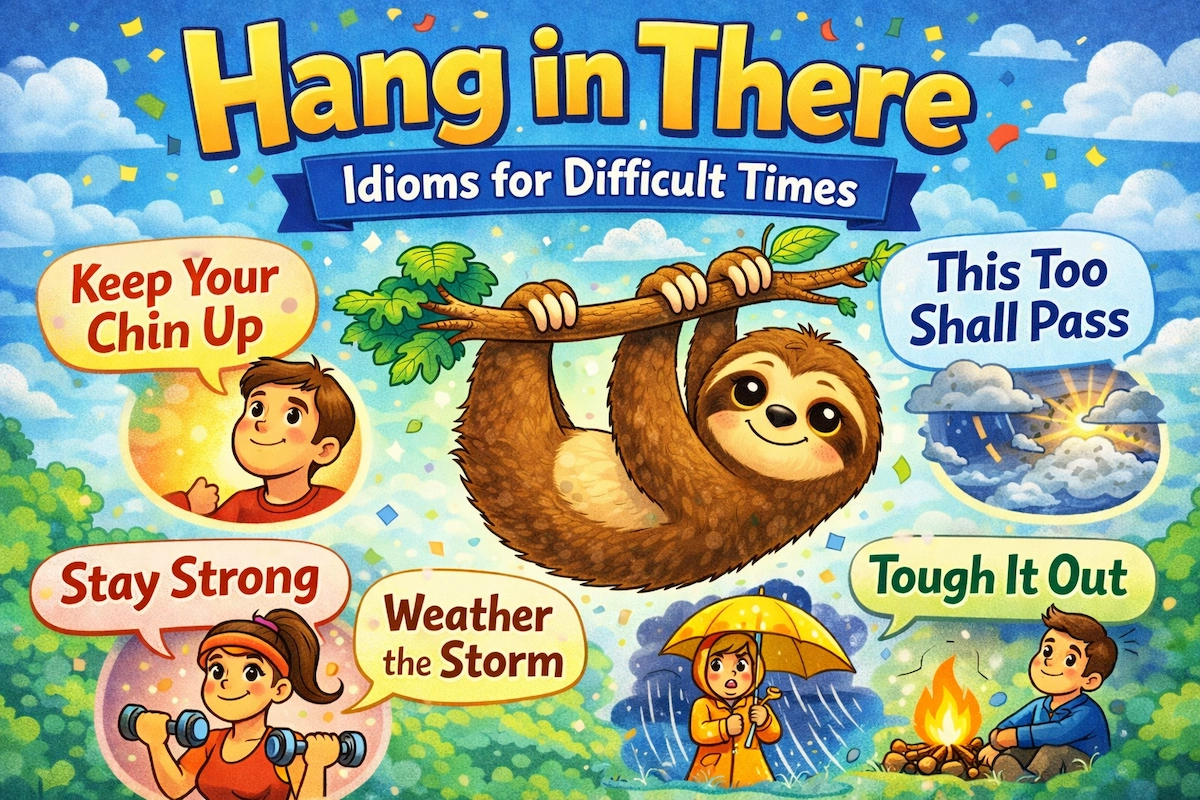
This Idioms and Phrases usage guide introduces seven encouraging English idioms, including “hang in there” and “keep your chin up.” Learn their meanings, when to use them, and how these supportive expressions help you comfort friends naturally and confidently in difficult situations.
Everyone goes through difficult moments. A tough week at work, a failed exam, a long job search, a breakup, or simply feeling overwhelmed by life. In these moments, people don’t always need advice — they need encouragement.
English has a rich collection of encouraging idioms designed for exactly these situations. Short, familiar phrases like “hang in there” or “keep your chin up” can offer emotional support without sounding dramatic or overly formal.
In this usage guide, you’ll learn seven common encouraging English idioms, understand what they really mean, and see how to use them naturally to support someone going through a difficult time.
Why Encouraging Idioms Matter
Encouraging idioms are not about fixing problems. They’re about acknowledging struggle and offering emotional presence.
Saying “Everything will be fine” can sometimes feel dismissive. Idioms, on the other hand, often sound warmer and more realistic.
They show empathy without pressure.
Idiom 1: “Hang in There”
Hang in there means don’t give up and keep going, even though the situation is difficult.
I know things are stressful right now, but hang in there.
This idiom is friendly, informal, and very common in everyday English.
It works best when the difficulty is temporary and improvement is expected.
When to Use “Hang in There”
Use this idiom when someone:
- Feels overwhelmed
- Is waiting for results
- Is going through a short-term challenge
It’s supportive without being dramatic.
Idiom 2: “Keep Your Chin Up”
Keep your chin up means stay positive and don’t lose confidence.
You didn’t get the job this time, but keep your chin up.
This idiom focuses more on emotional attitude than endurance.
It encourages optimism and self-belief.
Idiom 3: “You’ve Got This”
You’ve got this means I believe in your ability to handle the situation.
The presentation is challenging, but you’ve got this.
This phrase is especially popular in modern spoken English and online messages.
It empowers rather than comforts.
Idiom 4: “One Step at a Time”
One step at a time means focus on progress, not perfection.
Don’t worry about everything at once — just take it one step at a time.
This idiom helps when someone feels overwhelmed by the size of a problem.
Idiom 5: “This Too Shall Pass”
This too shall pass means the current difficulty is temporary.
It’s a rough period, but this too shall pass.
This idiom sounds slightly more reflective and is often used in emotional conversations.
Idiom 6: “Don’t Lose Heart”
Don’t lose heart means don’t give up hope.
Progress is slow, but don’t lose heart.
This idiom is less casual and can sound thoughtful or sincere.
Idiom 7: “There’s Light at the End of the Tunnel”
This idiom means the situation will eventually improve, even if it feels dark now.
The workload is heavy, but there’s light at the end of the tunnel.
It’s commonly used for long or exhausting challenges.
Choosing the Right Idiom
Not all encouragement fits every situation.
Consider:
- The seriousness of the problem
- Your relationship with the person
- The emotional tone needed
Sometimes simple encouragement is better than elaborate advice.
Encouragement vs Advice
Idioms are powerful because they don’t tell someone what to do.
Compare:
Advice: You should try harder and stay organized. Encouragement: Hang in there. You’ve got this.
The second approach feels more supportive.
Using Encouraging Idioms in Messages
These idioms work well in:
- Text messages
- Emails to friends
- Online comments
- Casual conversations
Just wanted to check in and say hang in there — thinking of you.
Common Learner Mistakes
Learners sometimes:
- Use encouragement in overly formal contexts
- Stack too many idioms at once
- Use them sarcastically by accident
One sincere phrase is usually enough.
Why These Idioms Sound Natural
Native speakers use encouraging idioms because they:
- Are familiar and comforting
- Reduce emotional distance
- Signal empathy quickly
They make English feel human, not mechanical.
Final Thoughts: Small Words, Big Support
Encouraging idioms don’t solve problems — but they help people feel less alone while facing them.
Phrases like “hang in there” and “keep your chin up” remind us that language is not just about information, but connection.
Mastering these idioms allows you to offer comfort, kindness, and encouragement in natural, fluent English.