"Tea" vs. "Gossip": Why We "Spill the Tea" in 2026
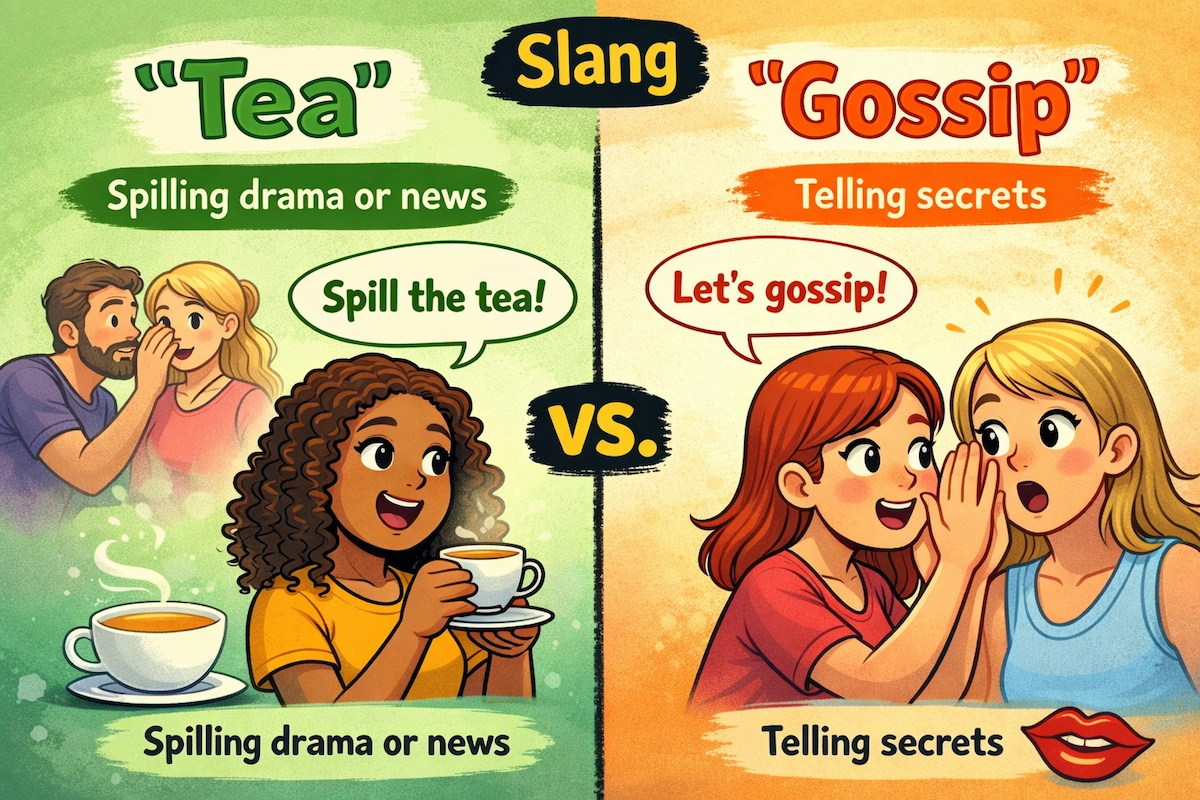
This Social Media Slang usage guide explains the difference between “tea” and “gossip.” Discover how “spill the tea” evolved from drag culture into a global internet expression, why it feels lighter than gossip, and how to use it naturally in modern online conversations.
If you spend any time on social media, you’ve probably seen phrases like “spill the tea”, “that’s the tea”, or “no tea, no shade.” In 2026, tea has become one of the most recognizable slang words on the internet — especially when it comes to gossip, drama, and behind-the-scenes information.
But why do people say tea instead of gossip? After all, both involve sharing information about others, often something juicy or unexpected. The difference isn’t just stylistic — it’s cultural, emotional, and historical.
In this usage guide, we’ll explore the difference between tea and gossip, trace the origins of “spill the tea” in drag culture, and explain how this expression evolved into a global internet term used across platforms, generations, and communities.
What Does “Gossip” Traditionally Mean?
The word gossip has existed in English for centuries. Traditionally, it refers to informal talk about other people’s lives, especially personal or private matters.
There’s a lot of gossip going around the office.
While gossip can be harmless, the word itself often carries a negative tone. It suggests:
- Rumors
- Exaggeration
- Judgment
- Potential harm
In professional or formal contexts, being labeled a “gossip” is rarely positive.
Why “Gossip” Sounds Old-Fashioned Online
As internet culture evolved, younger speakers began to feel that gossip sounded heavy, moralistic, and outdated.
On social media, people don’t always want to frame what they’re sharing as malicious or harmful. They want something lighter, playful, and culturally coded.
This is where tea enters the picture.
What Does “Tea” Mean in Slang?
In modern slang, tea means interesting, often juicy information, especially when it reveals the truth about a situation.
Did you hear the tea about what happened after the show?
Unlike gossip, tea doesn’t automatically imply cruelty or rumor. It often suggests:
- Insider knowledge
- Honesty or revelation
- Entertainment value
- Shared cultural understanding
The focus is less on judgment and more on disclosure.
“Spill the Tea” Explained
The phrase “spill the tea” means to share the full story, especially the parts that were previously hidden.
Okay, you have to spill the tea. What really happened?
The word spill adds a sense of drama and urgency, suggesting that the information can’t be contained any longer.
The Roots of “Tea” in Drag Culture
The slang use of tea originated in Black and Latinx drag culture, particularly in ballroom communities in the late 20th century.
In this context, tea was closely connected to the phrase “T”, short for truth.
That’s the T.
Over time, “T” evolved phonetically into tea, especially as drag slang became more visible through performances, media, and later, television.
From Subculture to Mainstream
Shows featuring drag culture introduced phrases like “spill the tea” to wider audiences. Social media then accelerated their spread.
Platforms like Twitter, TikTok, and YouTube played a key role in turning niche slang into global language.
By the mid-2020s, tea was no longer limited to specific communities — it became part of everyday internet speech.
Tea vs. Gossip: A Tone Comparison
Although they refer to similar activities, tea and gossip feel very different emotionally.
- Gossip → judgmental, risky, potentially harmful
- Tea → playful, revealing, socially engaging
Gossip: She’s always spreading gossip about her coworkers. Tea: She knows all the tea about what’s happening behind the scenes.
The second example feels lighter and more entertaining.
Why “Tea” Feels Safer to Say
Using tea allows speakers to distance themselves from the moral weight of gossip.
It reframes the act as:
- Sharing information
- Telling a story
- Revealing context
This linguistic shift makes conversations feel more casual and less accusatory.
How “Tea” Is Used Online in 2026
In 2026, tea appears across platforms in slightly different ways.
TikTok: Wait until the end — the tea is wild.
Twitter/X: The tea just dropped and it explains everything.
Group chat: I have some tea but I can’t share it publicly.
In each case, tea signals valuable information.
Related Expressions
Modern slang has expanded the tea metaphor:
- That’s the tea → that’s the truth
- No tea → no new information
- Cold tea → old or already-known information
- Hot tea → fresh, shocking news
These variations show how productive the slang has become.
When “Tea” Is Not Appropriate
Despite its popularity, tea is still informal slang.
Avoid using it in:
- Professional emails
- Formal writing
- Sensitive or serious situations
Incorrect: Let me spill the tea about the company restructuring.
In these contexts, neutral terms like information or details are more appropriate.
Why “Tea” Has Replaced “Gossip” Online
Language evolves to match social needs. Tea offers a way to talk about shared information without immediately framing it as harmful.
It reflects:
- Internet humor
- Community bonding
- Cultural remixing
- A preference for playful language
In short, tea feels modern in a way gossip no longer does.
Common Learner Mistakes
Learners sometimes misuse tea by applying it too literally.
- Using it outside informal contexts
- Assuming it always means something negative
- Confusing it with rumors rather than revelations
Remember: tea is about sharing, not attacking.
Language, Culture, and Power
The rise of tea highlights how marginalized communities influence mainstream language.
Slang often travels from subculture to pop culture, reshaping how ideas are expressed globally.
Final Thoughts: Why We Still Spill the Tea
In 2026, people don’t just want information — they want context, truth, and connection.
Tea delivers all three in a single word.
While gossip still exists, tea has become the internet’s preferred way to talk about revealing stories without the moral baggage.
When you hear someone say “spill the tea,” you’re not just hearing slang — you’re hearing the evolution of language in real time.