"Part" vs. "Component" vs. "Element" – Pieces of the Whole
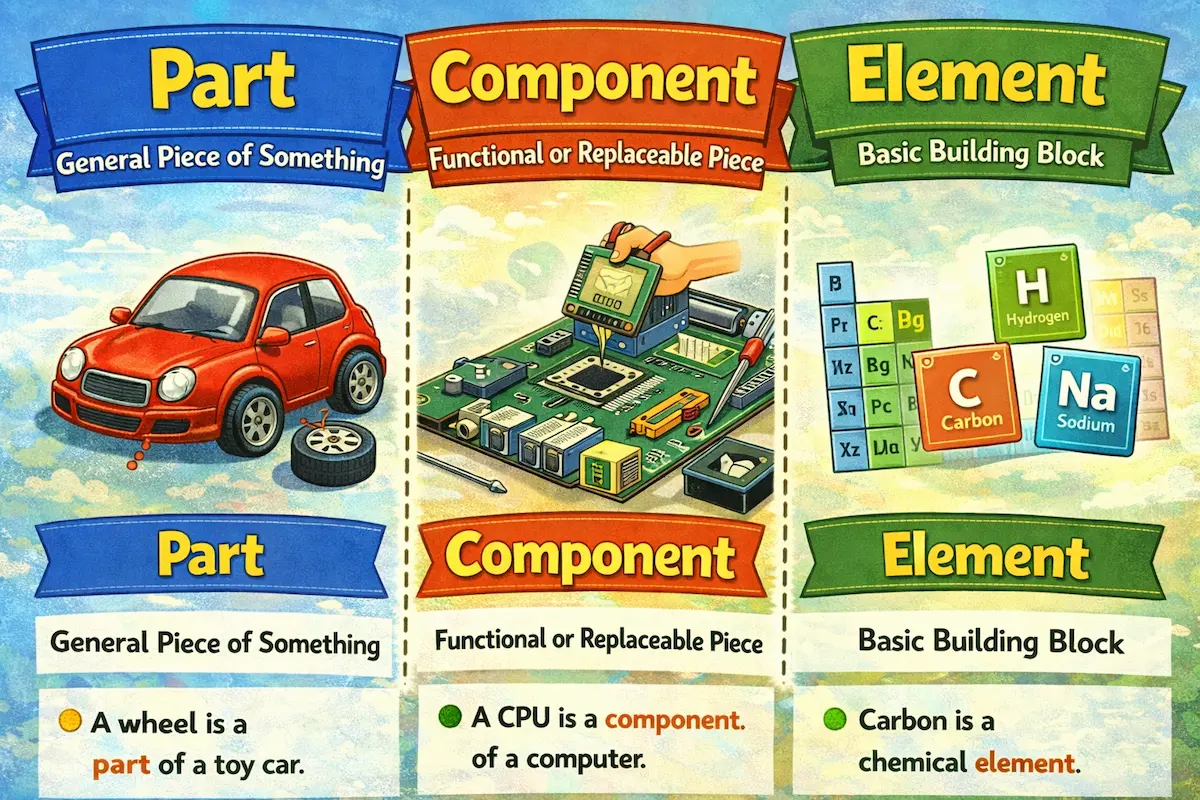
Is it a part of a machine, a component of a system, or an element of a strategy? This guide explains the technical and contextual differences between these three composition synonyms so you can write with precision in engineering, business, and academic English.
In English, many words seem interchangeable — until you use them in a technical or professional setting. Three such words are part, component, and element.
At first glance, they all appear to mean “a piece of something.” And yes, that’s broadly true. But in technical writing, engineering, academic discussion, business planning, and even creative analysis, choosing the wrong one can subtly weaken your clarity.
Is it a part of a machine? A component of a system? An element of a strategy? Sometimes they overlap. Sometimes they absolutely do not.
In this deep-dive guide, we’ll explore:
- The core meaning of each word
- Their technical usage differences
- Physical vs. abstract applications
- Professional and academic contexts
- Common mistakes
- Advanced nuance in formal writing
- A full interactive Practice Test
1. “Part” – The Most General Word
Part is the most flexible and everyday term.
It simply means: a piece of a larger whole.
Physical Usage
This part of the engine is broken. The spare parts are stored in the warehouse.
Abstract Usage
That was the best part of the movie. Learning grammar is part of studying English.
“Part” does not imply complexity or technical structure. It is neutral.
2. “Component” – A Functional Piece Within a System
Component is more technical. It suggests:
- A functional unit
- Something designed for a specific role
- A structured system
Engineering Context
This electronic component regulates voltage. Each component of the machine must be tested individually.
Notice that “component” implies intentional design.
Business Context
Communication is a key component of leadership. Training is an essential component of the onboarding process.
In professional writing, “component” sounds more structured and analytical than “part.”
3. “Element” – A Fundamental or Defining Feature
Element often refers to:
- A basic or essential aspect
- A defining characteristic
- Something fundamental
Scientific Context
Oxygen is a chemical element.
Conceptual Context
Trust is an important element of a healthy relationship. Humor adds an element of surprise.
“Element” often suggests something abstract but essential.
Comparing the Three
Part → General piece Component → Functional system unit Element → Fundamental aspect
When They Overlap
Sometimes all three are technically possible, but the tone changes.
Communication is a part of leadership. Communication is a component of leadership. Communication is an element of leadership.
The first sounds general. The second sounds structured. The third sounds philosophical or foundational.
Technical Writing Differences
Engineering
✔ Replace the damaged component. ❌ Replace the damaged element.
Engineers prefer “component” because it signals mechanical function.
Academic Writing
The cultural element of the study was overlooked.
Here, “element” emphasizes abstract importance.
Common Mistakes
Using “Component” for Emotional Aspects
❌ Love is a key component of happiness. ✔ Love is a key element of happiness.
“Component” sounds mechanical; “element” fits emotional or conceptual themes better.
Overusing “Part” in Professional Writing
“Part” is safe but can sound informal.
Informal: Training is part of development. Formal: Training is a critical component of professional development.
Abstract vs. Physical Summary
If you’re describing:
- A physical machine → component
- A general piece → part
- A fundamental aspect → element
Practice Test
Please answer the following questions. To see the correct answer, please click the arrow icon.
1. Oxygen is a chemical ___.
Answer: element Explanation: In science, basic substances are called elements.
2. The damaged electronic ___ must be replaced.
Answer: component Explanation: Functional units in machines are components.
3. That was the best ___ of the movie.
Answer: part Explanation: “Part” is the natural everyday choice.
4. Trust is a crucial ___ of teamwork.
Answer: element Explanation: This refers to a foundational concept.
5. The engine consists of multiple mechanical ___.
Answer: components Explanation: Engines contain structured functional units.
6. Planning is an important ___ of the project.
Answer: component Explanation: In business structure, “component” fits better than “part.”
Final Takeaway
All three words describe pieces of a whole — but they operate at different levels of precision.
- Part → broad and flexible
- Component → technical and functional
- Element → foundational and defining
In casual speech, “part” is fine. In professional or academic writing, precision matters.
When in doubt, ask yourself:
- Is this mechanical? → component
- Is this fundamental? → element
- Is this general? → part
Mastering these nuances will elevate your technical vocabulary instantly.