Stop Using "I Want" – Use These 5 Professional Phrases Instead
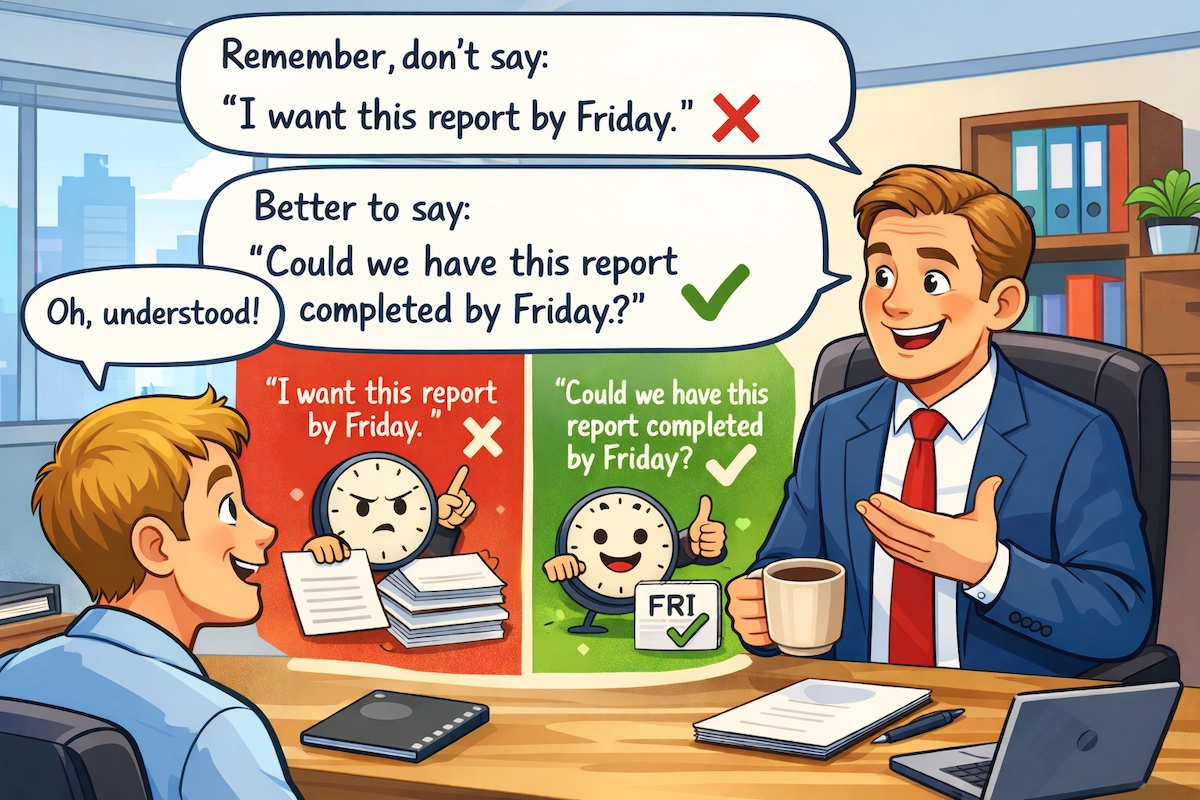
In professional communication, "I want" can sound demanding or blunt. This usage guide explains why it feels wrong at work and introduces five natural, polite alternatives you can use in emails, meetings, and corporate conversations to sound confident, respectful, and collaborative.
If you’ve ever written an email at work and paused at the phrase “I want”, you’re not alone. On the surface, it sounds harmless and direct. But in a professional setting, especially in corporate communication, those two words can easily come across as demanding, blunt, or even self-centered — even when that’s not your intention at all.
Corporate politeness isn’t about sounding stiff or overly formal. It’s about choosing language that shows respect, awareness, and collaboration. Small changes in phrasing can dramatically improve how your message is received, especially in emails, meetings, and cross-team communication.
In this usage guide, we’ll explore why “I want” can be risky in professional contexts and, more importantly, introduce five natural, professional alternatives you can start using immediately — without sounding robotic or fake.
Why “I Want” Often Sounds Wrong at Work
The problem with “I want” isn’t grammar — it’s tone. In everyday conversation, saying “I want coffee” or “I want to go home” feels normal and relaxed. But in corporate communication, the same structure can unintentionally signal authority, pressure, or personal priority over shared goals.
For example, compare these two sentences:
I want this report by Friday.
Could we have this report completed by Friday?
The request is identical, but the emotional impact is very different. The second version feels collaborative and respectful, while the first can sound like an order — especially when sent by email without vocal tone or facial cues.
In corporate environments where hierarchy, cultural differences, and written communication dominate, tone matters more than we often realize.
Professional Alternative #1: “I’d like to…”
The simplest and most natural replacement for “I want” is “I’d like to”. This phrase softens your message instantly while keeping it clear and confident.
“I’d like to” works particularly well in emails, meeting discussions, and project proposals because it sounds polite without being weak.
I’d like to discuss the timeline before we finalize the proposal, just to make sure everyone is comfortable with the current deadlines.
Notice how this phrasing invites conversation rather than demands agreement. It shows intention, but also openness.
Professional Alternative #2: “I was hoping we could…”
When you want to sound especially considerate or indirect — for example, when speaking to senior colleagues or external partners — “I was hoping we could” is an excellent choice.
This phrase emphasizes collaboration and shared decision-making, which is a core value in modern corporate culture.
I was hoping we could review the client feedback together and see if there are areas where we might adjust our approach.
It subtly shifts the focus from your desire to a mutual activity, making the request feel less personal and more professional.
Professional Alternative #3: “Would it be possible to…?”
If politeness and diplomacy are your top priorities, few phrases are as effective as “Would it be possible to…”.
This structure is ideal for requests that may require extra effort, schedule changes, or approval from others.
Would it be possible to move the meeting to next week so we have more time to prepare the updated data?
The phrase acknowledges that the other person may have constraints, which immediately builds goodwill and trust.
Professional Alternative #4: “I’d appreciate it if…”
“I’d appreciate it if” is particularly powerful when expressing gratitude in advance. It frames your request as something valuable rather than expected.
This phrase works very well in written communication, especially when asking for support, feedback, or assistance.
I’d appreciate it if you could share your feedback on the draft before the end of the day, as it will help us move forward more efficiently.
Used carefully, this phrasing balances politeness with professionalism and avoids sounding passive.
Professional Alternative #5: “From my perspective, it would be helpful to…”
When you want to express a personal viewpoint without sounding pushy, “From my perspective” is an excellent framing tool.
This phrase signals awareness that other opinions exist, which is highly valued in corporate discussions and decision-making.
From my perspective, it would be helpful to align on the priorities before we allocate additional resources to this project.
This wording encourages dialogue and positions you as thoughtful rather than demanding.
How to Choose the Right Phrase
The best alternative to “I want” depends on context. Consider:
- Your relationship with the recipient
- The level of formality required
- Whether the message is spoken or written
- The urgency of the request
A quick internal check helps: Does this sound like a command, or a conversation? If it feels like the former, switching to one of the phrases above will usually improve the tone immediately.
Final Thoughts: Politeness Is a Professional Skill
Replacing “I want” isn’t about hiding your intentions. It’s about expressing them in a way that aligns with professional norms and fosters positive working relationships.
Corporate politeness doesn’t mean being indirect all the time. It means being intentional with your language. By choosing phrases that respect both your needs and the perspectives of others, you communicate confidence without friction.
Start small. Pick one alternative from this guide and try using it today. Over time, these phrases will feel natural — and your professional communication will become clearer, smoother, and more effective.