Palate vs. Palette vs. Pallet: Don’t Let These Three Trip You Up
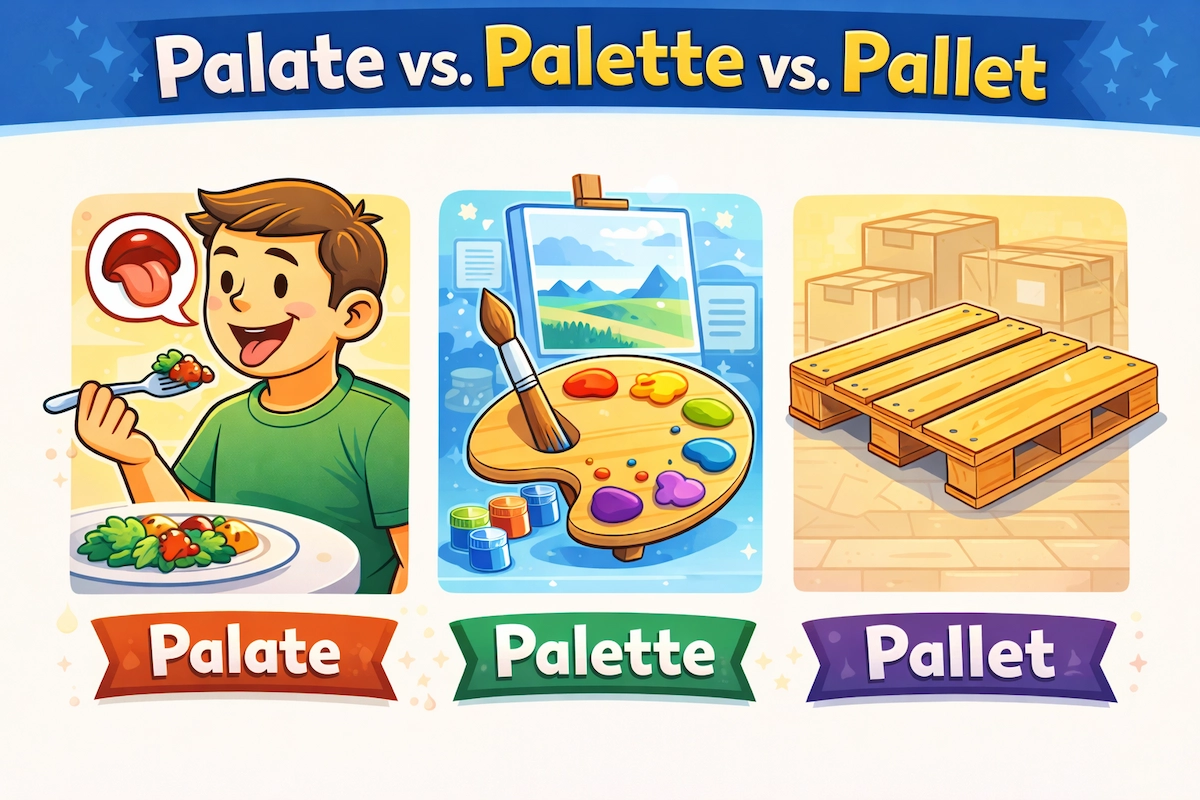
This Confusing Words usage guide explains the difference between palate, palette, and pallet. Learn what each word means, how it’s used in real sentences, common mistakes to avoid, and simple memory tricks to help you choose the correct spelling in writing and everyday English.
English has many words that look or sound similar but mean completely different things. These are often called confusing words, and they can trip up even confident speakers. One of the most common and frustrating sets is palate, palette, and pallet.
At first glance, these three words seem almost identical. They’re pronounced similarly, spelled in nearly the same way, and often appear in writing rather than conversation. But their meanings live in entirely different worlds — food, art, and logistics.
In this usage guide, we’ll break down the meaning of each word, show how it’s used in real sentences, explain common mistakes, and give you simple tricks to remember the difference so you never mix them up again.
Why Palate, Palette, and Pallet Are So Confusing
These three words are confusing for two main reasons. First, they sound very similar in spoken English, especially in fast conversation. Second, they often appear in writing, where a single wrong letter can completely change the meaning of a sentence.
For example, imagine writing this:
The chef has an excellent palette.
Grammatically, the sentence looks fine — but the meaning is wrong. The correct word should be palate, not palette. Small spelling differences matter a lot here.
Let’s look at each word individually and clear the confusion once and for all.
What Does “Palate” Mean?
Palate refers to your sense of taste, or more specifically, the roof of your mouth. In everyday English, it’s commonly used to talk about how well someone can taste and appreciate food and drink.
When people talk about a “refined palate,” they mean someone who can notice subtle flavors and enjoys complex tastes.
She has a very refined palate and can easily tell the difference between similar wines.
Palate is often used in food-related contexts such as cooking, dining, wine tasting, and culinary reviews.
This dish may be too spicy for a sensitive palate.
Although it’s connected to anatomy, most people use palate metaphorically to talk about taste preferences rather than body parts.
Common Mistakes with “Palate”
The most common mistake is spelling palate as palette when talking about food or taste. This happens because both words are pronounced almost the same.
Incorrect:
The restaurant offers flavors that appeal to every palette.
Correct:
The restaurant offers flavors that appeal to every palate.
Remember: if the topic is food, taste, or flavor, palate is almost always the right choice.
What Does “Palette” Mean?
Palette is a word from the world of art and design. It refers to the range of colors used by an artist, designer, or brand.
Originally, a palette was the flat board painters used to mix colors. Today, the word is commonly used to describe color schemes in visual design.
The designer chose a soft, neutral color palette for the website.
You’ll often see palette used in creative industries such as graphic design, fashion, interior design, and branding.
The film’s muted color palette creates a calm and emotional atmosphere.
Unlike palate, palette has nothing to do with taste or food — it’s all about visuals.
Common Mistakes with “Palette”
People sometimes use palette when they mean pallet or palate, especially in informal writing.
Incorrect:
He has a great palette for spicy food.
Correct:
He has a great palate for spicy food.
A helpful clue: if the sentence involves colors, visuals, or design, palette is the right word.
What Does “Pallet” Mean?
Pallet is completely different from the other two. It refers to a flat structure, usually made of wood or plastic, used for storing or transporting goods.
Pallets are common in warehouses, shipping centers, and factories. You’ll often hear this word in logistics, manufacturing, and retail contexts.
The boxes were stacked on a wooden pallet and moved into the warehouse.
In everyday conversation, pallet might also appear when talking about shipping, deliveries, or industrial work.
We received the order on two separate pallets.
Common Mistakes with “Pallet”
Because pallet sounds like palate and palette, it’s sometimes mistakenly used in writing about food or art.
Incorrect:
The artist experimented with a bright pallet.
Correct:
The artist experimented with a bright palette.
If the sentence involves shipping, storage, or boxes, pallet is the correct word.
Side-by-Side Comparison
Seeing the three words together often makes the difference clearer:
- Palate → taste, mouth, food, flavor
- Palette → colors, art, design, visuals
- Pallet → shipping, storage, logistics
Even though they sound alike, their meanings never overlap.
Simple Memory Tricks
If you struggle to remember which is which, these quick memory tricks can help:
- Palate → think of plate and food
- Palette → think of paint and colors
- Pallet → think of packages and shipping
Associating each word with a familiar image makes it much easier to choose the right spelling.
Why These Words Matter in Writing
Mixing up these words doesn’t usually cause confusion in spoken English, but in writing, it can affect clarity and professionalism.
Using the wrong spelling in an email, article, or report may distract readers or make the text seem less polished.
Paying attention to confusing word sets like this helps your writing look more confident and accurate.
Final Thoughts: One Sound, Three Worlds
Palate, palette, and pallet may sound similar, but they belong to completely different areas of life. Once you connect each word to its context — food, art, or shipping — the confusion disappears.
Understanding these differences is a small detail that makes a big difference in clear communication. And once you master this trio, you’ll start spotting — and avoiding — similar confusing word traps throughout English.