Stop Asking "What is Your Hobby?" – Try These 5 Dynamic Starters Instead
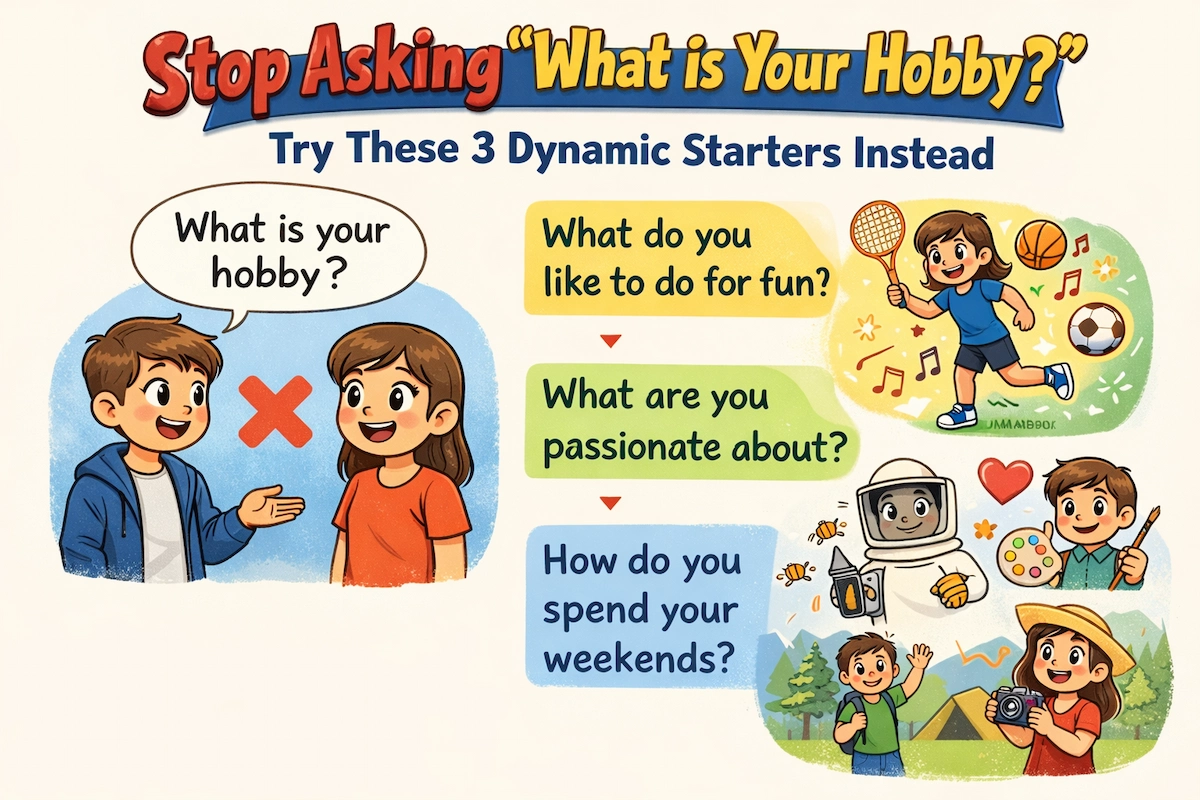
This Socializing usage guide explains why “What is your hobby?” often kills conversations and introduces five dynamic alternatives. Learn how to ask better questions, invite storytelling, and make a strong first impression in English through natural, engaging conversation starters.
If you’ve ever tried to start a conversation in English, chances are you’ve asked the question: “What is your hobby?” It’s safe, familiar, and grammatically correct. Unfortunately, it’s also one of the most overused and least engaging conversation starters out there.
While the question isn’t wrong, it often leads to short, predictable answers. “I like music.” “I enjoy sports.” “I don’t really have one.” The conversation stalls almost immediately, leaving both people unsure how to continue.
In social situations, especially when meeting someone new, your goal isn’t just to ask a question — it’s to invite a story, create energy, and build connection. In this usage guide, you’ll learn why “What is your hobby?” falls flat and discover five dynamic alternatives that sound natural, spark curiosity, and help conversations flow effortlessly.
Why “What Is Your Hobby?” Feels Awkward
The main problem with “What is your hobby?” is not politeness — it’s pressure.
The question assumes that everyone has a clearly defined hobby and feels comfortable labeling it. Many people don’t. Others enjoy several casual interests but don’t see any of them as a “real” hobby.
As a result, the question can make people feel put on the spot, which is the opposite of what good socializing should do.
What Makes a Good Conversation Starter?
Strong conversation starters share a few key traits:
- They are open-ended
- They invite storytelling, not lists
- They sound natural, not scripted
- They allow the other person to choose the depth of their answer
The five alternatives below follow these principles and work well in casual, professional, and international settings.
Dynamic Starter #1: “What do you usually enjoy doing in your free time?”
This question is a direct upgrade from “What is your hobby?” without sounding forced.
What do you usually enjoy doing in your free time?
The phrase “enjoy doing” feels softer and more personal than “hobby”. It allows the other person to talk about routines, small pleasures, or recent activities rather than defining themselves.
It also naturally leads to follow-up questions.
Why This Starter Works
People don’t feel judged by how impressive their answer sounds. Whether they say “reading,” “watching documentaries,” or “just relaxing,” all responses feel valid.
That sense of safety encourages longer, more relaxed answers.
Dynamic Starter #2: “How do you like to spend your weekends?”
This question shifts the focus from identity to lifestyle.
How do you like to spend your weekends?
Weekends are relatable. Almost everyone has some kind of rhythm or habit associated with them.
The answer might include social activities, personal projects, family time, or rest — all of which reveal personality naturally.
Conversation Tip
Listen for emotional cues. If someone sounds excited about something, that’s your opening to dig deeper.
That sounds fun — how did you get into that?
Dynamic Starter #3: “What do you usually do to relax after a long day?”
This question creates an instant emotional connection.
What do you usually do to relax after a long day?
Everyone understands stress. By acknowledging it, you signal empathy and shared experience.
The answers often reveal personal habits and values without feeling intrusive.
Why This Feels More Personal
Relaxation habits are tied to mood and well-being. Talking about them feels human and relatable.
This question works especially well in friendly or semi-professional settings.
Dynamic Starter #4: “Have you discovered anything interesting lately?”
This is one of the most flexible conversation starters on the list.
Have you discovered anything interesting lately?
The word “discovered” opens the door to a wide range of topics: books, places, ideas, shows, skills, or experiences.
It also allows the other person to choose something they’re excited about right now.
When to Use This Starter
This question works well when:
- You want a fresh topic
- You don’t know the person well
- You want to avoid personal questions
It feels curious rather than interrogative.
Dynamic Starter #5: “What do you find yourself talking about a lot these days?”
This question taps into current interests rather than fixed categories.
What do you find yourself talking about a lot these days?
It suggests that interests change — and that’s normal.
People often light up when talking about something they’ve been thinking about frequently.
Why This Starter Creates Momentum
Talking about recent interests makes conversations feel alive and current.
It also makes follow-up questions effortless.
How to Respond When Someone Asks You
Knowing how to ask questions is only half the skill. You also need to respond well.
Instead of listing activities, try adding context or emotion.
I’ve been really into cooking lately — it helps me slow down after work.
This invites the other person to engage.
Common Socializing Mistakes
Learners often:
- Ask questions that feel like interviews
- Switch topics too quickly
- Focus on “correct” English instead of connection
Remember: social fluency is about responsiveness, not perfection.
Why Dynamic Starters Make a Better First Impression
First impressions are shaped by how comfortable people feel around you.
Questions that invite storytelling make you seem curious, attentive, and easy to talk to.
That impression matters more than flawless grammar.
Adapting These Starters to Different Contexts
These questions can be adjusted slightly for:
- Networking events
- Casual meetups
- Language exchanges
- Travel conversations
Small wording changes can make them more formal or more relaxed.
Final Thoughts: Better Questions Create Better Conversations
“What is your hobby?” isn’t wrong — it’s just limited.
By switching to more dynamic conversation starters, you create space for personality, emotion, and genuine connection.
Great conversations don’t start with perfect questions. They start with curiosity — and these five alternatives help you show it naturally.