"Ghosting" Meaning: Why People Disappear Without a Trace
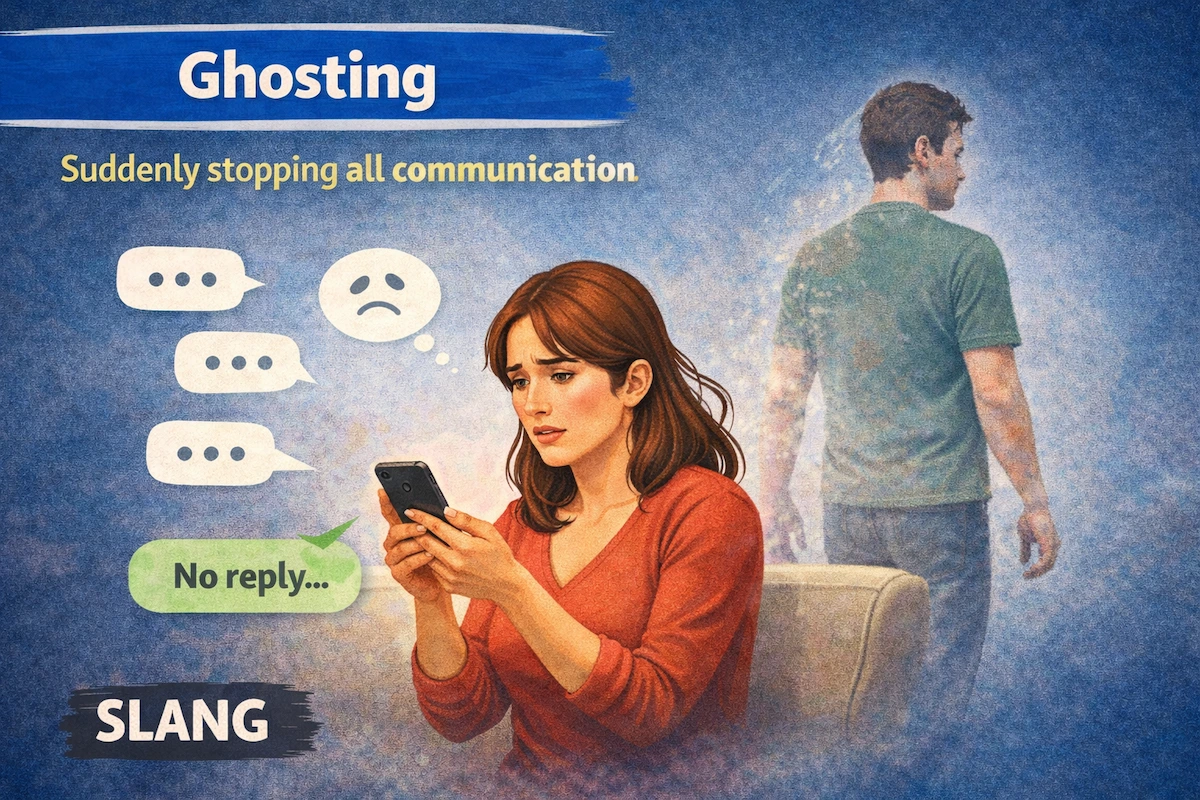
This social-media-slang usage guide explains the meaning of “ghosting,” why people suddenly stop replying online, and how the term is used in dating, friendships, and work. Learn how ghosting differs from being busy and why it has become a common digital habit.
In the age of instant messaging, constant notifications, and always-on social media, disappearing without explanation feels more noticeable than ever. One moment, you’re exchanging messages, memes, or voice notes. The next, there’s nothing — no reply, no explanation, no goodbye. This behavior has a name: ghosting.
Ghosting is no longer limited to dating apps or romantic situations. In 2026, it appears in friendships, work chats, online communities, and even family communication. Understanding what ghosting means — and why people do it — helps you navigate modern digital relationships with more clarity and less confusion.
In this usage guide, we’ll explain the meaning of ghosting, how it differs from simply being busy, why it has become so common in online culture, and how the word is used naturally in modern English.
What Does “Ghosting” Mean?
Ghosting refers to the act of suddenly cutting off all communication with someone without explanation.
We were talking every day, and then he just ghosted me.
The key elements of ghosting are:
- No warning
- No explanation
- No closure
- Complete silence
The person doesn’t officially end the relationship — they simply vanish.
Where Did the Term “Ghosting” Come From?
The term comes from the idea of becoming a ghost — invisible, unreachable, and silent. Once someone ghosts you, it feels like they no longer exist in your digital world.
While the behavior existed long before smartphones, the word ghosting became popular with the rise of dating apps and social media platforms.
Why Ghosting Feels Worse Than Rejection
Psychologically, ghosting is often more painful than direct rejection.
When someone says “I’m not interested,” you get clarity. When someone ghosts you, you’re left guessing.
Common thoughts include:
- Did I say something wrong?
- Are they busy — or done?
- Should I message again?
This uncertainty is a core part of ghosting’s emotional impact.
Ghosting vs Being Busy
Not every late reply is ghosting.
Ghosting involves a pattern of silence, not a delay.
Being busy: “Sorry, I was offline all weekend.” Ghosting: No reply for weeks, despite being active online.
Intentional disappearance is what defines ghosting.
Common Situations Where Ghosting Happens
Ghosting appears in many modern contexts:
- Online dating
- Casual friendships
- Job applications
- Freelance work
- Group chats
The more digital the relationship, the easier ghosting becomes.
Why Do People Ghost?
Ghosting is usually not about cruelty — it’s about avoidance.
Common reasons include:
- Fear of confrontation
- Emotional overwhelm
- Lack of communication skills
- Perceived low responsibility
Digital distance makes disappearing feel easier than explaining.
Ghosting in Dating Culture
Dating apps normalized quick connections — and quick exits.
Many users ghost when:
- Interest fades
- They meet someone else
- Conversations feel awkward
We went on two dates, then she ghosted me.
Ghosting at Work
In professional contexts, ghosting often appears as:
- No response after interviews
- Clients disappearing mid-project
- Unanswered follow-up emails
This form of ghosting is increasingly criticized — but still common.
Is Ghosting Always Bad?
While ghosting is usually seen as negative, some people justify it in certain situations.
For example:
- When safety is a concern
- When boundaries are ignored
- When communication becomes toxic
Context matters — but silence still sends a message.
How “Ghosting” Is Used in English
Ghosting can be used as:
- A noun
- A gerund
- A verb
Noun: Ghosting hurts more than rejection. Verb: He ghosted me after the meeting.
Related Slang Terms
Ghosting belongs to a family of digital relationship slang:
- Breadcrumbing
- Orbiting
- Soft ghosting
- Hard ghosting
These terms reflect how communication has changed online.
Practice Test
Please answer the following questions. To see the correct answer, please click the arrow icon.
Someone stops replying to your messages without explanation. What is this called?
Answer: Ghosting. Explanation: Ghosting involves sudden and complete silence with no closure.
Is replying after two days automatically ghosting?
Answer: No. Explanation: Ghosting requires an ongoing pattern of silence, not a delay.
Can ghosting happen in professional situations?
Answer: Yes. Explanation: Employers, clients, and recruiters can also ghost.
Why do people ghost instead of explaining?
Answer: Often to avoid discomfort or confrontation. Explanation: Digital distance lowers social pressure.
How to Respond to Being Ghosted
While there’s no perfect response, many experts suggest:
- Sending one final, calm message
- Avoiding repeated follow-ups
- Accepting silence as an answer
Closure sometimes comes from moving on — not from replies.
Final Thoughts: Silence Is a Message
Ghosting reflects how modern communication makes disappearing easy — but understanding the term helps you interpret that silence more clearly.
Whether it happens in dating, friendship, or work, ghosting is part of digital culture in 2026. Knowing what it means allows you to respond with awareness rather than confusion.