5 Ways to Politely End a Conversation with a "Clingy" Person
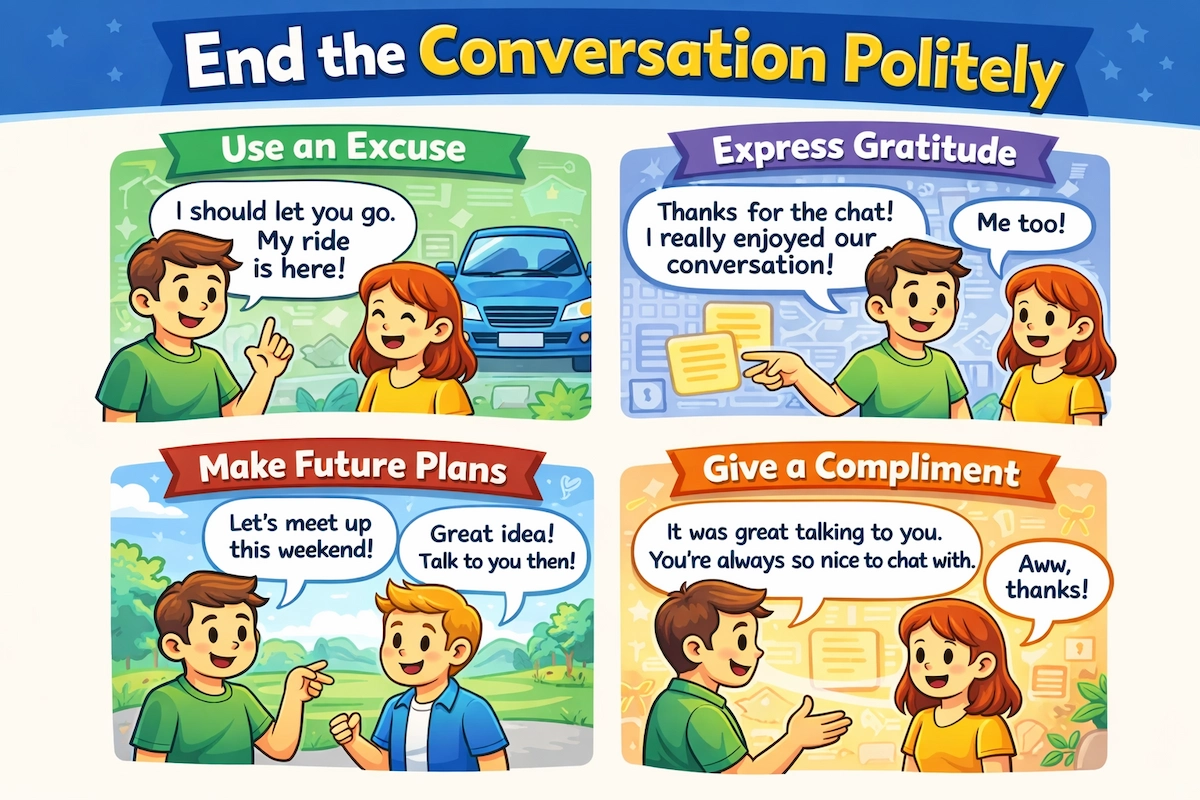
This Socializing usage guide explains how to politely end conversations with clingy people in real-life situations. Learn natural phrases, social strategies, and graceful exits you can use at parties, work events, and casual meetups without hurting feelings or creating awkward moments.
Almost everyone has been in this situation at least once: you’re in a conversation that just won’t end. You’ve checked the time, your energy is dropping, and you’ve already given several polite signals — but the other person keeps talking. Whether it’s a coworker, a friend, or someone you just met, ending a conversation with a “clingy” person can feel awkward and uncomfortable.
The challenge isn’t wanting to leave — that part is normal. The challenge is doing it politely without sounding rude, cold, or dismissive. In social situations, how you end a conversation often matters just as much as how you start it.
This usage guide will show you five practical and polite ways to end a conversation with a clingy person using natural English. These phrases and strategies are commonly used in real-life socializing — at parties, work events, casual meetups, and even online chats.
What Does “Clingy” Mean in Social Situations?
In socializing contexts, clingy describes someone who holds onto a conversation longer than is socially comfortable. They may not notice signals that the other person wants to leave, change topics repeatedly, or keep extending the interaction with small talk.
Importantly, being clingy is not always intentional. Many clingy people are simply enthusiastic, nervous, lonely, or unaware of social cues.
He’s nice, but once he starts talking, he can be a bit clingy.
Understanding this helps you approach the situation with empathy rather than irritation.
Why Ending Conversations Politely Is a Social Skill
Ending a conversation well is part of good social etiquette. A polite exit preserves relationships, avoids embarrassment, and keeps future interactions comfortable.
Abrupt endings — such as walking away mid-sentence or checking your phone without explanation — can leave the other person feeling ignored or rejected, even if that wasn’t your intention.
The goal isn’t to escape. The goal is to exit gracefully.
1. Use a Time-Based Exit
One of the most socially accepted ways to end a conversation is by referring to time. This method works because it shifts responsibility away from the person and onto an external reason.
I should probably get going — I’ve got an early start tomorrow.
I just realized how late it is, I need to head out.
Time-based exits feel natural and are rarely questioned. Most people accept them immediately because they’re easy to understand and socially neutral.
This approach works especially well at parties, dinners, and casual gatherings.
2. Mention a Next Task or Obligation
Another polite strategy is to mention something you need to do next. This gives the conversation a clear endpoint without blaming the other person.
I need to go check on something real quick, but it was great talking to you.
I should get back to my desk before the next meeting starts.
The key here is pairing the exit with a positive note. Saying “It was great talking to you” reassures the other person that the conversation itself wasn’t the problem.
3. Close the Conversation with Appreciation
Appreciation-based endings are particularly effective with clingy people because they soften the transition. They make the exit feel like a conclusion, not a rejection.
Thanks for sharing that — I really enjoyed hearing your perspective.
I’m glad we got a chance to catch up.
After expressing appreciation, you can naturally add an exit line.
I’m glad we got a chance to catch up. I should mingle a bit before I leave.
4. Redirect the Conversation to Someone Else
In group settings, redirecting the conversation is a smooth and socially intelligent move. It keeps the clingy person engaged while allowing you to step away.
You should tell Alex about that — he was asking something similar earlier.
Have you met Sarah? She works on that too.
This strategy works well at networking events, parties, and social mixers. It avoids awkward silence and helps everyone feel included.
5. Be Direct, but Still Polite
Sometimes, subtle hints don’t work. In those cases, being gently direct is better than feeling trapped.
I’m going to step away for a bit, but it was nice talking with you.
I don’t want to cut you off, but I need to head out now.
Polite directness is not rude when it’s paired with respectful language and a calm tone.
Common Mistakes to Avoid
When ending conversations, people often make small mistakes that increase awkwardness instead of reducing it.
- Apologizing too much
- Making excuses that sound fake
- Backing out and re-engaging repeatedly
- Ending without any closing phrase
Confidence and clarity usually feel kinder than hesitation.
Ending Conversations Online
Clingy conversations don’t only happen in person. They also happen in messages, comments, and DMs.
I’ll reply properly later — need to log off for now.
Let’s continue this another time.
Online, short and clear endings are often better than disappearing without explanation.
Final Thoughts: Politeness Is About Balance
Ending a conversation politely is about balancing honesty with empathy. You don’t owe anyone unlimited time, but you also don’t need to hurt feelings to protect your boundaries.
By using these five strategies, you can exit conversations smoothly, confidently, and respectfully — even when dealing with someone who tends to cling.
Socializing becomes much easier when you realize that polite endings are just as important as good beginnings.