10 Slang Words for "Partying" and Social Events in 2026
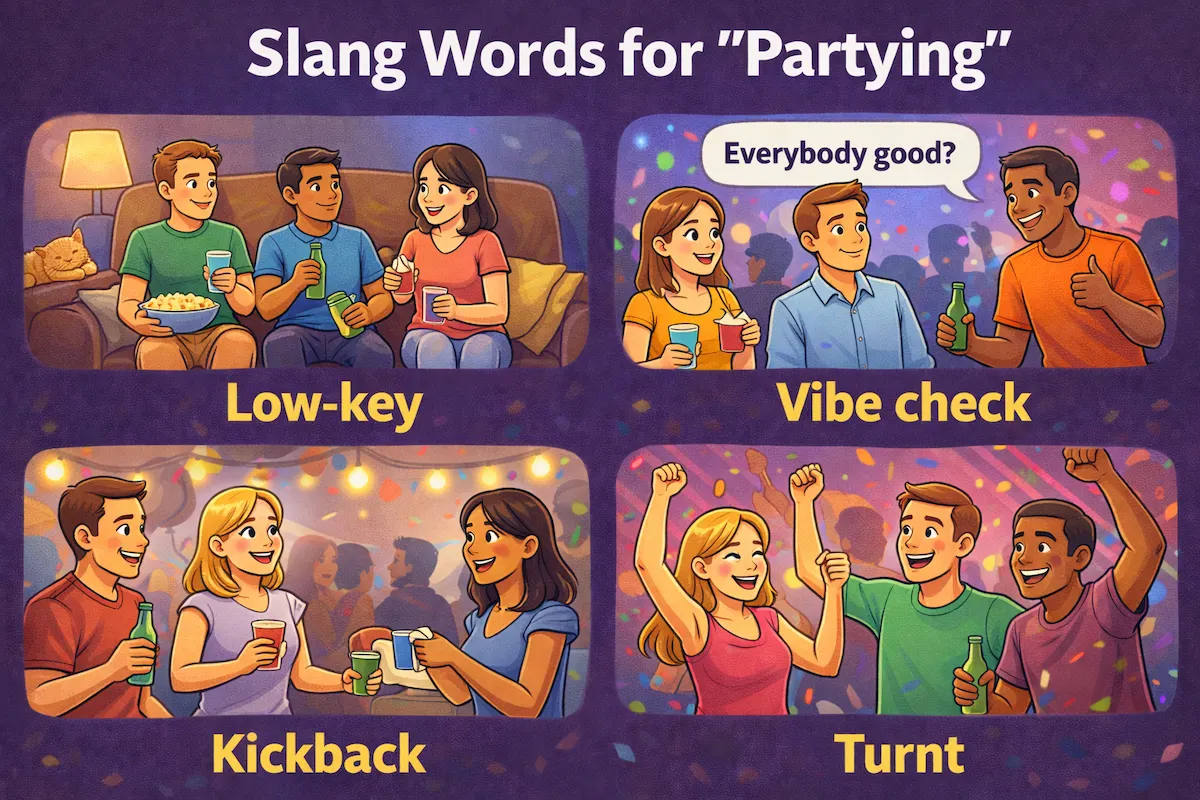
This socializing guide explores 10 modern slang words for partying and social events in 2026. From low-key kickbacks to high-energy turnt nights, learn how English speakers describe social gatherings, read the vibe, and sound current without forcing slang.
Socializing in 2026 looks very different from a decade ago. Parties don’t always mean loud music and crowded rooms anymore — sometimes they’re small, curated, vibe-driven gatherings announced through group chats or social media stories.
Along with these changes, the language around partying and social events has evolved too. Traditional phrases like “going to a party” still work, but they often feel too generic for modern conversation. Instead, English speakers now rely heavily on slang to describe how they socialize, where they go, and what kind of energy they expect.
In this socializing usage guide, you’ll learn 10 modern slang words used for partying and social events in 2026. You’ll see what each term means, how it’s used naturally, and — just as importantly — when not to use it.
Why Party Slang Changes So Fast
Slang reflects culture. As social habits shift — from clubbing to house hangs, from massive events to curated experiences — the words people use change too.
In 2026, party slang often focuses on:
- Energy and mood
- Exclusivity or intimacy
- Social comfort
- Online-to-offline connections
Knowing these terms helps you sound current, relaxed, and socially fluent.
Slang #1: “Low-key”
Low-key describes a relaxed, informal social event with no pressure.
It’s just a low-key get-together at my place tonight.
This signals minimal effort, casual vibes, and no strict expectations.
Slang #2: “Vibe check”
A vibe check is about evaluating the mood or energy of a person or event.
Let’s do a vibe check before we invite more people.
At parties, it often determines whether something feels right socially.
Slang #3: “Kickback”
A kickback is a small, relaxed social gathering — usually at someone’s home.
We’re having a kickback after dinner.
Think music, snacks, close friends, and no formal plan.
Slang #4: “Turnt”
Turnt describes a high-energy, lively party atmosphere.
That party got turnt real fast.
This word suggests excitement, loud music, and lots of movement.
Slang #5: “Pre-game”
To pre-game means to socialize before the main event.
We’re pre-gaming at Alex’s place before the concert.
This often involves drinks, conversation, and warming up socially.
Slang #6: “After-party”
An after-party is a smaller gathering that happens after the main event.
There’s an after-party at a rooftop bar.
In 2026, after-parties are often more exclusive than the main event.
Slang #7: “Link up”
To link up means to meet socially, often spontaneously.
We’re linking up later if you’re free.
This phrase is flexible and low-pressure.
Slang #8: “Hang” / “Hang out”
Hang or hang out remains popular, but its meaning has narrowed.
We’re just hanging tonight.
In 2026, this often implies comfort and familiarity rather than excitement.
Slang #9: “Pull up”
To pull up means to arrive at a social event.
Pull up when you’re ready.
This phrase is common in casual text invitations.
Slang #10: “It’s a vibe”
It’s a vibe means the event feels good emotionally and socially.
The rooftop party was a vibe.
This focuses on atmosphere rather than specific activities.
Choosing the Right Slang for the Situation
Not all slang fits every context. Consider:
- Who you’re talking to
- How well you know them
- The platform (text vs speech)
Overusing slang in the wrong context can feel forced.
Generational Awareness Matters
Some slang is Gen Z–heavy, while others are cross-generational.
When unsure, neutral terms like hang out or get together are safer.
Practice Test
Please answer the following questions. To see the correct answer, please click the arrow icon.
Which slang word describes a relaxed, no-pressure gathering?
Answer: Low-key Explanation: It signals casual and minimal expectations.
What does “pull up” mean in social slang?
Answer: To arrive at a place. Explanation: It’s often used in invitations.
Which term focuses most on energy and atmosphere?
Answer: It’s a vibe Explanation: It evaluates the overall feeling.
Is “turnt” appropriate for a quiet dinner?
Answer: No. Explanation: It implies high energy and excitement.
Final Thoughts: Slang Is Social Currency
Party slang isn’t about sounding cool — it’s about signaling awareness and belonging. Using the right word sets expectations and helps people feel comfortable.
You don’t need to use all of these terms. Pick a few that feel natural to you, and let them blend naturally into your social English in 2026.