How to Describe a Technical Issue with Your Rental Car
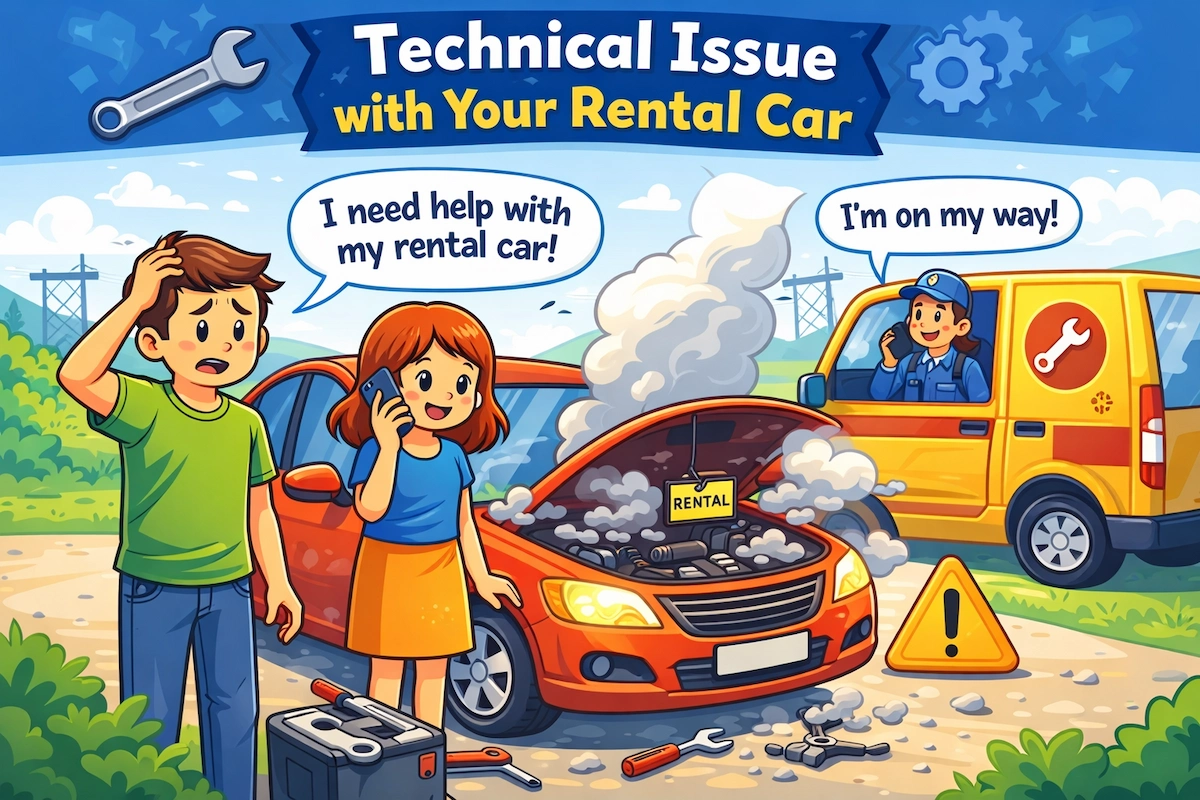
This Travel English usage guide teaches you how to explain technical issues with a rental car clearly and politely. Learn practical phrases, simple vocabulary, and natural sentence patterns to report problems, ask for help, and avoid misunderstandings while traveling abroad.
Renting a car while traveling can give you freedom, flexibility, and comfort. But when something goes wrong with the vehicle, explaining the problem in English can quickly become stressful — especially if you’re in a foreign country, tired from travel, or under time pressure.
Many travelers know basic English, but struggle when they need to describe a technical issue. Words like “broken” or “not working” may not be enough, and unclear explanations can lead to misunderstandings, delays, or even extra charges.
This usage guide will help you confidently explain common rental car problems in clear, natural English. You’ll learn practical vocabulary, useful sentence patterns, and polite ways to communicate with rental staff — even if you’re not a technical person.
Why Clear Communication Matters When There’s a Car Problem
When you report a technical issue with a rental car, clarity is everything. The staff needs to understand what’s wrong so they can decide whether to fix the problem, replace the car, or give you instructions on what to do next.
If your explanation is too vague, the issue may be misunderstood. For example, saying “The car is strange” doesn’t help much. But saying “The engine makes a loud noise when I start the car” gives clear, useful information.
Clear communication also protects you. When problems are explained properly and documented, you’re less likely to be blamed for damage you didn’t cause.
Start with a Polite Opening
In Travel English, tone is just as important as vocabulary. Always begin politely, even if you’re frustrated. This helps the conversation go smoothly and encourages cooperation.
Hi, I’m having a bit of a problem with the rental car and I was hoping you could help me.
This opening sounds calm, respectful, and natural. It immediately signals that you’re asking for assistance, not making an accusation.
How to Say Something Is Not Working
One of the most common situations is when part of the car simply doesn’t work. Instead of just saying “broken,” use more specific and natural expressions.
The air conditioning doesn’t seem to be working properly.
The radio isn’t turning on at all.
The power windows are not responding when I press the button.
Phrases like “doesn’t seem to be working” or “isn’t responding” sound polite and non-aggressive, which is ideal when dealing with service staff.
Describing Strange Noises
Unusual sounds often worry drivers, especially when they don’t know much about cars. You don’t need technical terms — descriptive language is enough.
There’s a strange noise coming from the engine when I accelerate.
I hear a clicking sound when I turn the steering wheel.
The car makes a loud vibration noise at high speeds.
Words like strange, loud, clicking, and vibrating are commonly used in real conversations and easy to understand.
Talking About Warning Lights
Dashboard warning lights can be confusing, especially if you don’t recognize the symbols. You don’t need to know their official names — just describe what you see.
A warning light came on while I was driving, and I’m not sure what it means.
There’s a red symbol on the dashboard that wasn’t there before.
You can also add context to be helpful.
The warning light appeared after I stopped for fuel.
Explaining Problems with Brakes or Steering
Issues involving brakes or steering are serious and should be described clearly but calmly.
The brakes feel very soft, and I need to press the pedal harder than usual.
The steering wheel feels stiff when I try to turn.
Using phrases like “feels very” or “feels different than usual” is natural and avoids sounding overly technical.
When the Car Won’t Start
This is one of the most stressful situations for travelers, but the English needed is simple and practical.
The car won’t start, even though the key is turning.
I tried starting the car several times, but nothing happens.
The engine doesn’t respond when I press the start button.
Adding details about what you already tried can help the staff diagnose the issue faster.
Talking About Overheating or Smells
Smells and heat are strong indicators of technical problems. Describe them clearly without panic.
I noticed a burning smell coming from the front of the car.
The engine temperature seems higher than normal.
These descriptions are straightforward and commonly used in real travel situations.
Asking What to Do Next
After describing the problem, it’s important to ask for instructions. This shows cooperation and keeps the conversation moving forward.
What would you recommend I do in this situation?
Should I continue driving, or is it better to stop using the car?
Is it possible to get a replacement vehicle?
Confirming Responsibility Politely
Many travelers worry about being blamed for damage. You can protect yourself by asking clear but polite questions.
I just want to confirm that this issue wasn’t caused by anything I did.
Could you please note this problem in the rental record?
These sentences sound calm and professional, not defensive.
Useful Vocabulary You’ll Hear Often
- issue / problem
- not working properly
- warning light
- unusual noise
- replacement car
- roadside assistance
- dashboard
- engine / brakes / steering
You don’t need advanced automotive vocabulary. These everyday terms are enough to handle most rental car situations while traveling.
Final Thoughts: Stay Calm, Clear, and Polite
Describing a technical issue with a rental car doesn’t require perfect English. What matters most is staying calm, being clear, and using polite, natural language.
By focusing on what you see, hear, smell, or feel — and explaining it step by step — you help rental staff understand the situation quickly and accurately.
With the phrases and patterns in this guide, you’ll be much better prepared to handle unexpected car problems while traveling. And that confidence can make a stressful situation feel far more manageable.