Jelly vs. Jam vs. Jello – The Sticky Fruit Debate
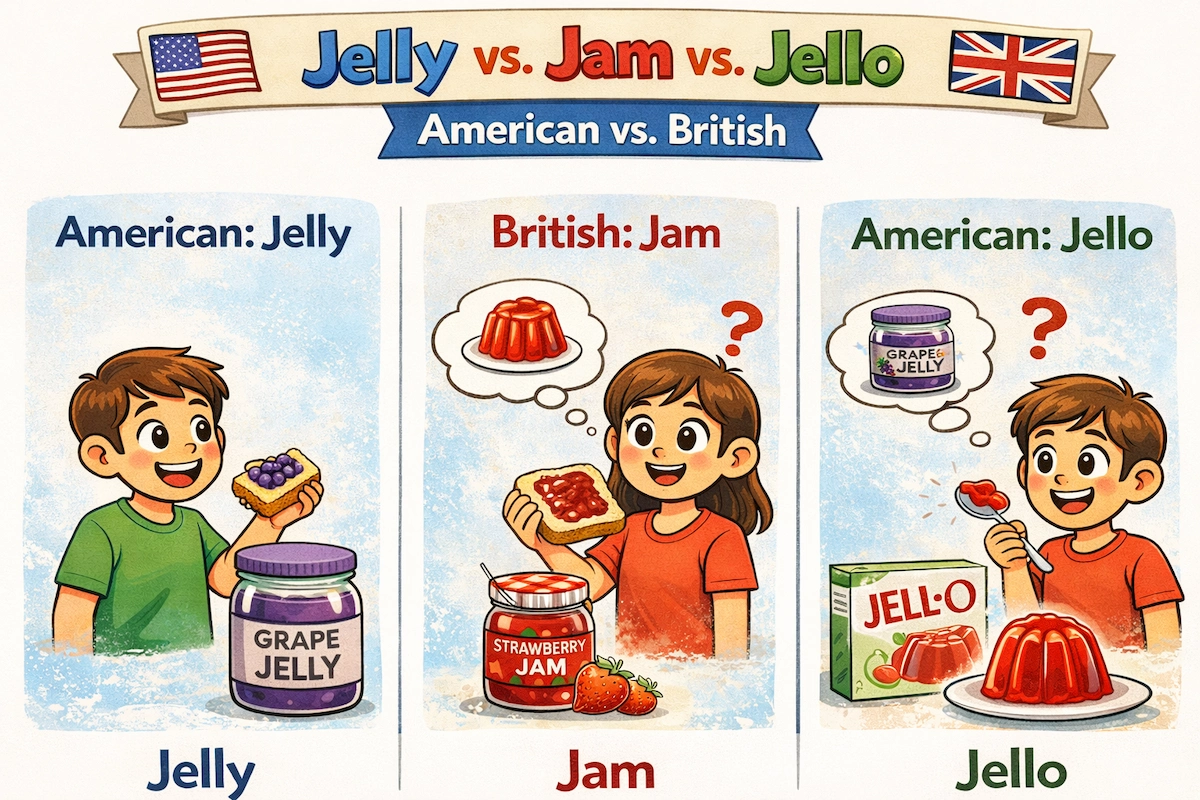
This American vs British usage guide explains the difference between jelly, jam, and jello. Learn why Americans use jelly for fruit spreads and Jello for desserts, while Brits use “jam” and “jelly” differently, and avoid common food-related misunderstandings in international English.
Few food words cause as much confusion between American and British English as jelly, jam, and jello. These words look simple, familiar, and delicious — yet their meanings shift dramatically depending on which side of the Atlantic you’re on.
If an American says they ate a peanut butter and jelly sandwich, a British listener might imagine something very strange. Likewise, when a Brit talks about jelly for dessert, Americans picture something entirely different.
In this usage guide, we’ll untangle the sticky vocabulary of jelly, jam, and jello, explain how American and British English use these words differently, and help you avoid delicious but confusing misunderstandings.
Why Food Vocabulary Causes So Much Confusion
Food words often evolve locally. Ingredients, cooking traditions, and brand names influence how words are used — and once habits form, they stick.
With jelly and jam, the confusion comes from:
- Different preparation methods
- Different textures
- Different cultural expectations
- Brand influence
The result is one word carrying multiple meanings depending on region.
What “Jelly” Means in American English
In American English, jelly is a fruit spread made from fruit juice, sugar, and pectin.
I had toast with grape jelly this morning.
American jelly is:
- Smooth
- Clear or translucent
- Free of fruit pieces
It’s commonly used on toast, biscuits, or in sandwiches — especially the famous peanut butter and jelly sandwich.
What “Jam” Means in American English
In the U.S., jam is also a fruit spread — but with visible fruit pieces.
She prefers strawberry jam because it has chunks of fruit.
Compared to jelly, jam:
- Is thicker
- Contains crushed fruit
- Feels more rustic
Both jelly and jam are normal breakfast foods in American English.
American Distinction: Jelly vs Jam
For Americans, the difference is mostly about texture.
Jelly is smooth; jam has fruit pieces.
Both are spreads. Neither is dessert by default.
What “Jelly” Means in British English
This is where things change dramatically.
In British English, jelly refers to a wobbly dessert made from gelatin.
We’re having jelly and ice cream for dessert.
British jelly is:
- Gelatin-based
- Brightly colored
- Served cold
- Often sweet and fruity
It is not spread on bread.
What Americans Call This Dessert
In American English, this gelatin dessert is called Jello.
The kids had Jello after dinner.
Although Jello started as a brand name, it has become a generic term in everyday American speech.
Why “Jello” Is Capitalized
Jello is technically a brand name, which is why it’s often capitalized.
However, in informal writing and speech, many Americans use it generically.
We made homemade jello for the party.
Context usually makes the meaning clear.
What “Jam” Means in British English
In British English, jam covers most fruit spreads — including what Americans call jelly.
I like raspberry jam on my toast.
British jam may be:
- Smooth
- Chunky
- Seeded
The smooth vs chunky distinction is less important in British usage.
British Usage: No “Jelly” on Bread
In the UK, saying “jelly sandwich” would sound confusing or humorous.
A British speaker would expect a gelatin dessert between slices of bread — which is not a thing.
Side-by-Side Comparison
American English: - Jelly → fruit spread (smooth) - Jam → fruit spread (with fruit) - Jello → gelatin dessert
British English: - Jam → fruit spread - Jelly → gelatin dessert
Same words, different expectations.
Why These Differences Matter
In travel, cooking, or casual conversation, using the wrong term can lead to confusion — or at least raised eyebrows.
Ordering food, describing recipes, or talking about childhood favorites all rely on shared understanding.
Common Learner Mistake #1
Incorrect (UK context): I like jelly on toast. Correct: I like jam on toast.
Common Learner Mistake #2
Incorrect (US context): We had jelly for dessert. Correct: We had Jello for dessert.
How Native Speakers Clarify Meaning
Native speakers often clarify automatically.
Do you mean jelly as in jam, or jelly like dessert?
This is common in international conversations.
Why American vs British Vocabulary Is Tricky
These differences aren’t logical — they’re historical and cultural.
Once you learn them, though, they become memorable because they’re tied to real experiences.
Tips for Avoiding Confusion
- Think about context: breakfast or dessert?
- Notice regional accents
- When unsure, describe the food instead of naming it
Why This Is a Great Learning Example
Jelly vs jam vs jello perfectly illustrates how:
- Vocabulary changes across cultures
- Brand names influence language
- Meaning depends on shared context
Understanding these differences makes your English more flexible and culturally aware.
Final Thoughts: Same Fruit, Different Words
Food brings people together — but words can separate meanings.
By learning how jelly, jam, and jello work in American and British English, you avoid confusion and sound more natural in international conversations.
Sticky vocabulary, clear understanding.