Dictionary or Thesaurus? Stop Using the Wrong Book for Your Vocabulary!
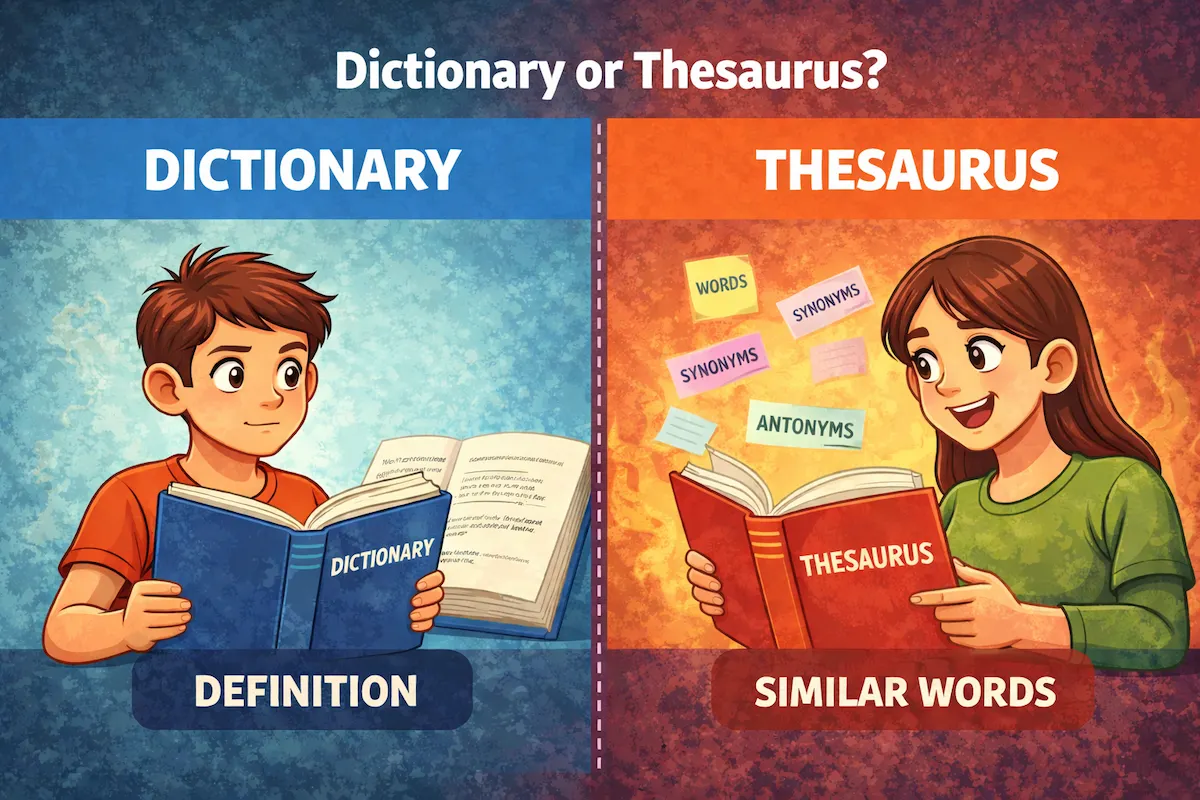
This reading materials guide explains the key differences between a dictionary and a thesaurus. Learn what each tool is designed for, why using the wrong one causes vocabulary mistakes, and how combining both improves clarity, accuracy, and writing style.
If you’ve ever been unsure whether to open a dictionary or reach for a thesaurus, you’re not alone. Many English learners — and even fluent writers — use these two tools interchangeably, assuming they serve the same purpose.
They don’t. In fact, using the wrong one at the wrong time can slow your learning, weaken your writing, or even lead to embarrassing mistakes.
In this reading materials guide, you’ll learn the real difference between a dictionary and a thesaurus, what each tool is designed to do, and how choosing the right one at the right moment can dramatically improve your vocabulary, accuracy, and writing confidence.
Why This Confusion Is So Common
The confusion usually comes from how vocabulary is taught. Many learners are told to “look up a word,” but not told where or why.
Since both dictionaries and thesauruses deal with words, it’s easy to assume they offer the same kind of information. In reality, they answer very different questions.
What Is a Dictionary?
A dictionary explains what a word means.
Dictionary question: “What does this word mean?”
Dictionaries focus on clarity, accuracy, and correct usage.
What Information Does a Dictionary Provide?
A standard dictionary may include:
- Definitions
- Pronunciation
- Part of speech
- Example sentences
- Usage notes
- Word forms
The dictionary tells you what a word is and how to use it.
When You Should Use a Dictionary
A dictionary is the right choice when:
- You encounter a new word
- You are unsure of a word’s meaning
- You want to check correct usage
- You need accurate definitions
You read a sentence and don’t understand one word → dictionary.
What Is a Thesaurus?
A thesaurus shows words with similar or related meanings.
Thesaurus question: “What other words could I use instead?”
A thesaurus helps you vary language and avoid repetition.
What Information Does a Thesaurus Provide?
A thesaurus usually includes:
- Synonyms
- Near-synonyms
- Related words
- Sometimes antonyms
It rarely explains meaning in detail.
When You Should Use a Thesaurus
A thesaurus is helpful when:
- You already know the meaning
- You want variety in writing
- You are revising a draft
- You want to sound less repetitive
You keep repeating the same word → thesaurus.
The Biggest Mistake: Using a Thesaurus First
One of the most common vocabulary mistakes is opening a thesaurus before understanding the word.
This often leads to choosing a synonym that:
- Doesn’t fit the context
- Sounds unnatural
- Changes the meaning
Why Synonyms Are Not Interchangeable
Words that look similar in a thesaurus often differ in:
- Tone
- Formality
- Emotional weight
- Grammar patterns
“Big,” “large,” and “huge” are not always interchangeable.
The Correct Order: Dictionary First, Thesaurus Second
The smartest vocabulary workflow is:
- Check the dictionary
- Understand the meaning
- Check usage examples
- Then explore synonyms
How Writers Use Both Tools Together
Skilled writers rarely rely on only one resource.
Dictionary → confirms accuracy Thesaurus → improves style
This combination creates writing that is both correct and expressive.
Dictionary for Learning, Thesaurus for Polishing
Think of it this way:
- Dictionary = understanding
- Thesaurus = refinement
Mixing these roles leads to confusion.
Why Dictionaries Are Safer for Learners
Dictionaries show:
- Correct grammar patterns
- Natural examples
- Contextual usage
A thesaurus does not warn you when a synonym is inappropriate.
Digital Tools Make the Difference Clearer
Modern online dictionaries often include built-in synonym sections — but still prioritize definition first.
This reflects how language is actually learned.
Common Vocabulary Mistakes Caused by Thesaurus Abuse
- Overly formal word choice
- Incorrect collocations
- Awkward tone shifts
- Misused “fancy” words
Academic vs Creative Writing
Academic writing relies heavily on dictionaries for precision.
Creative writing benefits more from a thesaurus — but only with care.
Practice Test
Please answer the following questions. To see the correct answer, please click the arrow icon.
You see a word you don’t understand. Which tool should you use first?
Answer: Dictionary Explanation: You need meaning before alternatives.
You want to avoid repeating the same word in an essay. Which tool helps?
Answer: Thesaurus Explanation: It provides synonyms and variations.
Is it safe to replace any word with its synonym from a thesaurus?
Answer: No. Explanation: Synonyms differ in tone, context, and grammar.
Which tool teaches correct usage patterns?
Answer: Dictionary Explanation: It provides definitions and examples.
Final Thoughts: Right Tool, Right Time
Dictionaries and thesauruses are not competitors — they are partners.
A dictionary helps you understand language. A thesaurus helps you shape it. When you use each tool for its true purpose, your vocabulary grows faster, your writing becomes clearer, and your confidence increases naturally.